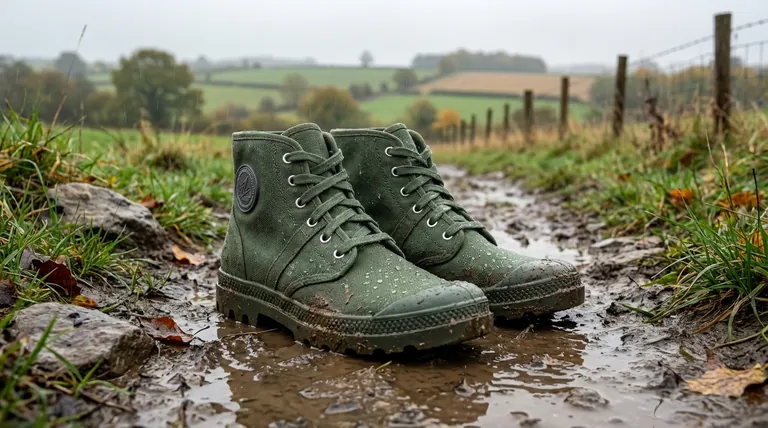
For men's country boots, rubber is the material of choice for its uncompromised protection, grip, and durability. Its inherent properties make it uniquely suited to the wet, muddy, and unpredictable terrain of the countryside, providing a functional advantage over materials like leather or cheaper synthetics.
The core advantage of rubber is its ability to deliver complete waterproofing and superior traction without sacrificing durability. This makes it the most practical and reliable material for footwear intended for serious outdoor use in varied conditions.
The Core Pillars of Performance: Protection and Grip
When you choose a country boot, you are primarily seeking a tool to keep you comfortable and secure in a demanding environment. Rubber excels in these foundational requirements.
Unmatched Waterproofing
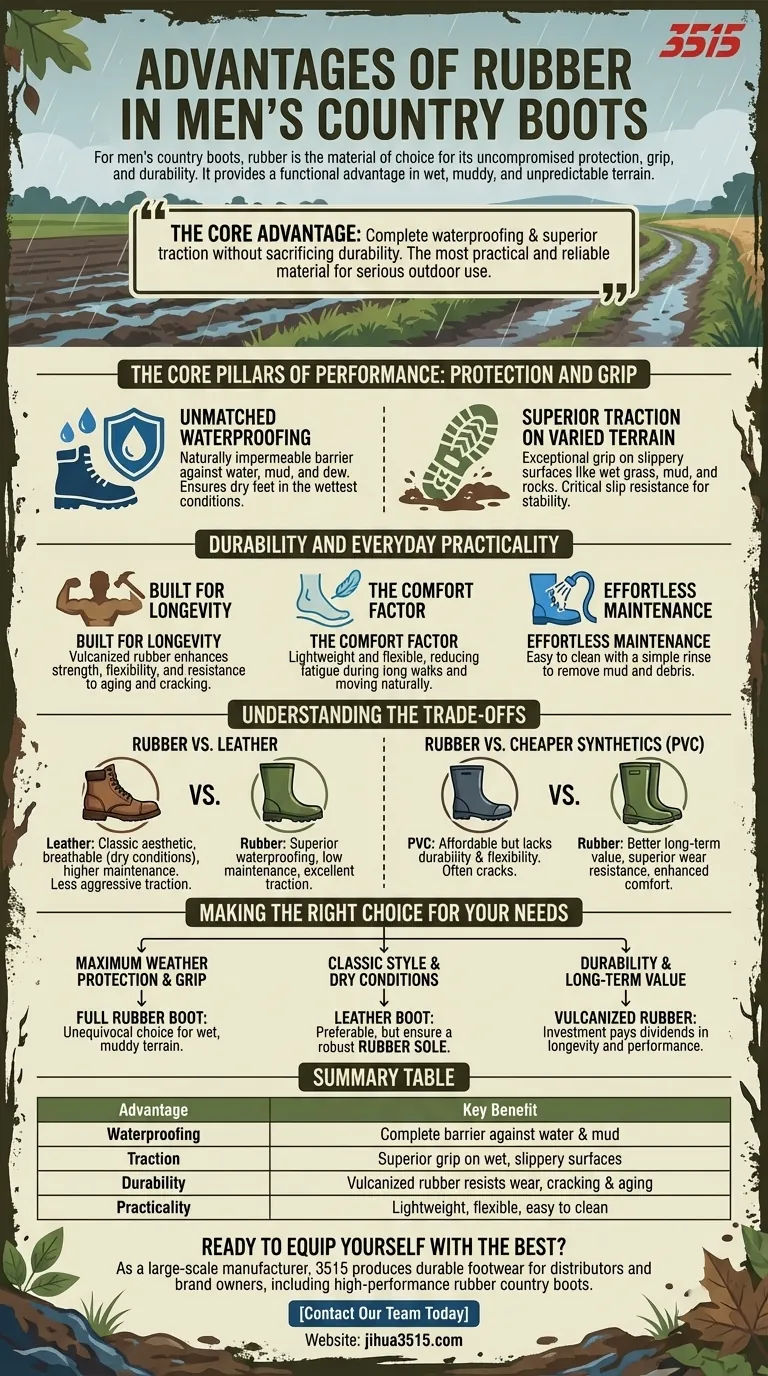
Rubber is naturally impermeable. This means it creates a complete barrier against water, mud, and morning dew, ensuring your feet remain dry and comfortable.
Unlike treated leather, which can eventually saturate, a well-constructed rubber boot offers reliable protection in the wettest conditions.
Superior Traction on Varied Terrain
The primary function of an outsole is grip. Rubber soles provide exceptional traction on the slippery and uneven surfaces common in the country, from wet grass and mud to slick rocks.
This slip resistance is a critical safety and performance feature, providing stability and confidence with every step.
Durability and Everyday Practicality
Beyond immediate performance, a good country boot must withstand repeated use and be easy to live with. Rubber's material science and practical nature make it a long-term asset.
Built for Longevity
High-quality country boots often use vulcanized rubber, a process that cures the rubber to enhance its strength, flexibility, and resistance to aging and wear.
This treatment means the boots are less likely to crack or lose their shape over time, even with frequent exposure to the elements.
The Comfort Factor
Modern rubber formulations are both lightweight and flexible. This combination reduces fatigue during long walks and allows the boot to move naturally with your foot.
Effortless Maintenance
One of the most significant practical advantages of rubber is how easy it is to clean. A simple rinse with a hose is often all that is needed to remove mud and debris, keeping your boots ready for their next use.
Understanding the Trade-offs
No single material is perfect for every situation. Understanding where rubber stands in relation to other common materials is key to making an informed decision.
Rubber vs. Leather
Leather offers a classic aesthetic and superior breathability, making it very comfortable in dry conditions. However, it requires significant maintenance to remain water-resistant and its soles typically offer less aggressive traction.
Many find the ideal solution in a hybrid boot: a leather upper for comfort and style, bonded to a durable, high-traction rubber sole.
Rubber vs. Cheaper Synthetics (like PVC)
While PVC boots are often more affordable, they generally lack the durability and flexibility of high-quality vulcanized rubber.
Rubber provides a better long-term value proposition through its superior resistance to wear and its enhanced comfort during active use.
Making the Right Choice for Your Needs
Your ideal boot depends entirely on how you intend to use it.
- If your primary focus is maximum weather protection and grip: A full rubber boot is the unequivocal choice for navigating wet, muddy, and challenging terrain.
- If your primary focus is classic style and all-day wear in drier conditions: A high-quality leather boot may be preferable, but consider a model with a robust rubber sole for improved traction.
- If your primary focus is durability and long-term value: Investing in a boot made from vulcanized rubber will pay dividends in longevity and performance.
Ultimately, choosing a boot with rubber components is choosing a tool designed specifically for the rigors of the outdoors.
Summary Table:
| Advantage | Key Benefit |
|---|---|
| Waterproofing | Complete barrier against water and mud, keeping feet dry. |
| Traction | Superior grip on wet grass, mud, and slippery surfaces for safety. |
| Durability | Vulcanized rubber resists wear, cracking, and aging for long-term use. |
| Practicality | Lightweight, flexible for comfort, and easy to clean with a simple rinse. |
Ready to equip yourself with the best?
As a large-scale manufacturer, 3515 produces a comprehensive range of durable footwear for distributors, brand owners, and bulk clients. Our production capabilities encompass all types of boots, including high-performance rubber country boots designed for ultimate protection and longevity.
Let us help you provide your customers with the reliable footwear they need. Contact our team today to discuss your requirements and discover the 3515 advantage.
Visual Guide
Related Products
- Wholesale Leather Ankle Boots with Lug Soles for Custom Brand Manufacturing
- Custom Breathable Perforated Leather Derby Shoes for Wholesale & Brands
- Wholesale Lightweight Tactical Boots Custom Manufacturer for Desert & Combat Use
- High-Traction Suede Tactical Boots Wholesale & Custom Manufacturing
- Durable Leather Tactical Boots Wholesale & Custom Manufacturing for Brands
People Also Ask
- What is the difference between full-grain and top-grain leather? Premium Material Guide for Boot Manufacturers
- What are the key qualities of leather for work boots? Superior Durability, Breathability & Custom Fit
- What is the complete process for deep cleaning leather work boots? A Step-by-Step Guide to Preserve Your Investment
- What are the advantages of leather uppers in work boots? Unmatched Durability & Protection
- How should new leather work boots be broken in? A Guide to Comfort and Durability