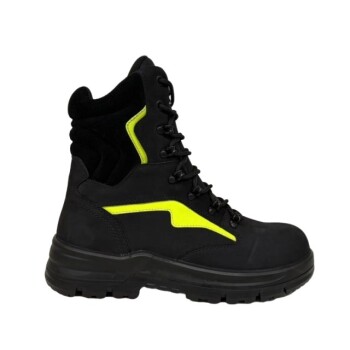
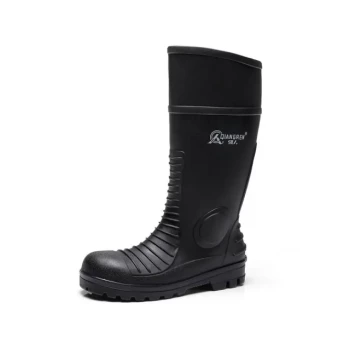
The primary function of professional protective footwear during landing is to provide rigid structural support to the ankle complex. This equipment acts as a mechanical stabilizer, specifically shielding the talus and distal fibula at the moment of impact. Unlike standard athletic shoes, which often lack these reinforced features, protective footwear is engineered to significantly reduce the incidence of severe lower limb injuries, including bi-malleolar and tri-malleolar fractures.
High-impact landings create physical forces that can easily exceed the structural limits of the human ankle joint. Professional protective footwear addresses this by offering a rigid exoskeleton that maintains joint alignment, thereby preventing the catastrophic bone fractures associated with unstable landings.
The Mechanics of Impact Protection
Rigid Ankle Support
The defining feature of effective protective footwear is the provision of rigid support around the ankle area.
While standard shoes may offer flexibility, protective gear prioritizes structural stiffness. This rigidity limits excessive movement during the critical millisecond of landing, ensuring the joint remains aligned under load.
Protecting Critical Anatomy
The primary reference indicates that this support is specifically vital for protecting the talus and distal fibula.
These bones are highly vulnerable to fracture during high-impact activities. By reinforcing the area surrounding these bones, the footwear acts as a preventive barrier against the forces that typically cause breaks.
Fracture Prevention
The ultimate goal of this design is the reduction of complex fractures.
Protective footwear significantly lowers the incidence of bi-malleolar and tri-malleolar fractures. These are severe injuries involving multiple breaks in the ankle, which are far more common when wearing standard athletic shoes that lack specific ankle support features.
Comparing Protective vs. Performance Roles
Structural Reinforcement vs. Cushioning
It is important to distinguish between structural safety and performance cushioning.
While running shoes utilize high-performance cushioning to mitigate repetitive impact forces, protective landing footwear focuses on bone stability. The primary role here is preventing structural failure (fractures) rather than simply absorbing shock to improve endurance.
The Role of Design in Compliance
Beyond physical safety, professional footwear design plays a role in consistent usage.
By addressing specific physical risks—whether fracture prevention or protection from environmental hazards—professional footwear helps overcome barriers to activity. When users feel physically secure, they are more likely to maintain long-term participation in their routines.
Understanding the Trade-offs
Rigidity vs. Flexibility
The rigid support required to prevent fractures often comes at the cost of flexibility.
Users must understand that the "stiffness" required to save an ankle from breaking during a hard landing may reduce the natural range of motion found in standard running shoes. This is a calculated safety feature, not a design flaw.
Specialized Focus vs. General Use
Not all professional footwear serves the same purpose.
Footwear designed for "landing safety" (rigid support) differs from footwear designed for "green care" or running (cushioning and hygiene). Using a highly cushioned running shoe for an activity requiring rigid ankle support may leave the user vulnerable to the very fractures the protective gear is meant to prevent.
Making the Right Choice for Your Goal
To ensure safety, you must match the footwear's engineering to the specific risks of your activity.
- If your primary focus is landing safety and fracture prevention: Prioritize footwear with rigid ankle support to protect the talus and fibula against bi-malleolar and tri-malleolar fractures.
- If your primary focus is repetitive motion (e.g., running): Prioritize footwear with high-performance cushioning materials to mitigate impact forces and enhance endurance.
- If your primary focus is environmental work or routine building: Prioritize footwear that offers physical shielding from elements (soil, moisture) to support psychological structure and identity.
True protection comes not just from wearing gear, but from understanding exactly which biomechanical failure points that gear is designed to reinforce.
Summary Table:
| Feature | Protective Landing Footwear | Standard Athletic Shoes |
|---|---|---|
| Primary Goal | Fracture & Bone Stability | Shock Absorption & Flexibility |
| Ankle Support | Rigid Exoskeleton / Stabilizer | Minimal / Soft Support |
| Key Protection | Talus & Distal Fibula | Soft Tissue & Joints |
| Impact Outcome | Prevents Tri-malleolar Fractures | Mitigates Repetitive Strain |
Secure Your Supply Chain with 3515 High-Performance Footwear
As a premier large-scale manufacturer, 3515 specializes in providing distributors and brand owners with high-durability solutions designed to prevent serious injuries. Our flagship Safety Shoes series and tactical boots are engineered with the rigid structural integrity required to protect the talus and fibula during high-impact activities.
Whether you need robust work boots, specialized sneakers, or professional dress shoes, we offer comprehensive production capabilities to meet your bulk requirements and protect your customers' safety.
Partner with a leading manufacturer today. Contact us at 3515 to discuss your wholesale or branding needs!
References
- Michiel Damhuis, Edward Tan. The ground is the limit: epidemiology of skydiving accidents over 25 years and in 2.1 million jumps in the Netherlands with sub-analysis of injuries reported by medical professionals in the past five years. DOI: 10.1186/s13017-024-00535-w
This article is also based on technical information from 3515 Knowledge Base .
Related Products
- Premium Suede Sport Safety Shoes for Wholesale & Bulk Orders
- Wholesale Customizable Safety Boots Durable & Protective Footwear Manufacturing
- Premium Waterproof Nubuck Safety Boots for Wholesale
- Wholesale Anti-Smash & Puncture-Proof Safety Shoes Custom Manufacturing for Brands
- Premium Safety Shoes with Rotating Buckle Safety Sneakers
People Also Ask
- What industries have specific OSHA footwear requirements? Ensure Compliance & Protect Your Workforce
- What are the primary functions of professional safety shoes? Maximize Safety in Water Supply Confined Spaces
- What role do specialized safety shoes play in preventing falls? Engineering Stability in Industrial Environments
- Why should ergonomics and comfort be prioritized when selecting safety shoes? Boost Compliance & Worker Health
- What are the main components of safety shoes? A Guide to Protective Footwear Design