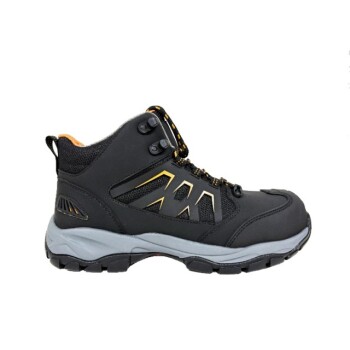
At its core, the primary purpose of a soft-toe boot is to provide all-day comfort, flexibility, and agility in work environments where there are minimal to no risks of foot injury from impact or compression. Unlike safety-toe boots, they do not have a reinforced toe box, prioritizing natural foot movement and a lightweight design for professionals who spend extensive time walking or standing.
The choice between a soft-toe and a safety-toe boot is a deliberate trade-off. You are choosing to prioritize either maximum comfort and flexibility or certified protection against specific jobsite hazards.
The Case for Soft-Toe Boots
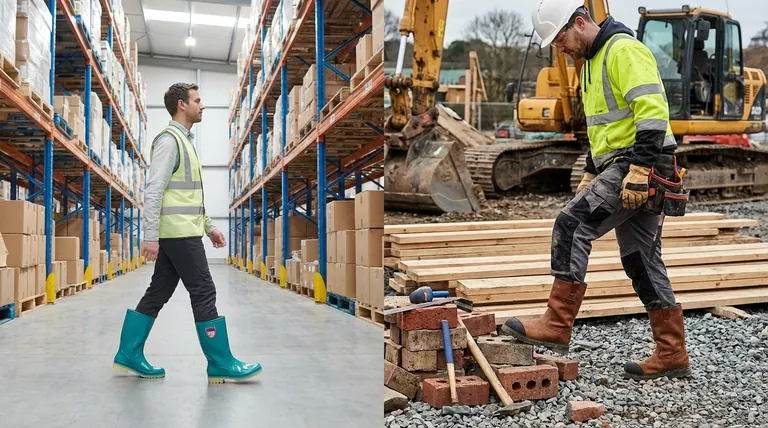
Soft-toe boots are engineered around the user's need for endurance and mobility throughout a long workday. Their value is most apparent in low-risk environments.
Unmatched Comfort and Flexibility
The defining feature of a soft-toe boot is its non-restrictive design. By omitting a rigid toe cap, the boot allows for more natural foot movement.
This flexibility is crucial for roles that involve constant walking, standing, or squatting, reducing foot fatigue over an entire shift.
Lightweight and Agile Design
Without the added weight of a steel or composite toe cap, soft-toe boots are significantly lighter.
This reduced weight translates directly to less strain on your legs and greater agility, making them ideal for fast-paced jobs in retail, warehousing, or light manufacturing.
When Safety-Toe Boots Are Non-Negotiable
Understanding the purpose of soft-toe boots requires knowing when not to use them. Safety-toe boots are essential when specific workplace hazards are present.
Protection from Impact and Compression
The primary function of a safety toe is to protect the foot from falling objects or compression from rolling equipment.
These boots contain a reinforced toe box, made of materials like steel or composite, that is rated to resist specific forces, preventing catastrophic injury.
Defense Against Punctures and Other Hazards
Many safety boots also offer protection from sharp objects piercing the sole or from electrical hazards.
If your job site involves nails, sharp metal, or live electrical circuits, a certified safety boot is the only appropriate choice.
Understanding the Trade-offs
Choosing footwear is not just about features; it's about understanding the compromises you are making for your specific environment.
The Primary Trade-off: Protection vs. Comfort
The decision is a straightforward balance. With soft-toe boots, you gain maximum comfort, flexibility, and a lightweight feel.
In exchange, you sacrifice certified protection against serious impact and compression injuries. This trade-off is only acceptable when such risks are verifiably absent from your workplace.
Common Pitfalls to Avoid
A common mistake is assuming any durable boot is a "work boot." A true work boot is selected based on a risk assessment of the job.
Never wear soft-toe boots in an environment that requires safety-toe footwear. The consequences of an accident are simply too high.
Making the Right Choice for Your Role
Your choice should be dictated entirely by the daily demands and potential hazards of your work environment.
- If your primary focus is all-day comfort for walking or standing in a low-risk setting: A soft-toe boot is the superior choice for its lightweight and flexible design.
- If your primary focus is protection from falling objects, heavy equipment, or puncture risks: A certified safety-toe boot is the only acceptable and responsible option.
Ultimately, the right boot is the one that correctly matches its features to the realities of your job.
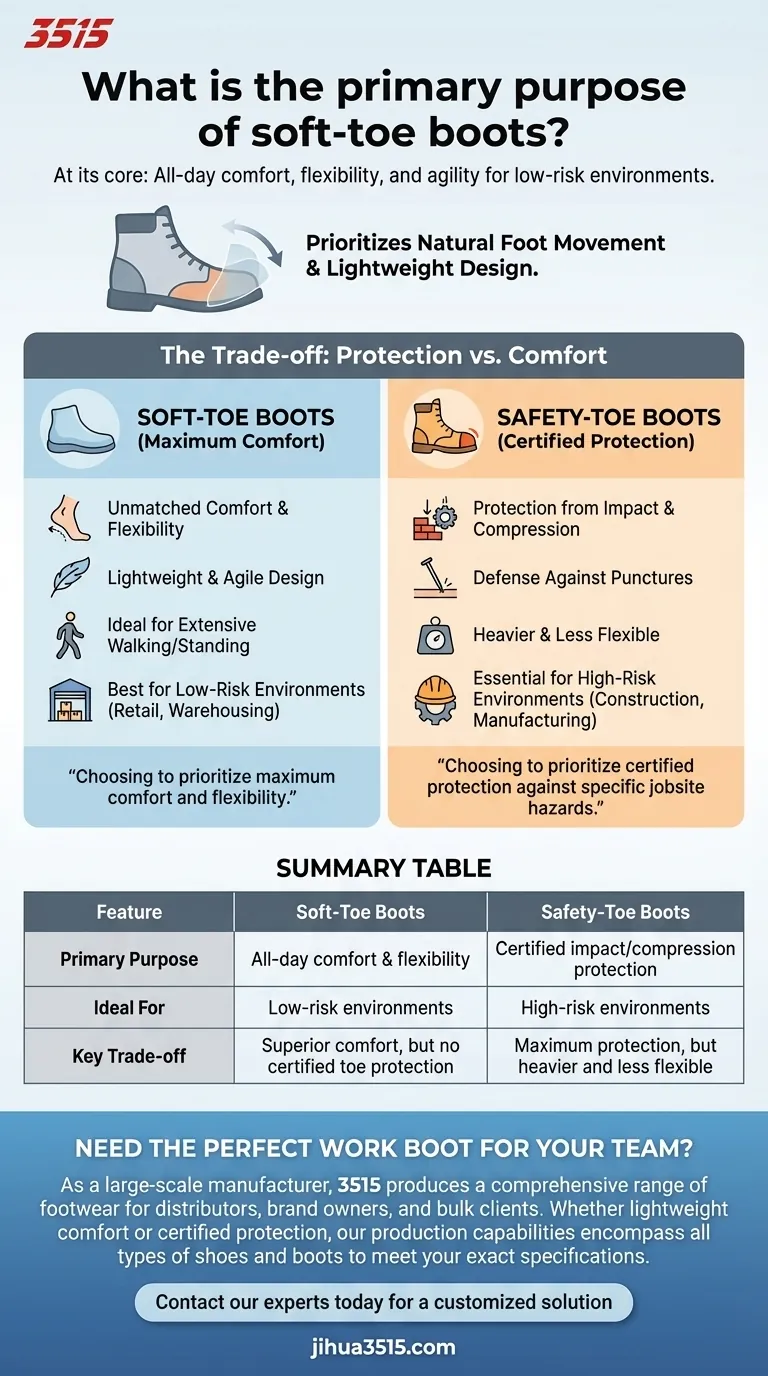
Summary Table:
| Feature | Soft-Toe Boots | Safety-Toe Boots |
|---|---|---|
| Primary Purpose | All-day comfort & flexibility | Certified impact/compression protection |
| Ideal For | Low-risk environments (e.g., retail, warehousing) | High-risk environments (e.g., construction, manufacturing) |
| Key Trade-off | Superior comfort, but no certified toe protection | Maximum protection, but heavier and less flexible |
Need the Perfect Work Boot for Your Team?
As a large-scale manufacturer, 3515 produces a comprehensive range of footwear for distributors, brand owners, and bulk clients. Whether your workforce requires the lightweight comfort of soft-toe boots or the certified protection of safety-toe boots, our production capabilities encompass all types of shoes and boots to meet your exact specifications and volume needs.
Let us help you equip your team with the right footwear for the job.
Contact our experts today to discuss your requirements and receive a customized solution.
Visual Guide
Related Products
- Durable Leather Moc Toe Work Boots for Wholesale & Custom Manufacturing
- Wholesale Durable Safety Boots Manufacturer Customizable Steel Toe Work Boots
- Durable Leather Safety Boots for Wholesale & Custom OEM Manufacturing
- Puncture-Resistant Velcro Safety Boots for Wholesale & Custom Manufacturing
- Wholesale Customizable Safety Boots Durable & Protective Footwear Manufacturing
People Also Ask
- What are moc toe work boots designed for? Superior Comfort and Mobility for Tradespeople
- What are the key features to look for when purchasing moc toe boots? A Guide to Durability & Fit
- How did moc toe boots originate? A Legacy of Workwear Durability and Style
- What clothing items complement the Outdoorsman/Heritage Look with moc toe boots? Build a Timeless, Rugged Wardrobe
- What types of outfits can moc toe boots be worn with? Versatile Style Guide