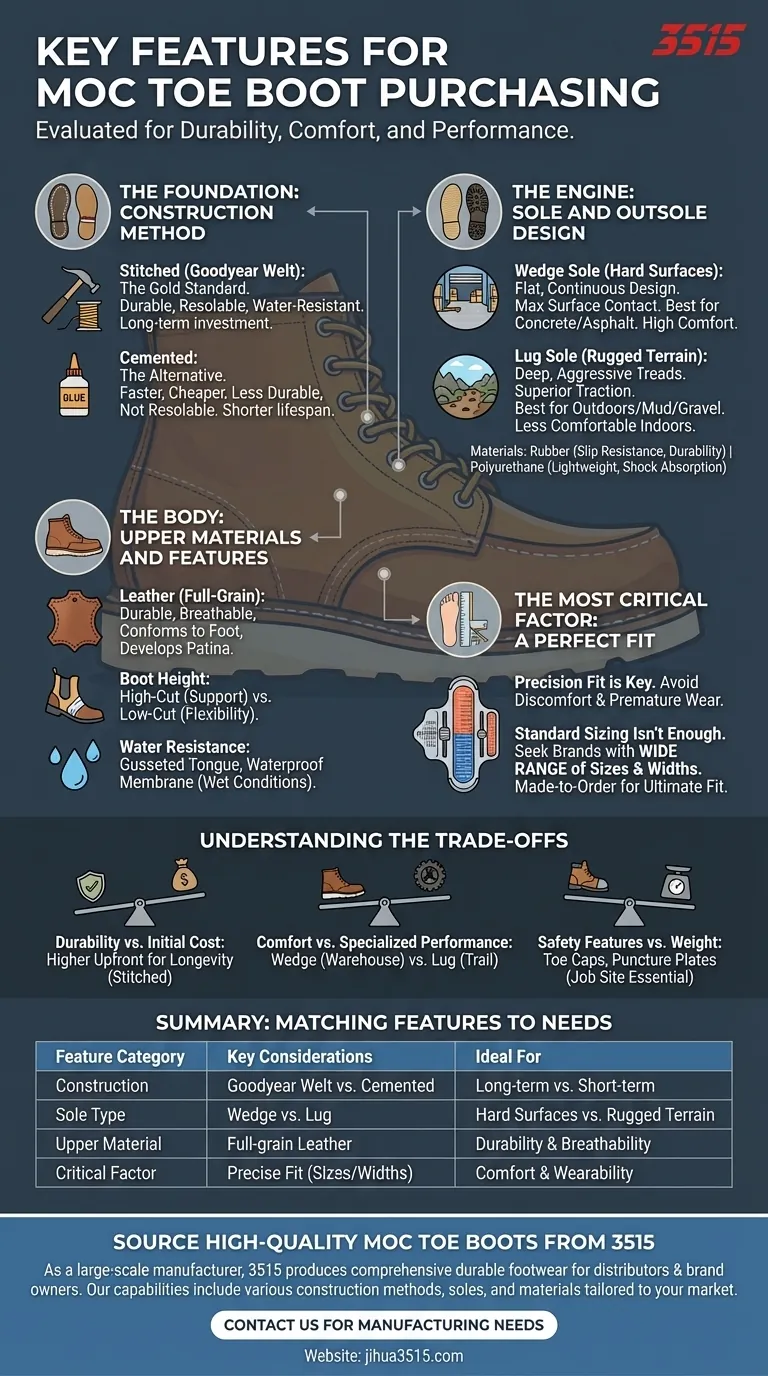
When purchasing moc toe boots, the most critical features to evaluate are the construction method, the type of sole, the upper material, and, above all, the precision of the fit. A durable, stitched construction and a sole designed for your primary environment—be it a wedge sole for concrete or a lug sole for terrain—form the foundation of a quality boot.
The best moc toe boot is not the one with the most features, but the one whose features are correctly aligned with your intended use. Understanding the trade-offs between construction, materials, and sole design is the key to investing in a pair that will serve you well for years.
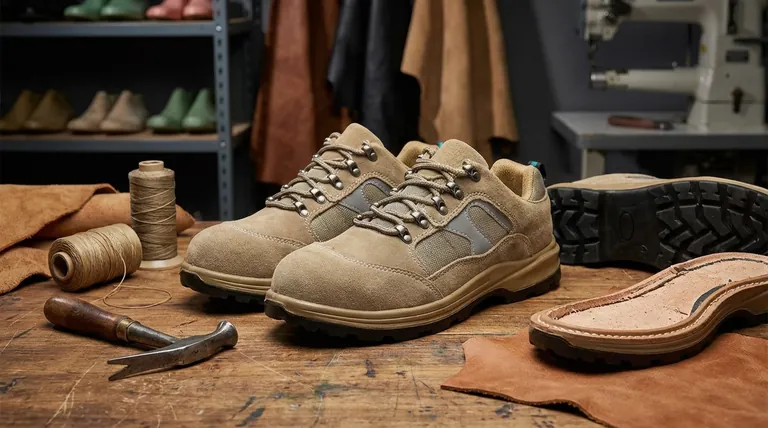
The Foundation: Construction Method
The way a boot's upper is attached to its sole is the single most important factor for its long-term durability and repairability.
Stitched Construction (The Gold Standard)
This method, most notably the Goodyear welt, involves stitching the upper to the sole. This creates an incredibly durable and water-resistant bond.
Critically, stitched boots are resolable, meaning a cobbler can replace a worn-out sole, dramatically extending the boot's lifespan.
Cemented Construction (The Common Alternative)
In this method, the sole is attached to the upper using a strong adhesive. This is a faster and less expensive manufacturing process.
However, cemented boots are significantly less durable and are not designed to be resoled, making them a shorter-term investment.
The Engine: Sole and Outsole Design
The outsole determines where your boots will perform best, directly impacting both comfort and safety.
Wedge Soles for Hard Surfaces
Characterized by a continuous, uniform sole from heel to toe, wedge soles maximize surface contact. This design provides exceptional comfort and support when walking or standing for long hours on hard, flat surfaces like concrete and asphalt.
Lug Soles for Rugged Terrain
Lug soles feature deep, aggressive treads designed to grip uneven and loose surfaces like dirt, mud, and gravel. They provide superior traction for outdoor and off-road use but can feel clunky on flat indoor floors.
Sole Materials
The material itself matters. Rubber is prized for its excellent slip resistance and durability, while polyurethane (PU) offers a more lightweight and flexible alternative with good shock absorption.
The Body: Upper Materials and Features
The upper protects your foot and defines the boot's style and environmental resistance.
Leather Uppers (The Classic Choice)
High-quality full-grain leather is the traditional choice for a reason. It is exceptionally durable, breathable, and conforms to your foot over time for a custom fit. It also develops a unique patina with age.
Boot Height and Support
High-cut boots (6-inch or 8-inch) provide superior ankle support, which is crucial for stability on uneven ground or job sites. Lower-cut models offer greater flexibility and mobility for less demanding environments.
Water Resistance
While many leather boots offer some natural water resistance, look for specific features like a gusseted tongue (sewn to the sides of the upper) or a waterproof membrane if you frequently work in wet conditions.
Understanding the Trade-offs
Choosing the right boot means accepting that no single design excels at everything. Objectivity here is key.
Durability vs. Initial Cost
Stitched boots with premium leather command a higher price upfront. However, their longevity and ability to be resoled often result in a lower total cost of ownership compared to replacing cheaper, cemented boots multiple times.
Comfort vs. Specialized Performance
A comfortable wedge sole is ideal for a warehouse floor but lacks the grip needed for a muddy trail. A heavy-duty lug sole provides immense traction but is less comfortable for all-day wear on pavement.
Safety Features (When You Need Them)
For workplace use, specialized features are non-negotiable. This includes protective toe caps (steel or composite), puncture-resistant plates, and electrical hazard (EH) ratings. These are essential for safety on a job site but add unnecessary weight and rigidity for casual wear.
The Most Critical Factor: A Perfect Fit
Even the best-made boot is worthless if it doesn't fit properly. Poor fit leads to discomfort, blisters, and premature wear.
Why Standard Sizing Isn't Enough
Feet are three-dimensional. A brand that only offers standard D-width sizing cannot accommodate the full spectrum of foot shapes.
What to Look For in a Brand
Prioritize brands that offer a wide range of sizes and widths. For the best possible fit, some bootmakers even provide made-to-order options to match your exact foot measurements. This is the ultimate way to ensure long-term comfort and wearability.
Making the Right Choice for Your Goal
- If your primary focus is daily comfort and style: Choose a flexible wedge sole, premium leather, and prioritize a brand known for its precise fit and range of widths.
- If your primary focus is demanding work on hard surfaces: A Goodyear-welted construction with a comfortable wedge sole and any necessary safety toe features is essential.
- If your primary focus is outdoor use and traction: Select a boot with a durable lug sole for grip, a higher cut for ankle support, and water-resistant features.
By matching the boot's core features to your specific needs, you can invest confidently in a pair that delivers both performance and longevity.
Summary Table:
| Feature Category | Key Considerations |
|---|---|
| Construction | Goodyear Welt (resolable, durable) vs. Cemented (less durable) |
| Sole Type | Wedge (hard surfaces) vs. Lug (rugged terrain) |
| Upper Material | Full-grain leather (durable, breathable) |
| Critical Factor | Precise fit with a range of sizes/widths |
Ready to source high-quality moc toe boots with the exact features your customers need?
As a large-scale manufacturer, 3515 produces a comprehensive range of durable footwear for distributors, brand owners, and bulk clients. Our production capabilities encompass all types of boots, including moc toe styles with various construction methods, sole types, and materials tailored to your market.
Let us help you provide your customers with boots built for performance and longevity. Contact our team today to discuss your manufacturing needs.
Visual Guide
Related Products
- Durable Leather Moc Toe Work Boots for Wholesale & Custom Manufacturing
- Durable Moc Toe Wedge Sole Work Boots for Wholesale and Private Label
- Durable Moc-Toe Wedge Work Boots | Wholesale Manufacturing for Brands
- Wholesale Durable Safety Boots Manufacturer Customizable Steel Toe Work Boots
- Premium Suede Metatarsal Guard Safety Boots Work Shoes
People Also Ask
- What are moc toe work boots designed for? Superior Comfort and Mobility for Tradespeople
- How did moc toe boots originate? A Legacy of Workwear Durability and Style
- What clothing items complement the Outdoorsman/Heritage Look with moc toe boots? Build a Timeless, Rugged Wardrobe
- What types of outfits can moc toe boots be worn with? Versatile Style Guide
- What distinguishes moc toe boots? The Ultimate Guide to Unmatched Comfort & Style