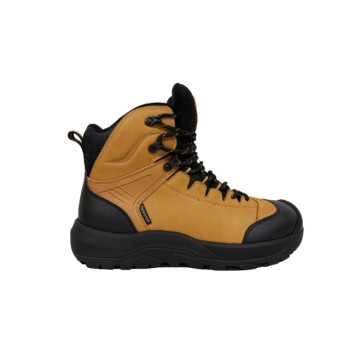
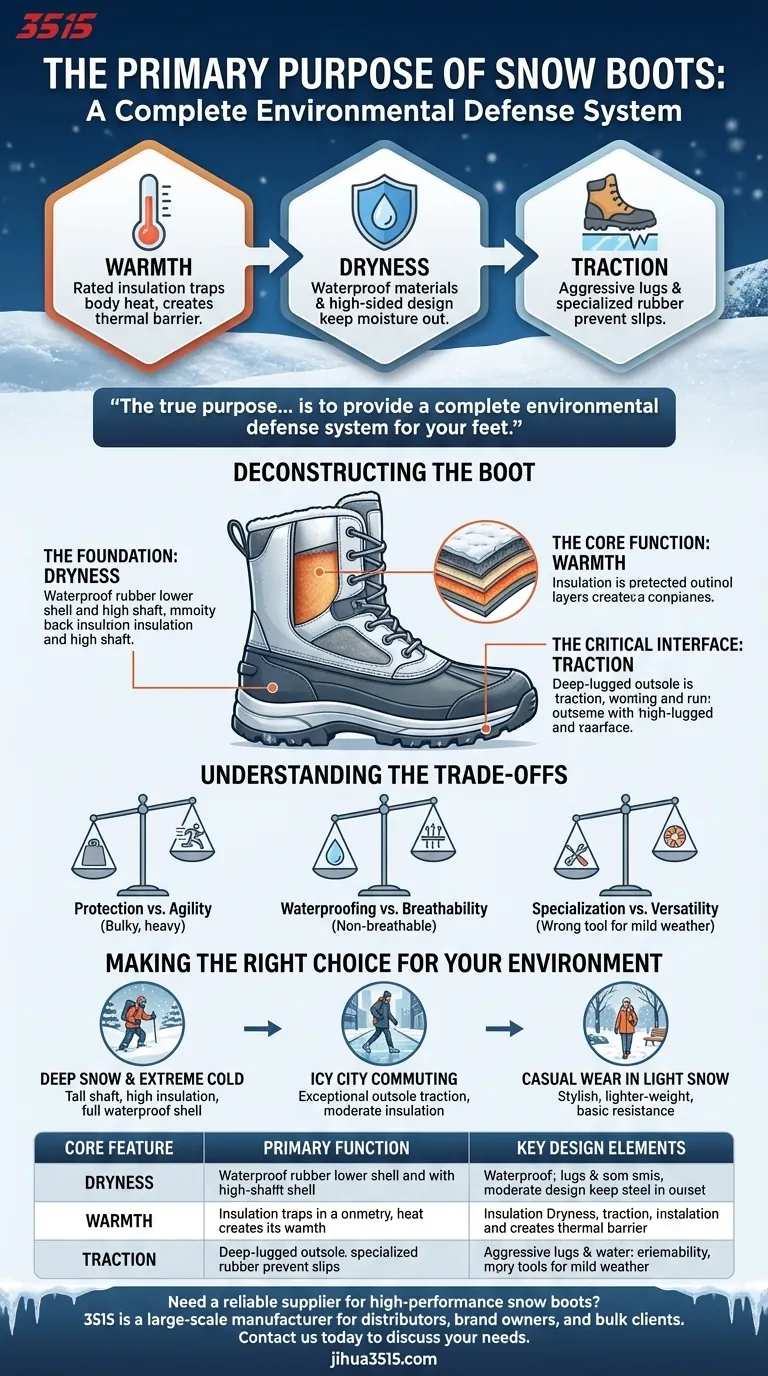
At its core, a snow boot is a specialized piece of equipment with three primary functions. It is engineered to keep your feet warm through insulation, dry through waterproofing, and stable through superior traction on snow and ice. These three elements work together as a system to protect you in harsh winter conditions.
The true purpose of a snow boot is not just to be a warm or waterproof boot, but to provide a complete environmental defense system for your feet. Understanding how its core features of warmth, water resistance, and grip interact is the key to choosing the right tool for the job.
Deconstructing the Snow Boot: A System for Protection
A snow boot is more than the sum of its parts. Each design feature directly addresses a specific challenge posed by a cold, wet, and slippery environment.
The Foundation: Dryness
The first line of defense is keeping moisture out. Wet feet lose heat exponentially faster than dry feet, making waterproofing a non-negotiable feature.
Snow boots achieve this with materials like rubber for the lower shell and water-resistant or waterproof uppers. Their high-sided design also serves the critical purpose of preventing snow and slush from entering from the top.
The Core Function: Warmth
Simply keeping feet dry isn't enough in freezing temperatures. Snow boots incorporate insulation to trap your body's natural heat and create a thermal barrier against the cold ground.
This is a key differentiator from a typical rain or hiking boot. The insulation is specifically rated and designed to perform in sub-zero conditions where other footwear would fail.
The Critical Interface: Traction
Snow and ice create uniquely unstable surfaces. A snow boot's outsole is engineered specifically for this challenge.
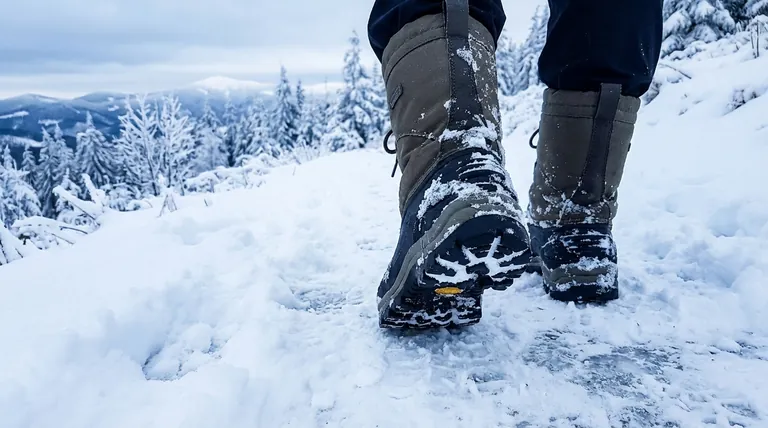
It features deep, aggressive lugs and often uses specialized rubber compounds that remain flexible in the cold. This design provides a reliable grip to prevent dangerous slips and falls.
Understanding the Trade-offs
No piece of equipment is perfect for every situation. The specialized nature of snow boots comes with inherent compromises you must consider.
Protection vs. Agility
The robust materials, thick insulation, and heavy-duty soles that make snow boots so effective also make them bulky and heavy. They are not designed for nimble movements or long-distance trail hiking.
Waterproofing vs. Breathability
The most waterproof materials, like solid rubber, are not breathable. This can lead to sweaty feet during high exertion, which then become cold. Many boots balance this with waterproof-breathable membranes, but there is always a trade-off.
Specialization vs. Versatility
A snow boot is a specialist. Wearing one in mild or dry conditions will likely be uncomfortable, causing your feet to overheat. They are the wrong tool for a cool autumn day or a dry mountain trail.
Making the Right Choice for Your Environment
Your specific needs should dictate your choice. Consider the conditions you will most frequently encounter.
- If your primary focus is deep snow and extreme cold: Prioritize a boot with a tall shaft, a high insulation rating, and a fully waterproof lower shell.
- If your primary focus is icy city commuting: Look for exceptional outsole traction and moderate insulation, as you will be moving between cold outdoors and warm indoors.
- If your primary focus is casual wear in light snow: A more stylish, lighter-weight boot with basic water resistance and minimal insulation will likely suffice.
Ultimately, selecting the right snow boot is about matching its specific design strengths to the unique demands of your winter environment.
Summary Table:
| Core Feature | Primary Function | Key Design Elements |
|---|---|---|
| Dryness | Keep moisture out | Waterproof materials (rubber), high-sided design |
| Warmth | Insulate against cold | Rated insulation for sub-zero temperatures |
| Traction | Prevent slips on ice/snow | Deep lugs, flexible cold-weather rubber compounds |
Need a reliable supplier for high-performance snow boots?
As a large-scale manufacturer, 3515 produces a comprehensive range of footwear for distributors, brand owners, and bulk clients. Our production capabilities encompass all types of insulated, waterproof boots designed to meet the specific demands of any winter environment.
Contact us today to discuss your snow boot needs and benefit from our expertise in durable, protective winter footwear.
Visual Guide
Related Products
- Premium Insulated Safety Boots and Shoes for Wholesale & Bulk Orders
- Durable Waterproof Rain Boots | Custom Manufacturer for Wholesale & Brands
- Factory Direct Wholesale Rain Boots Durable Waterproof & Fully Customizable
- Wholesale Waterproof Tactical Boots Custom Suede & High-Traction Soles
- Wholesale Lightweight Tactical Boots Custom Manufacturer for Desert & Combat Use
People Also Ask
- What are the recommended insulation ratings for mild winter conditions? A Guide for Active & Stationary Workers
- How does insulation thickness correlate with temperature ranges? A Guide to Choosing the Right Warmth
- What insulation level is needed for severe cold and stationary work? 1200g or Higher is Essential
- What safety advantages do insulated boots offer beyond warmth? Dielectric Protection & Superior Grip
- How does fleece lining contribute to the warmth of insulated boots? Trapping Air for Superior Cold Protection