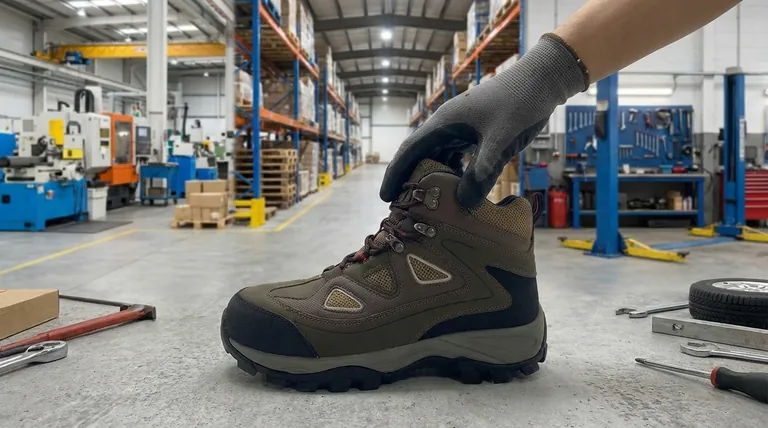
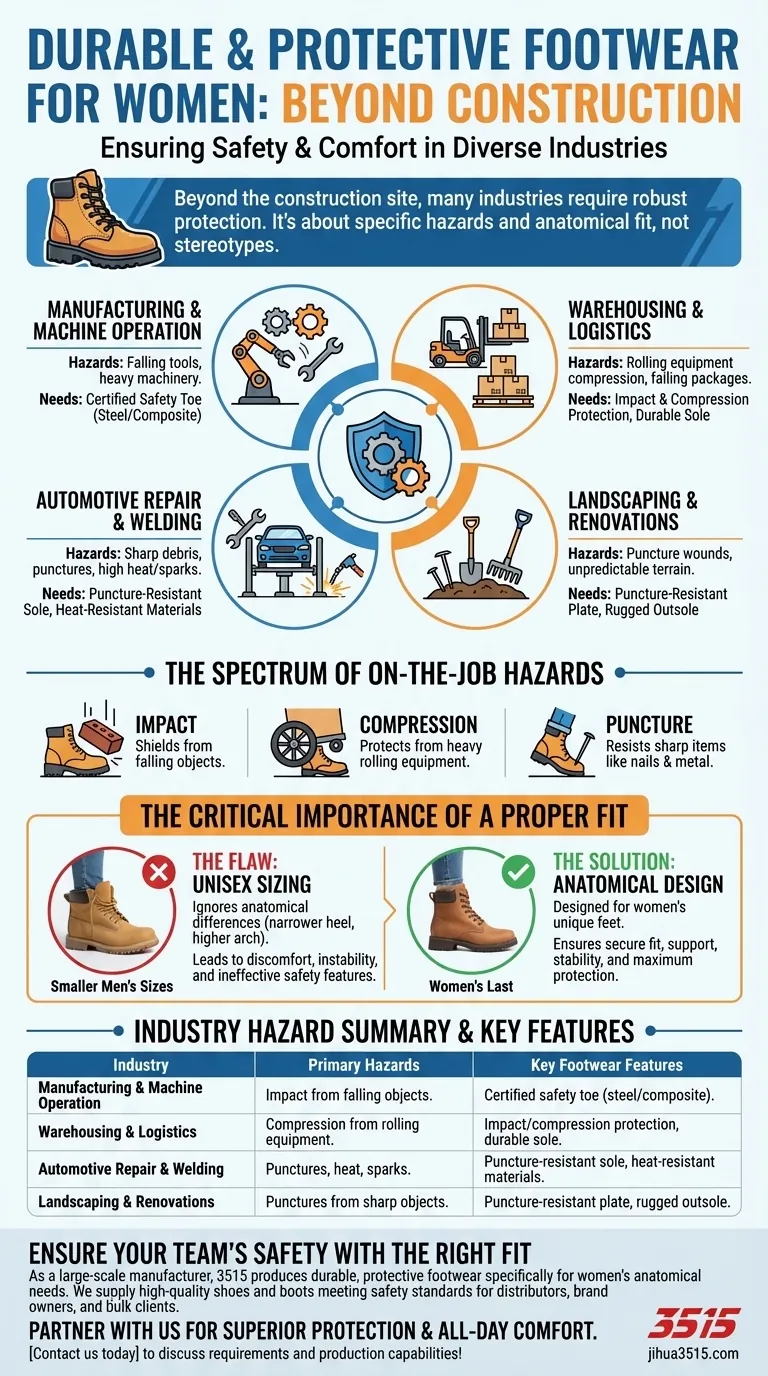
Beyond the construction site, a significant number of industries require durable and protective footwear for women. Key sectors include manufacturing, warehousing, auto repair, machine operation, landscaping, welding, and even specific service roles where physical hazards are present. These professions demand footwear that protects against risks like impact, compression, and punctures.
The necessity for safety footwear is driven by the specific hazards of a job, not by traditional industry stereotypes. For women, finding footwear designed for their unique anatomical needs is a critical safety measure that prevents injuries and ensures stability, moving far beyond simply offering smaller sizes of men's shoes.
Why These Industries Demand Protection
The common thread connecting these diverse fields is the presence of predictable physical risks to the feet. Safety standards are in place to mitigate these dangers, which are universal regardless of gender.
The Spectrum of On-the-Job Hazards
The primary function of protective footwear is to shield the wearer from common workplace dangers. This includes protection from falling objects (impact), heavy rolling equipment like carts or pallet jacks (compression), and sharp items on the ground like nails or metal shavings (puncture).
Manufacturing and Machine Operation
In manufacturing environments, workers are constantly around heavy machinery and moving parts. The risk of dropping tools, components, or materials makes a protective safety toe (steel or composite) an absolute necessity.
Warehousing and Logistics
Warehouses are dynamic environments with constant movement of goods via forklifts, pallet jacks, and hand carts. The primary risks here are compression injuries from rolling equipment and impact injuries from falling packages.
Automotive Repair and Welding
Auto repair shops present a high risk of foot injury from dropped tools, heavy vehicle parts, or sharp metal debris on the floor. Welding requires specialized footwear that can resist high heat and sparks in addition to providing standard impact protection.
Landscaping and Renovations
Workers in landscaping and renovations face unpredictable terrain and the constant threat of puncture wounds from nails, sharp rocks, or garden tools. Durable, puncture-resistant soles are a critical feature for footwear in these roles.
The Critical Importance of a Proper Fit
Simply wearing a safety boot is not enough; the boot must fit correctly to provide genuine protection. This is a particularly important issue for women in trades, who have historically been underserved by safety footwear manufacturers.
The Flaw in "Shrink It and Pink It"
For years, the standard approach was to offer smaller sizes of men's boots for women. This "unisex" model ignores fundamental differences in foot anatomy, such as a narrower heel, a higher arch, and a different instep.
How a Poor Fit Creates New Dangers
An ill-fitting boot can cause significant problems. It can lead to blisters and discomfort, but more dangerously, it can create instability, increasing the risk of slips, trips, and falls. If a boot is too wide, the foot can slide internally during an impact, negating the effectiveness of the safety toe.
The Modern Standard: Anatomically Correct Design
Leading manufacturers now produce protective footwear specifically designed on a woman's last (the 3D model of a foot used to create a shoe). This ensures a secure fit that provides proper support and stability, allowing the safety features to function as intended.
Making the Right Choice for Your Goal
Selecting the correct footwear depends entirely on the specific risks you encounter in your daily work.
- If your primary focus is protection from falling objects (Manufacturing, Warehousing): Prioritize boots with a certified safety toe (steel, alloy, or composite) and excellent impact/compression ratings.
- If your primary focus is preventing punctures (Renovations, Auto Repair): Ensure your footwear is built with a puncture-resistant plate integrated into the sole.
- If your primary focus is all-day comfort and stability (All Roles): Seek out brands that design boots specifically for women's feet to guarantee proper anatomical support.
Ultimately, choosing the right protective footwear is a foundational investment in your personal safety and well-being on the job.
Summary Table:
| Industry | Primary Hazards | Key Footwear Features |
|---|---|---|
| Manufacturing & Machine Operation | Impact from falling objects | Certified safety toe (steel/composite) |
| Warehousing & Logistics | Compression from rolling equipment | Impact/compression protection, durable sole |
| Automotive Repair & Welding | Punctures, heat, sparks | Puncture-resistant sole, heat-resistant materials |
| Landscaping & Renovations | Punctures from sharp objects | Puncture-resistant plate, rugged outsole |
Ensure Your Team's Safety with the Right Fit
As a large-scale manufacturer, 3515 produces a comprehensive range of durable and protective footwear designed specifically for the unique anatomical needs of women. We supply distributors, brand owners, and bulk clients with high-quality shoes and boots that meet the highest safety standards for industries like manufacturing, warehousing, and more.
Partner with us to provide footwear that combines superior protection with all-day comfort and stability.
Contact us today to discuss your requirements and explore our full production capabilities!
Visual Guide
Related Products
- Premium Safety Shoes with Rotating Buckle Safety Sneakers
- Premium Suede Sport Safety Shoes for Wholesale & Bulk Orders
- Safety Footwear Wholesale Manufacturer for Custom OEM/ODM Production
- Premium Lightweight Safety Shoes for Wholesale & Bulk Orders
- Premium Wholesale Tactical Style Safety Shoes Boots with Quick Lacing
People Also Ask
- How do complex outsole tread designs in safety shoes work with coated floors? Master Slip Resistance Engineering
- What role do specialized safety shoes play in preventing falls? Engineering Stability in Industrial Environments
- How do I choose the best safety shoes? Match Certified Features to Your Hazards
- What industries have specific OSHA footwear requirements? Ensure Compliance & Protect Your Workforce
- How Specialized Footwear Impacts Side-Cutting Performance and Injury Risk Assessment