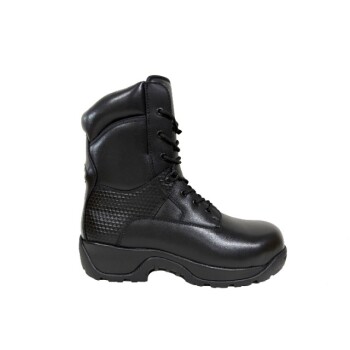
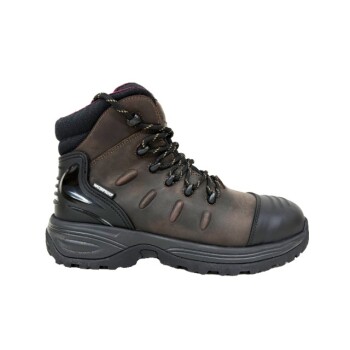
Choosing the right police boot is one of the most critical gear decisions an officer can make, directly impacting their safety, comfort, and performance throughout a shift. It's not about brand or style; it's a foundational choice that affects everything from physical endurance on a long patrol to agility during a critical incident.
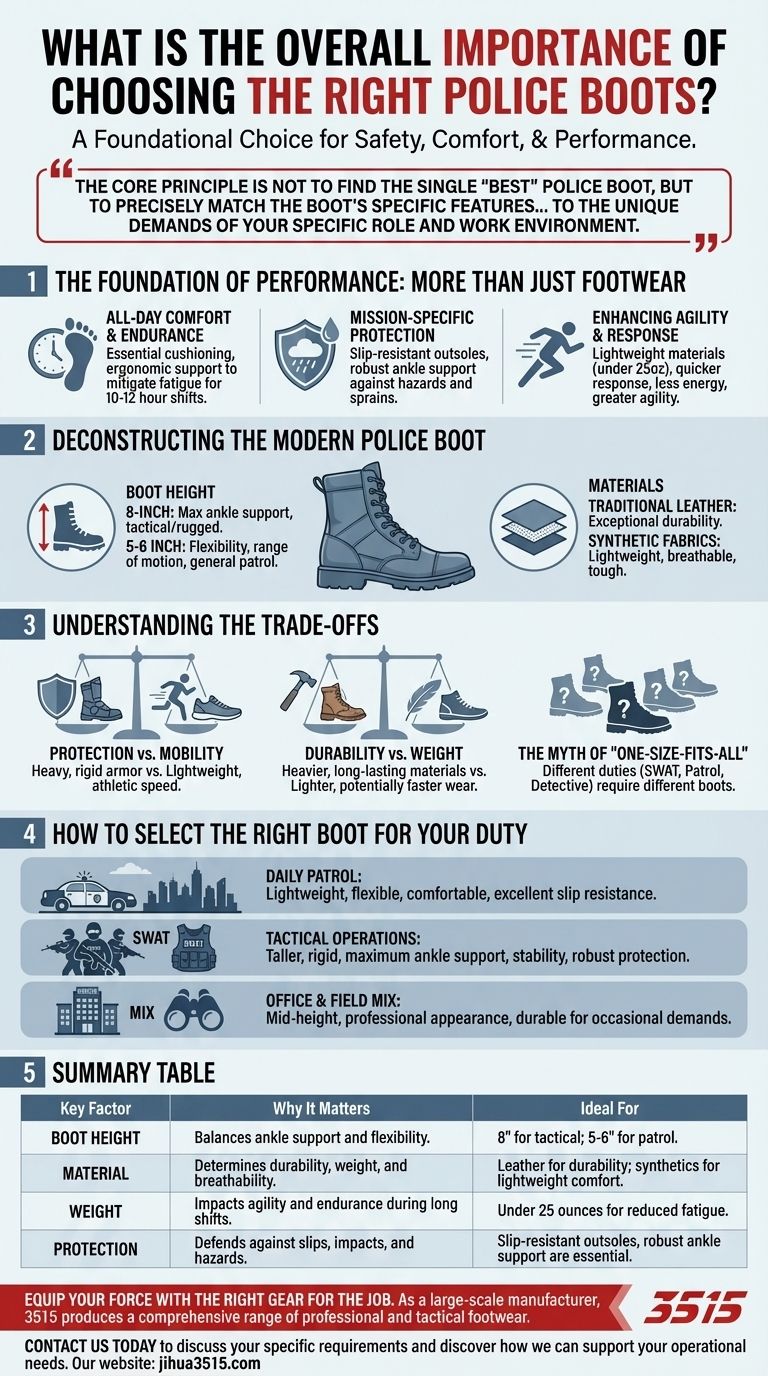
The core principle is not to find the single "best" police boot, but to precisely match the boot's specific features—such as weight, support, and protection—to the unique demands of your specific role and work environment.
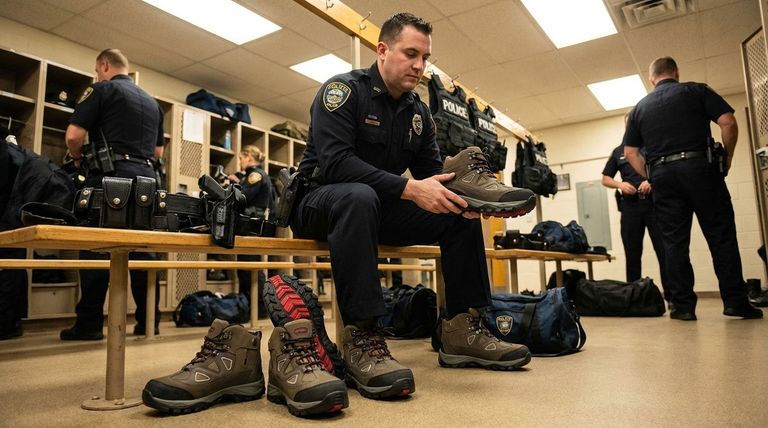
The Foundation of Performance: More Than Just Footwear
A police boot is a critical tool, and selecting the wrong one can have consequences that extend far beyond simple discomfort. It can directly impair your ability to perform your duties effectively and safely.
All-Day Comfort and Endurance
Officers spend the majority of their shifts on their feet, often for 10-12 hours at a time. The right boot provides essential cushioning and ergonomic support to mitigate fatigue.
Poor footwear is a direct cause of physical strain, leading to aching legs and a sore back. Proper support ensures you can remain focused and effective from the beginning of your shift to the end.
Mission-Specific Protection
The work environment for law enforcement is unpredictable and presents numerous hazards. A boot's protective features are a primary line of defense.
This includes slip-resistant outsoles for maintaining traction on wet or uneven surfaces and robust ankle support to prevent sprains during dynamic movements or altercations.
Enhancing Agility and Response
Modern police boots have evolved significantly from older, heavier designs. Today's boots often utilize lightweight synthetic materials to reduce fatigue and improve mobility.
A lighter boot, often weighing under 25 ounces, allows for quicker response times, less energy expenditure during a foot pursuit, and greater overall agility when seconds count.
Deconstructing the Modern Police Boot
Understanding the key components of a police boot allows you to make an informed decision based on your daily needs rather than just appearance.
The Role of Boot Height
Boot height, typically measured in inches, is a crucial factor that balances support with flexibility.
An 8-inch boot provides maximum ankle support and protection for the lower leg, making it ideal for tactical situations or work in rugged terrain.
A shorter 5 or 6-inch boot offers greater flexibility and range of motion, which is often preferred for general patrol duties that involve frequent transitions between walking and driving.
The Impact of Materials
The materials used in a boot's construction define its durability, weight, and breathability.
Traditional leather offers exceptional durability, while modern synthetic fabrics provide a lightweight and often more breathable alternative without sacrificing toughness. The right material contributes directly to the boot's overall comfort and longevity.
Understanding the Trade-offs
There is no single boot that excels in every category. Every design choice involves a compromise, and understanding these trade-offs is key to selecting the right tool for your specific job.
Protection vs. Mobility
A heavily armored, rigid boot offers superior protection from impacts and environmental hazards but will inherently be heavier and less flexible.
Conversely, a lightweight, athletic-style boot enhances speed and agility but provides less protection against crushing force or ankle torsion.
Durability vs. Weight
The most durable boots are often constructed from heavier, thicker materials that can withstand years of abuse. However, this added weight increases fatigue over a long shift.
Lighter boots reduce strain but may use materials that wear more quickly, potentially requiring more frequent replacement.
The Myth of a "One-Size-Fits-All" Boot
An officer's duties vary widely. The ideal boot for a SWAT team member is fundamentally different from that of a patrol officer, which is different again from that of a detective. Assuming one model can serve all roles is a common and costly mistake.
How to Select the Right Boot for Your Duty
Your choice should be dictated by a clear-eyed assessment of your primary role and the environment where you perform it most often.
- If your primary focus is daily patrol: Prioritize a lightweight, flexible, and comfortable boot with excellent slip resistance for varied urban environments.
- If your primary focus is tactical operations: Select a taller, more rigid boot that offers maximum ankle support, stability, and robust protection.
- If your primary focus is a mix of office and field work: Consider a mid-height boot that balances a professional appearance with the durability needed for occasional, less-demanding assignments.
Investing in the right footwear is a direct investment in your career longevity and daily effectiveness.
Summary Table:
| Key Factor | Why It Matters | Ideal For |
|---|---|---|
| Boot Height | Balances ankle support and flexibility. | 8" for tactical; 5-6" for patrol. |
| Material | Determines durability, weight, and breathability. | Leather for durability; synthetics for lightweight comfort. |
| Weight | Impacts agility and endurance during long shifts. | Under 25 ounces for reduced fatigue. |
| Protection | Defends against slips, impacts, and environmental hazards. | Slip-resistant outsoles and robust ankle support are essential. |
Equip your force with the right gear for the job.
As a large-scale manufacturer, 3515 produces a comprehensive range of professional and tactical footwear for distributors, brand owners, and bulk clients. Our production capabilities encompass all types of boots, ensuring durability, comfort, and mission-specific performance for law enforcement professionals.
Contact us today to discuss your specific requirements and discover how we can support your operational needs.
Visual Guide
Related Products
- Durable High-Ankle Tactical Boots for Wholesale & Custom Manufacturing
- Wholesale Durable Mid-Cut Tactical Boots for Custom & Private Label Brands
- Durable Mid-Cut Tactical Boots for Wholesale & Private Label
- High-Traction Suede Tactical Boots Wholesale & Custom Manufacturing
- Durable Leather Tactical Boots Wholesale & Custom Manufacturing for Brands
People Also Ask
- How do tactical boots protect against injuries? Discover the Integrated Safety System
- What is the role of high-frequency acquisition hardware in technical skill analysis for outdoor and tactical boots?
- What are the main construction similarities between tactical boots and tactical sneakers? Built for Performance & Durability
- How does additive manufacturing equipment reduce environmental risks? Sustainable Tactics for Modern Footwear Production
- How is the compatibility of polymer materials demonstrated in smart footwear? Enhancing Tactical & Training Performance