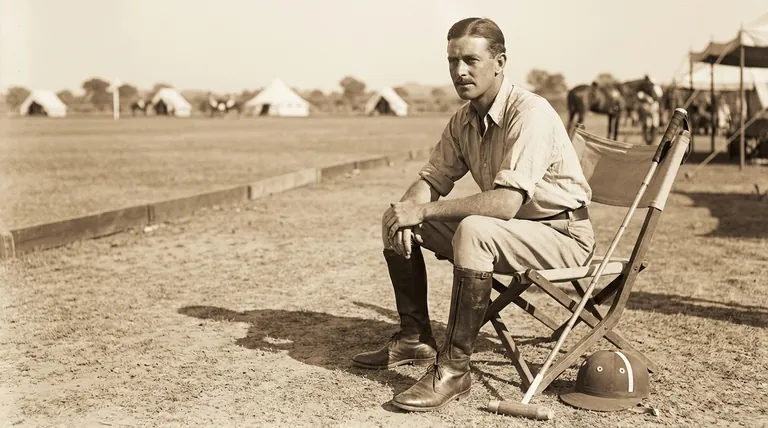
At its core, the Chukka boot's origin is tied to the British colonial era in India and the game of polo. The name itself is borrowed directly from the sport, where a "chukka" is a seven-minute period of play. British soldiers stationed in India encountered this simple, durable, and comfortable ankle-high boot, adopted it for their own use, and eventually brought the style back to the West.
While its name comes from polo, the Chukka boot's enduring appeal isn't about sport. It represents a classic example of cultural exchange—a practical design adapted by British soldiers for off-duty wear, valued for its simple construction and unparalleled versatility.
Deconstructing the Polo Connection
The link between the boot and the sport is the source of its name, but the exact nature of that connection is often debated. The evidence points less toward activewear and more toward leisure.
The "Chukka" Name
The term chukka is a direct reference to a period of play in polo. This linguistic link firmly places the boot's conceptual origin within the world of that sport.
A Boot for After the Match
The most widely accepted theory is that Chukkas were not worn during polo matches. Instead, they were the comfortable, casual boots players would change into for leisurely strolls after a game. Their simple, unlined construction was a welcome relief from the more rigid and structured riding boots required for play.
The British Military Influence
The style's migration to the West is credited to British soldiers. While serving in India, they recognized the practical benefits of this lightweight, ankle-high design and adopted it, bringing it home to England where its popularity grew.
The Anatomy of a Classic Chukka
A true Chukka is defined by a few simple, unmistakable characteristics that have remained consistent for over a century. Understanding these elements is key to distinguishing it from its variations.
The Unmistakable Silhouette
The boot is always ankle-high. This specific cut provides support without the restriction of a full-height boot.
The Minimalist Lacing System
A defining feature is its open lacing with only two to three pairs of eyelets. This minimal design contributes to its clean aesthetic and makes it easy to slip on and off.
Material and Construction
Traditionally, the upper is made of two single pieces of leather or suede. The sole was originally thin leather, emphasizing its lightweight, casual nature.
The Key Distinction: Chukka vs. Desert Boot
A common point of confusion is the difference between a Chukka boot and a Desert boot. The relationship is simple: all Desert boots are Chukkas, but not all Chukkas are Desert boots.
The Foundational Category
"Chukka" is the broad category of boot defined by the silhouette: ankle-high with two to three lacing eyelets. This can include a wide variety of materials and sole types.
A Specific Military Adaptation
The Desert boot is a specific type of Chukka with its own distinct military origin. During World War II, British forces in North Africa adapted the basic Chukka design for the harsh conditions of the desert campaign.
The Defining Features
A true Desert boot is a Chukka that is always made with suede uppers and a crepe rubber sole. This specific combination was chosen for its durability, breathability, and the exceptional grip the soft crepe sole provided on sand.
Making the Right Choice for Your Purpose
Understanding these origins helps you select the right boot based on the level of formality and function you require.
- If your primary focus is classic versatility: A traditional Chukka with smooth leather uppers and a thin leather sole offers a more refined option suitable for smart-casual and even some business-casual settings.
- If your primary focus is relaxed, casual comfort: The Desert Boot, with its signature suede and soft crepe sole, is the definitive choice for pairing with jeans, chinos, and other informal wear.
Ultimately, both styles descend from a shared history of practical, minimalist design that has proven its timeless appeal.
Summary Table:
| Origin & Feature | Key Detail |
|---|---|
| Name Origin | From 'chukka', a period of play in polo |
| Historical Roots | British colonial era in India |
| Primary Use | Casual, off-duty wear for soldiers and polo players |
| Defining Features | Ankle-high, 2-3 eyelets, open lacing, simple leather/suede upper |
| Desert Boot (Subtype) | Suede uppers, crepe rubber sole; a WWII adaptation |
Looking for a reliable manufacturer for your Chukka boot line?
As a large-scale manufacturer, 3515 produces a comprehensive range of footwear for distributors, brand owners, and bulk clients. Our production capabilities encompass all types of shoes and boots, including classic Chukkas and Desert boots. We can help you bring high-quality, authentic designs to your market.
Contact us today to discuss your production needs and leverage our expertise.
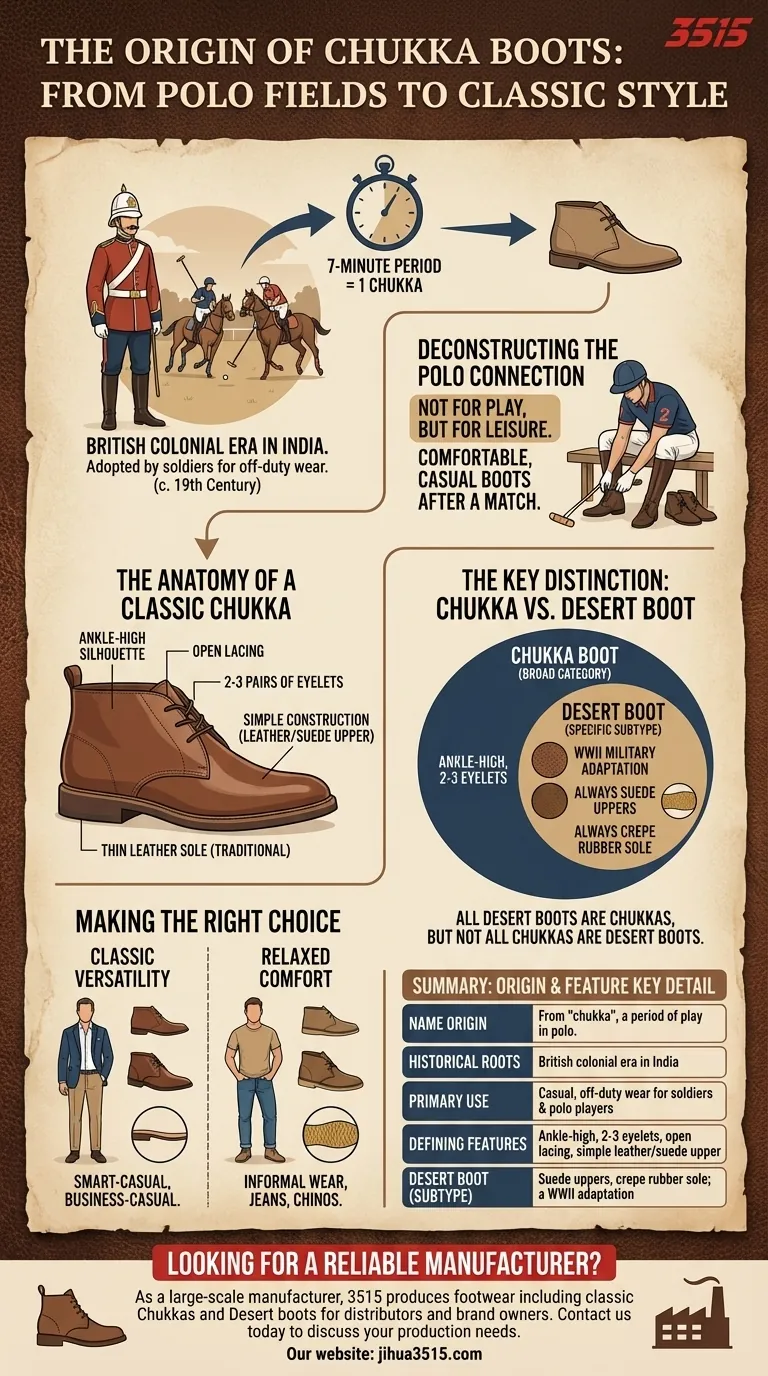
Visual Guide
Related Products
- Durable Spiked Camouflage Boots Wholesale & Factory Production
- Wholesale High-Traction Camo Boots - Custom Manufacturer for Brands
- High-Traction Suede Tactical Boots Wholesale & Custom Manufacturing
- Durable Leather High-Ankle Tactical Boots for Wholesale & Custom Manufacturing
- Premium Wholesale Tactical Style Safety Shoes Boots with Quick Lacing
People Also Ask
- How does boot height affect waterproofing? Choose the Right Height for Ultimate Protection
- What are the best types of shoes for different gardening conditions? Find Your Perfect Match.
- What role does camouflage play in hunting boots? It's More Than Just a Pattern
- What should you look for to ensure boots are fully waterproof? The Essential 2-Part System
- How does boot construction affect waterproofing? The Science Behind Truly Dry Feet