Choosing the right size for your steel toe boots is fundamentally about ensuring the boot can do its job without causing you harm. An improper fit directly compromises the boot's safety features and creates new health risks, turning a protective asset into a liability that can lead to chronic pain and on-the-job injury.
A correctly sized steel toe boot is more than a matter of comfort; it is a critical component of your personal protective equipment. The right fit ensures the protective steel cap is properly aligned to absorb impact, while preventing foot ailments that reduce focus and productivity.
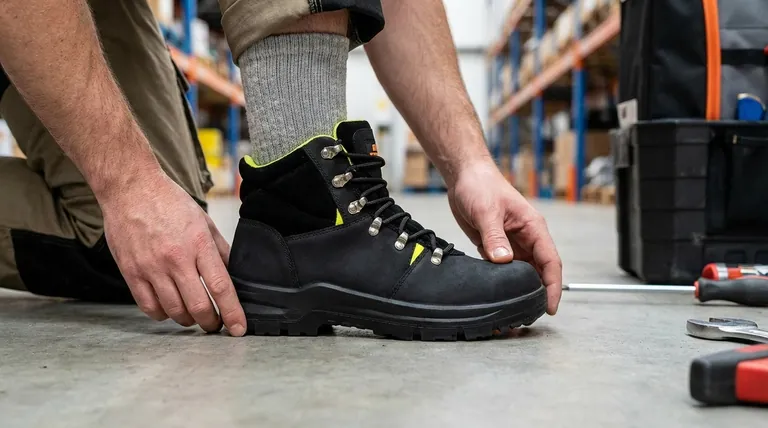
The Dual Mandate: Protection and Health
The effectiveness of a safety boot rests on two pillars: its ability to protect you from external hazards and its ability to support your body's health during long hours of work. An incorrect size undermines both.
How a Poor Fit Undermines Safety
A boot that is too loose allows your foot to shift. During an impact, this means the steel cap may not be correctly positioned over your toes, drastically reducing its effectiveness. Loose boots also create a significant tripping hazard.
A boot that is too tight restricts blood flow and can cause constant, distracting pain. This fatigue reduces your situational awareness, making accidents more likely.
The Hidden Costs of Discomfort
The most immediate consequence of a bad fit is discomfort. This quickly evolves into more serious foot ailments.
Constant pressure and friction from an ill-fitting boot are the primary cause of blisters, corns, and calluses. Over time, these issues can lead to chronic pain that affects your performance and morale.
Why a Proper Fit is Non-Negotiable
Steel toe boots are specifically engineered to shield your feet in high-risk environments. Their entire design premise is defeated if the fit is wrong.
The Core Function of the Steel Cap
The reinforced steel cap is the boot's primary safety feature. It acts as a shield, designed to protect the toes from severe injury caused by falling objects, rolling equipment, or sharp tools.
This protection is essential in industries like construction, manufacturing, and logistics, where foot injuries are a constant risk.
The Impact on Productivity
When employees are outfitted with appropriate, well-fitting footwear, the benefits extend beyond safety. It directly reduces lost work hours from injuries, improves overall productivity, and contributes to higher team morale.
Understanding the Trade-offs of a Bad Fit
Simply wearing a steel toe boot is not enough. Choosing the wrong size introduces specific, avoidable risks.
The "Too Loose" Problem
A loose heel causes constant rubbing, leading to painful blisters. More critically, it forces you to alter your natural gait to keep the boot on, which can cause strain in your ankles, knees, and back over time.
The "Too Tight" Problem
Excessive tightness puts direct pressure on your nerves and bones. This can lead to numbness and long-term conditions. It also leaves no room for your feet to swell naturally throughout the workday, compounding the discomfort.
The Common Sock Mistake
A boot that feels perfect in the store with thin dress socks can become painfully tight when worn with thick, cushioned work socks. This is one of the most common oversights when purchasing new safety footwear.
Making the Right Choice for Your Goal
Finding the right size is an active process. It requires more than just knowing your shoe number.
Always Try Before You Buy
Whenever possible, try on boots at the end of the day, as your feet are often slightly swollen. Make sure to wear the same type of thick socks you use for work to get a true sense of the fit.
Check for Key Fit-Points
There should be about a half-inch (a thumb's width) of space between your longest toe and the end of the boot. Your heel should lift slightly as you walk, but it should not slip out completely. The boot should feel snug across the ball of your foot, but not tight.
Consider the Overall Hazard
Remember that size is just one component. The right boot must also match the specific hazards of your job, whether that includes electrical risks, extreme temperatures, or slippery surfaces.
How to Ensure the Perfect Fit
Your final choice should be guided by your primary needs on the job site.
- If your primary focus is maximum impact protection: Ensure there is a thumb's width of space at the front, which prevents your toes from slamming into the steel cap.
- If your primary focus is all-day comfort: Confirm your heel is secure with minimal slippage and the boot flexes with your foot without pinching.
- If your primary focus is agility and avoiding trips: Choose a snug fit that feels like an extension of your foot, eliminating internal movement and external bulkiness.
Investing the time to find the perfect fit transforms your safety boots from a requirement into your most reliable tool for protection and productivity.
Summary Table:
| Fit Issue | Safety Risk | Health Consequence |
|---|---|---|
| Too Loose | Tripping hazard; steel cap misalignment | Blisters, altered gait, back/knee strain |
| Too Tight | Reduced awareness from pain | Numbness, nerve pressure, long-term foot ailments |
| Correct Fit | Optimal protection from impacts | All-day comfort, supports productivity and morale |
As a large-scale manufacturer, 3515 produces a comprehensive range of steel toe boots for distributors, brand owners, and bulk clients. Our expertise ensures every pair is engineered for the perfect balance of safety, comfort, and durability. Let us help you equip your team with the right fit for maximum protection.
Contact us today for a consultation to discuss your specific needs and volume requirements.
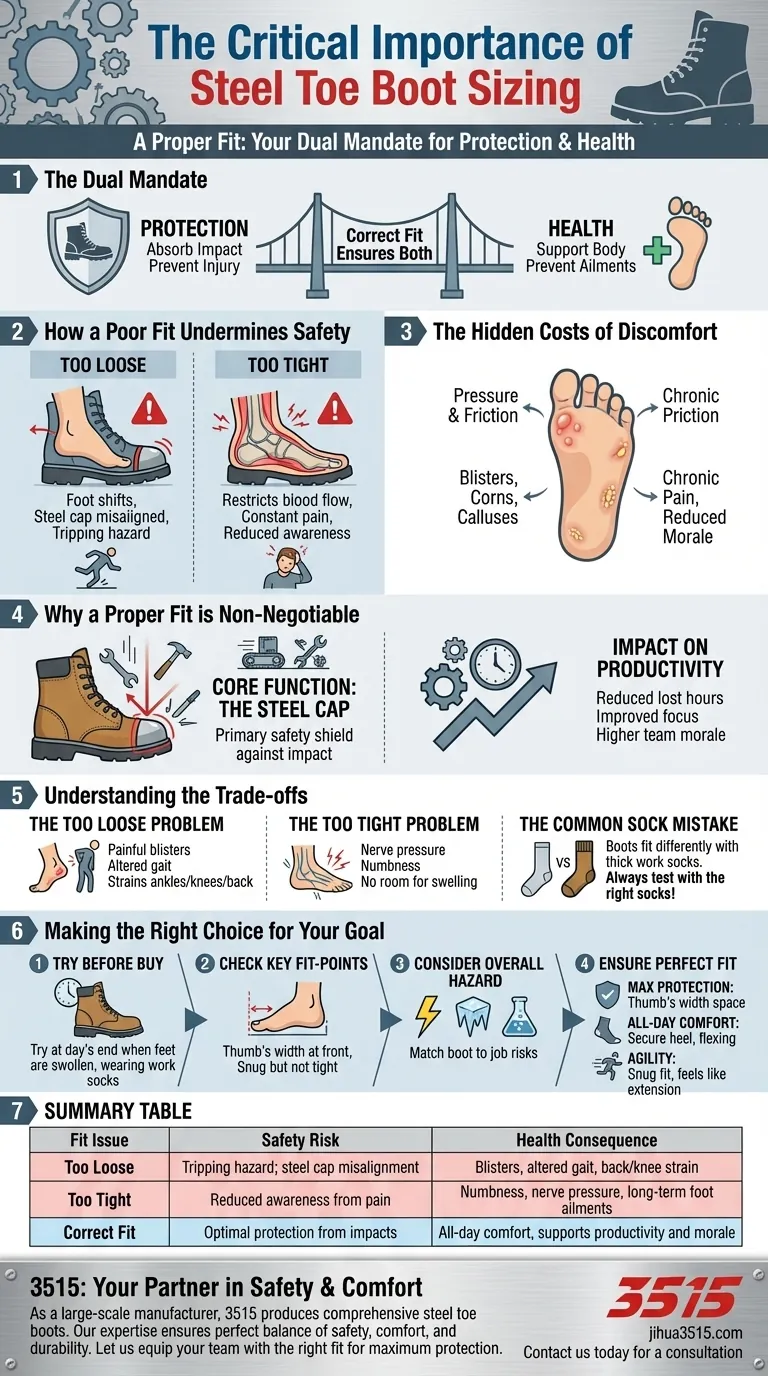
Visual Guide
Related Products
- Durable Steel Toe Safety Boots Wholesale & Custom Manufacturing
- Wholesale Durable Breathable Safety Boots Custom OEM Manufacturer
- Wholesale Durable 6-Inch Work Boots | Custom & Private Label Manufacturer
- Puncture-Resistant Velcro Safety Boots for Wholesale & Custom Manufacturing
- Premium Sport Style Safety Boots for Bulk Orders
People Also Ask
- Why are industrial safety boots with steel toes necessary for machine operators? Essential Foot Protection for Safety
- Why is it mandatory to wear safety shoes with steel toe protection during metal loading? Prevent Crushing Injuries
- What are the main materials used in steel toe safety shoes? A Guide to Protective Footwear Construction
- What are the characteristics of steel toe safety boots? Maximum Protection, Key Trade-offs
- Is it true that steel toes can cause toes to get cut off? Debunking the Dangerous Myth