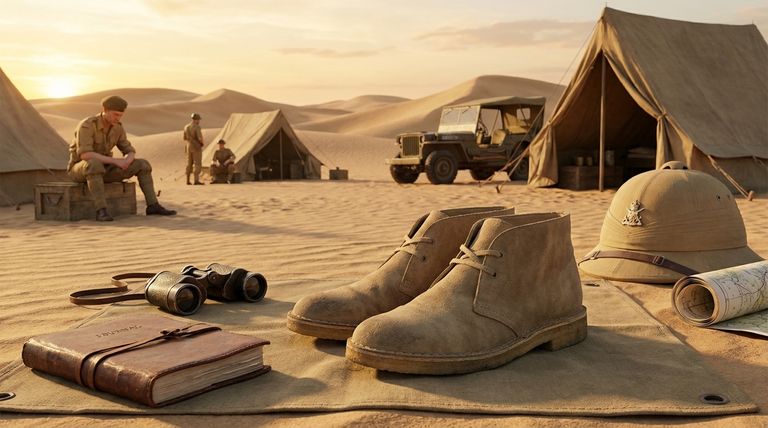
The chukka boot's history is directly tied to the British military, originating with soldiers stationed in India during the era of the British Raj. This simple, ankle-high boot was first adopted for its comfort during off-duty hours and later evolved into an essential piece of equipment for desert campaigns in World War II.
The core connection is one of evolution: the chukka began as a comfortable off-duty shoe for British soldiers in India and was later adapted into the "desert boot," a specialized piece of military footwear proven in the North African campaigns of WWII.
The Origin Story: Polo Fields and Colonial India
The boot's journey from civilian wear to military icon is a story of practicality and comfort. Its design was perfectly suited for the needs of soldiers seeking relief from their standard-issue footwear.
The British Raj Connection
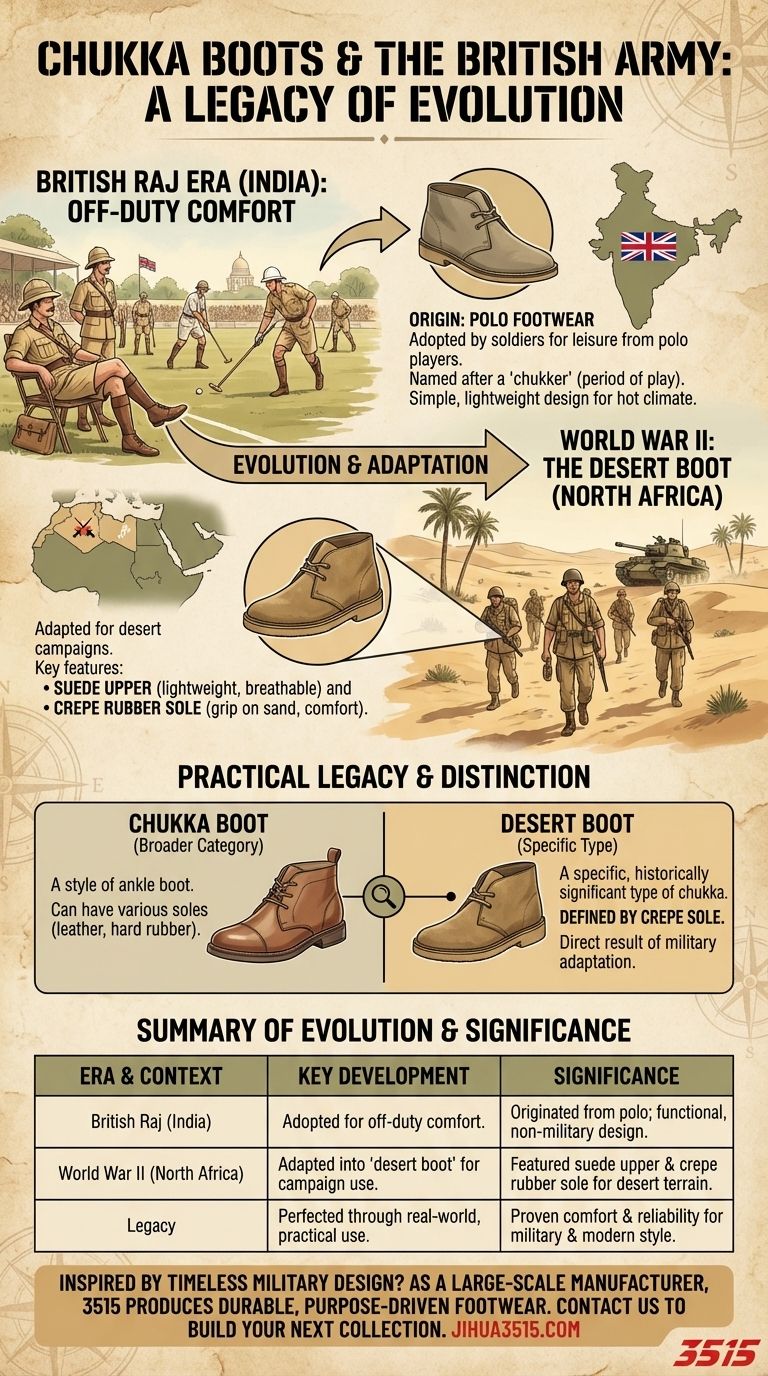
Historians trace the chukka's roots to British India. Soldiers stationed there discovered the boot, which was similar to footwear worn by polo players.
The name "chukka" itself comes from the game of polo, where a "chukker" or "chukka" is a period of play. Soldiers adopted this comfortable style for their leisure time.
Designed for Simplicity and Comfort
The chukka's design was a radical departure from the heavy, rigid military boots of the period. Its ankle-high cut, simple two or three eyelet lacing, and lightweight construction offered unparalleled comfort in the hot climate.
This emphasis on function over formal military style is what allowed it to transition so effectively from off-duty wear to active-duty equipment.
The Evolution into the Desert Boot
The chukka's most famous military application came during the Second World War, where it was adapted for one of the most punishing environments on earth.
From India to North Africa
During the North African Campaign of WWII, British forces required footwear that could handle the intense heat and sandy terrain of the desert.
The chukka boot, with its history of use in warm climates, was the ideal candidate for this adaptation.
The Birth of the 'Desert Boot'
The military-issue version became known as the desert boot. While structurally a chukka, it was defined by two key features perfect for the environment.
It was typically made from a light suede upper, and most critically, it featured a crepe rubber sole. This sole provided grip on sand while remaining lightweight and comfortable for long marches.
Understanding the Practical Legacy
The terms "chukka" and "desert boot" are often used interchangeably, but the military history highlights a key distinction and a legacy of pure functionality.
Chukka vs. Desert Boot
Think of the desert boot as a specific, historically significant type of chukka.
All desert boots are chukkas, but not all chukkas are desert boots. The defining feature of the classic desert boot is its crepe sole, a direct result of its military adaptation for desert warfare. Other chukkas may feature leather or hard rubber soles.
A Legacy of Purpose-Driven Design
The boot's military heritage is not about ceremony or parade grounds. It's about a design so fundamentally practical that it was adopted and refined for soldiers operating in harsh conditions.
Its enduring appeal lies in this very simplicity and proven comfort, a testament to its functional origins.
How This Heritage Informs Your Choice
Understanding the chukka's military lineage helps you appreciate its timeless design and versatility.
- If your primary focus is authenticity: Seek out suede chukkas with a crepe sole to own a direct descendant of the WWII desert boot.
- If your primary focus is versatility: Recognize that the boot’s journey from sport to combat is precisely why it works with everything from jeans to tailored trousers.
The chukka boot remains a classic because its design was perfected through practical, real-world use by soldiers who needed comfort and reliability above all else.
Summary Table:
| Era | Key Development | Significance |
|---|---|---|
| British Raj (India) | Adopted by soldiers for off-duty comfort. | Originated from polo footwear; named after a 'chukker' (period of play). |
| World War II (North Africa) | Adapted into the 'desert boot' for campaign use. | Featured suede uppers and crepe rubber soles for desert terrain. |
| Legacy | A design perfected through real-world, practical use. | Proven comfort and reliability for both military and modern style. |
Inspired by Timeless Military Design?
As a large-scale manufacturer, 3515 produces a comprehensive range of footwear built on a heritage of durability and purpose-driven design, just like the classic chukka. We craft all types of shoes and boots for distributors, brand owners, and bulk clients.
Let us help you build your next collection with reliable, high-quality footwear.
Contact our team today to discuss your manufacturing needs.
Visual Guide
Related Products
- Premium Wholesale Tactical Style Safety Shoes Boots with Quick Lacing
- Wholesale Safety Boots Manufacturer for Custom & Private Label Orders
- Factory Direct Wholesale Rain Boots Durable Waterproof & Fully Customizable
- Wholesale High-Traction Camo Boots - Custom Manufacturer for Brands
- Durable Leather High-Ankle Tactical Boots for Wholesale & Custom Manufacturing
People Also Ask
- How are gait analysis research findings applied to the functional design of safety shoes and tactical boots?
- How does anthropomorphic design influence material selection? Enhance Footwear Performance through Biological Alignment
- How do quality certification standards for safety shoes reduce perceived risk? Buy Online with Technical Certainty
- Why is the synchronization of craftsmanship and UX development emphasized for bulk customization of safety shoes?
- How can specialized footwear mitigate safety risks? High-Volume OEM/ODM Solutions since 1951