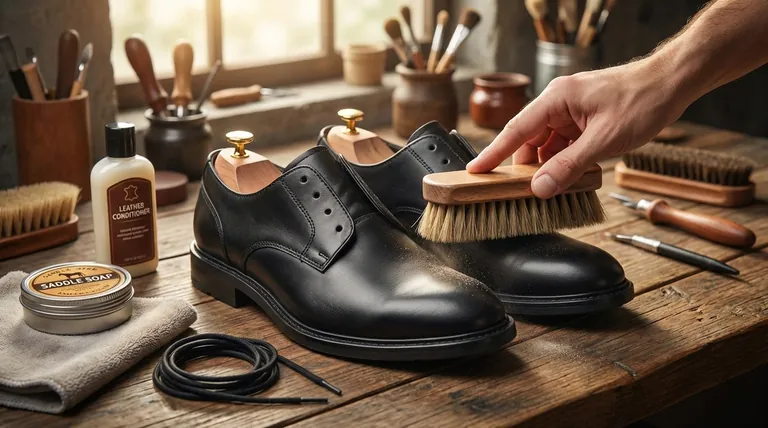
The first step in deep cleaning leather shoes is to prepare the surface by removing the laces and using a dry, soft-bristled brush, like one made of horsehair, to thoroughly remove all loose dirt, dust, and grime. This crucial preparation ensures you aren't grinding abrasive particles into the leather's pores during the wet cleaning phase that follows.
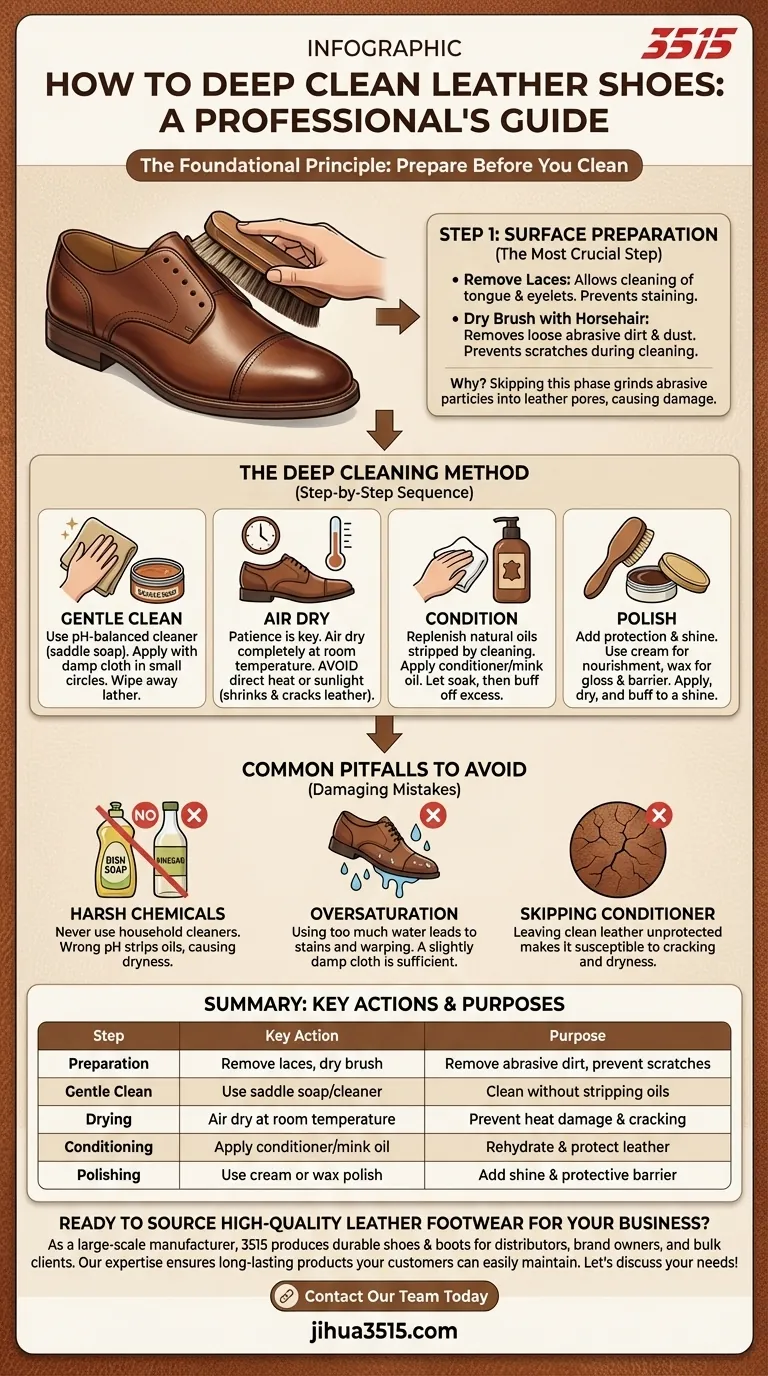
Deep cleaning leather is a restorative process, not just a surface scrub. It involves a critical sequence: preparing the surface by removing loose dirt, gently cleaning with an appropriate soap, rehydrating the material with conditioner, and finally, protecting it with polish.
The Foundational Principle: Prepare Before You Clean
Before any soap or water touches your shoes, a few preparatory actions are essential to ensure a safe and effective clean. Skipping this stage is the most common amateur mistake.
Why Dry Brushing is Non-Negotiable
Think of it like dusting a wooden table before you polish it. Applying a damp cloth to a dusty surface creates a muddy paste that can get pushed into the grain.
The same is true for leather. A vigorous dry brushing removes the larger, abrasive particles of dirt and dust that could otherwise scratch the leather's finish when you begin scrubbing.
Remove Laces and Insert Shoe Trees
Removing the laces allows you to clean the tongue and eyelet areas properly, which often accumulate the most dirt. It also prevents the laces from getting stained by soap or polish.
Inserting wooden shoe trees is highly recommended. They hold the shoe's natural shape, making the surface taut and much easier to clean evenly while also helping to absorb interior moisture.
The Deep Cleaning Method, Step-by-Step
Once the shoe is properly prepared, you can move on to the core cleaning and restoration process. Each step builds upon the last.
Step 1: The Gentle Clean
With the surface dust gone, use a damp, clean cloth (microfiber is ideal) with a small amount of a pH-balanced cleaner.
The best options are saddle soap or a dedicated certified leather cleaner. Apply the soap in small, circular motions, working on one panel of the shoe at a time. Wipe away all lather and residue with a separate clean, damp cloth.
Step 2: The Drying Period
Patience is critical here. Let the shoes air dry completely at room temperature for several hours or overnight.
Never place leather shoes near a radiator, vent, or in direct sunlight to speed up the process. Intense heat will shrink and crack the leather, causing irreparable damage.
Step 3: The Conditioning Phase
Cleaning, especially with soap, strips away some of the leather's natural oils. The conditioning step replenishes this moisture, keeping the material soft, flexible, and preventing cracks.
Apply a small amount of a quality leather conditioner or mink oil with a soft cloth, covering all surfaces of the shoe. Let the conditioner soak in before buffing off any excess with a clean, dry cloth.
Step 4: Polishing for Protection and Shine
Polishing is the final step that adds a layer of protection and restores color and shine.
Cream polish is best for nourishing the leather and restoring pigmentation. Wax polish provides a high-gloss shine and a more robust protective barrier against water and scuffs. Apply polish in small circles, let it dry, and then buff to a shine with a horsehair brush or soft chamois.
Common Pitfalls That Damage Leather
True expertise involves knowing what not to do. Avoiding these common mistakes is just as important as following the steps correctly.
Avoiding Harsh Chemicals
Never use household cleaners, dish soap, or vinegar on your leather shoes. These products have the wrong pH and contain degreasers that will aggressively strip the leather's essential oils, leaving it dry and brittle.
The Dangers of Oversaturation
Using too much water is a primary cause of damage. A slightly damp cloth is all you need. Soaking the leather can lead to water stains and can warp the material as it dries.
The Mistake of Skipping Conditioner
Skipping the conditioning step after a deep clean is like washing your hair without using conditioner. The leather will be clean but left unprotected, dry, and highly susceptible to cracking over time.
How to Apply This to Your Shoes
Your approach can be tailored based on the condition of your shoes and your goal.
- If your primary focus is routine maintenance: A thorough dry brushing after every few wears and conditioning every few months is all you need to preserve the leather.
- If your primary focus is a quick scuff removal: After dry brushing, spot-clean the affected area with a small amount of leather cleaner, then blend the area with a bit of conditioner or cream polish.
- If your primary focus is a full restoration: Follow all steps meticulously, from dry brushing to cleaning, conditioning, and polishing, allowing proper drying time between each phase.
A well-executed cleaning process doesn't just improve your shoes' appearance—it preserves your investment for years to come.
Summary Table:
| Step | Key Action | Purpose |
|---|---|---|
| 1. Preparation | Remove laces, dry brush with horsehair brush | Remove abrasive dirt to prevent scratches |
| 2. Gentle Clean | Use saddle soap or leather cleaner | Clean leather without stripping oils |
| 3. Drying | Air dry at room temperature | Prevent heat damage and cracking |
| 4. Conditioning | Apply leather conditioner/mink oil | Rehydrate and protect the leather |
| 5. Polishing | Use cream or wax polish | Add shine and a protective barrier |
Ready to source high-quality leather footwear for your business? As a large-scale manufacturer, 3515 produces a comprehensive range of durable shoes and boots for distributors, brand owners, and bulk clients. Our expertise ensures your products are built to last and easy for your customers to maintain. Let's discuss your footwear needs – contact our team today to get started!
Visual Guide
Related Products
- Factory Direct Wholesale Leather Comfort Shoes with Dial Closure
- Classic Leather Derby Dress Shoes Wholesale & Custom Manufacturing
- Custom Manufactured Air Cushion Leather Business Shoes for Wholesale
- Wholesale Comfort Leather Business Shoes with Dial Lacing System
- Wholesale Leather Apron Toe Derby Shoes Custom Factory Production
People Also Ask
- What are some common materials used to make men's leather shoes? A Guide to Calfskin, Cordovan & Suede
- How can you waterproof leather shoes? Choose the Right Method for Maximum Protection
- What role do auxiliary materials play in leather shoe product mix optimization? Maximize Profit & Stability
- What are the best practices for storing leather shoes? Preserve Your Investment for Years to Come
- What are the maintenance requirements for leather shoes? A Complete Guide to Longevity