
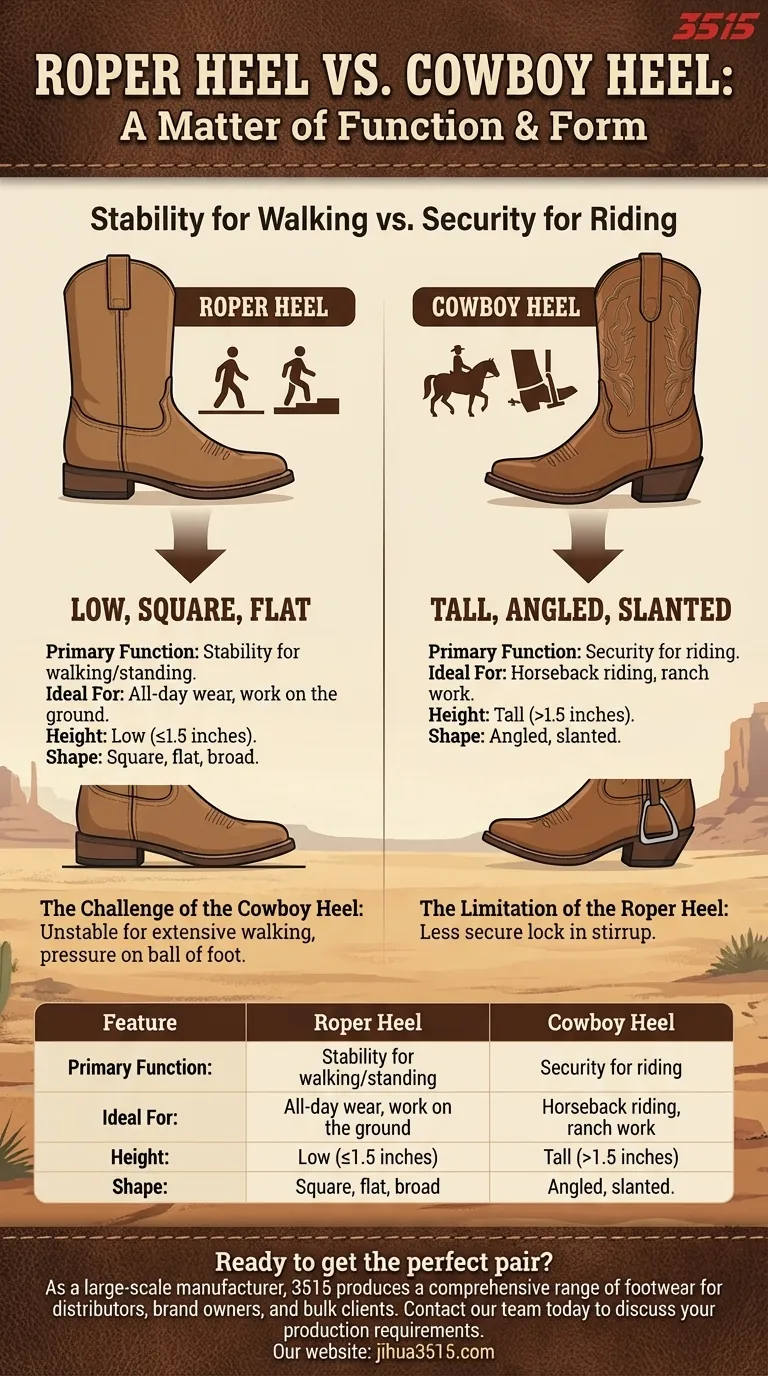
At its core, the difference between a roper heel and a cowboy heel is a matter of function. A roper heel is low, square, and flat, designed for stability and comfort while walking or working on the ground. A cowboy heel is taller and angled, specifically engineered to keep a rider's foot from slipping through a stirrup.
The choice between a roper and a cowboy heel is not merely aesthetic; it is a fundamental decision between stability for walking and security for riding. Each design is a purpose-built solution for a different environment.
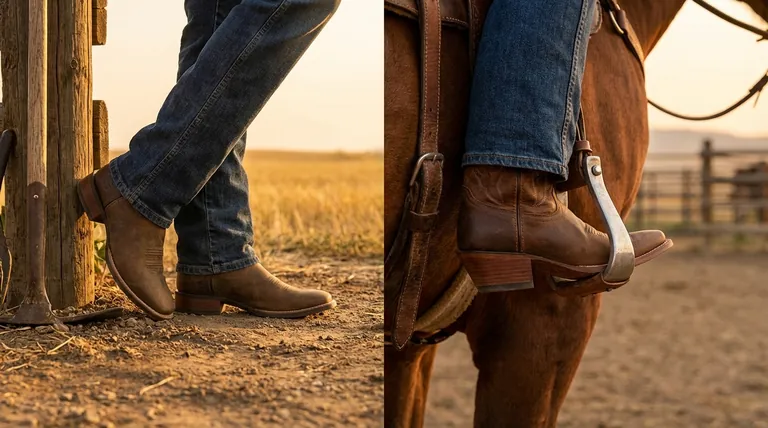
Function Defines Form: A Tale of Two Heels
The design of a boot heel is dictated by the primary task it's meant to perform. Understanding this purpose is key to selecting the right footwear.
The Cowboy Heel: Engineered for the Saddle
The traditional cowboy heel, also known as a riding heel, is distinctly tall and angled. Its height, often 1.5 inches or more, and forward-slanted profile serve a critical safety function.
This design allows the heel to lock into place against a stirrup, preventing the rider's foot from sliding too far forward. This provides leverage and security, which is essential for ranch work and rodeo events.
The Roper Heel: Built for the Ground
In contrast, the roper heel is low, broad, and squared-off, typically measuring 1.5 inches or shorter. Its primary purpose is to provide a stable, comfortable platform for walking.
The wide, flat base maximizes contact with the ground, making it ideal for workers who spend long hours on their feet in fields, on concrete floors, or on slick surfaces. This style is often found on Western work boots and walking boots.
Understanding the Trade-offs
Choosing one heel style means accepting the inherent limitations of the other. There is no single heel that excels at every task.
The Challenge of the Cowboy Heel
The very features that make the cowboy heel perfect for riding make it less suitable for extensive walking.
The height and angle place more pressure on the ball of the foot and can feel unstable on uneven or hard surfaces. While iconic in style, it is not designed for all-day comfort on foot.
The Limitation of the Roper Heel
Conversely, the roper heel's stability on the ground becomes its main drawback in the saddle.
Its low profile and straight edge do not offer the same deep, secure lock in a stirrup as a riding heel. While suitable for casual riding, it is not the preferred choice for high-intensity equestrian activities where stirrup security is paramount.
How to Apply This to Your Needs
Your primary activity should be the deciding factor in your choice. Base your decision on function first and style second.
- If your primary focus is horseback riding: Choose a traditional cowboy heel for its essential safety and control in the stirrup.
- If your primary focus is all-day wear, walking, or standing work: Select a roper heel for its superior stability, support, and long-term comfort.
- If your primary focus is a versatile blend of style and practicality: A roper heel provides a classic Western look while functioning much like a comfortable, everyday shoe.
Ultimately, choosing the right heel transforms your boot from a simple accessory into a purpose-built tool for the task at hand.
Summary Table:
| Feature | Roper Heel | Cowboy Heel |
|---|---|---|
| Primary Function | Stability for walking/standing | Security for riding |
| Height | Low (typically ≤1.5 inches) | Tall (typically >1.5 inches) |
| Shape | Square, flat, and broad | Angled and slanted |
| Ideal For | All-day wear, work on the ground | Horseback riding, ranch work |
Ready to get the perfect pair of boots for your specific needs?
As a large-scale manufacturer, 3515 produces a comprehensive range of footwear for distributors, brand owners, and bulk clients. Whether you need durable boots with stable roper heels for your ground crew or authentic riding boots with secure cowboy heels for your equestrian customers, our production capabilities encompass all types of shoes and boots.
Let us help you equip your customers with purpose-built footwear. Contact our team today to discuss your production requirements.
Visual Guide
Related Products
- Durable Leather Moc Toe Work Boots for Wholesale & Custom Manufacturing
- Durable Steel Toe Safety Boots Wholesale & Custom Manufacturing
- Durable High-Ankle Tactical Boots Wholesale Manufacturer for Custom & Bulk Orders
- Durable Leather High-Ankle Tactical Boots for Wholesale & Custom Manufacturing
- Wholesale Durable Safety Boots | Custom Steel Toe & Puncture-Resistant Manufacturing
People Also Ask
- What are moc toe work boots designed for? Superior Comfort and Mobility for Tradespeople
- What are the key features to look for when purchasing moc toe boots? A Guide to Durability & Fit
- How did moc toe boots originate? A Legacy of Workwear Durability and Style
- What clothing items complement the Outdoorsman/Heritage Look with moc toe boots? Build a Timeless, Rugged Wardrobe
- What types of outfits can moc toe boots be worn with? Versatile Style Guide















