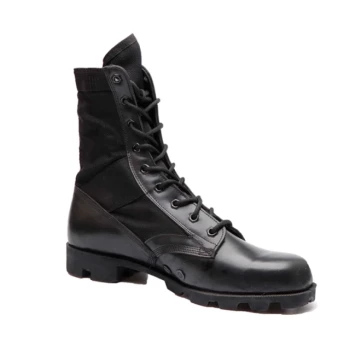
To effectively remove odor from military boots, you must first isolate and clean the insoles separately. Then, neutralize the bacteria inside the boot with a 1:1 solution of white vinegar and water, followed by an overnight treatment with baking soda to absorb any remaining odors and moisture.
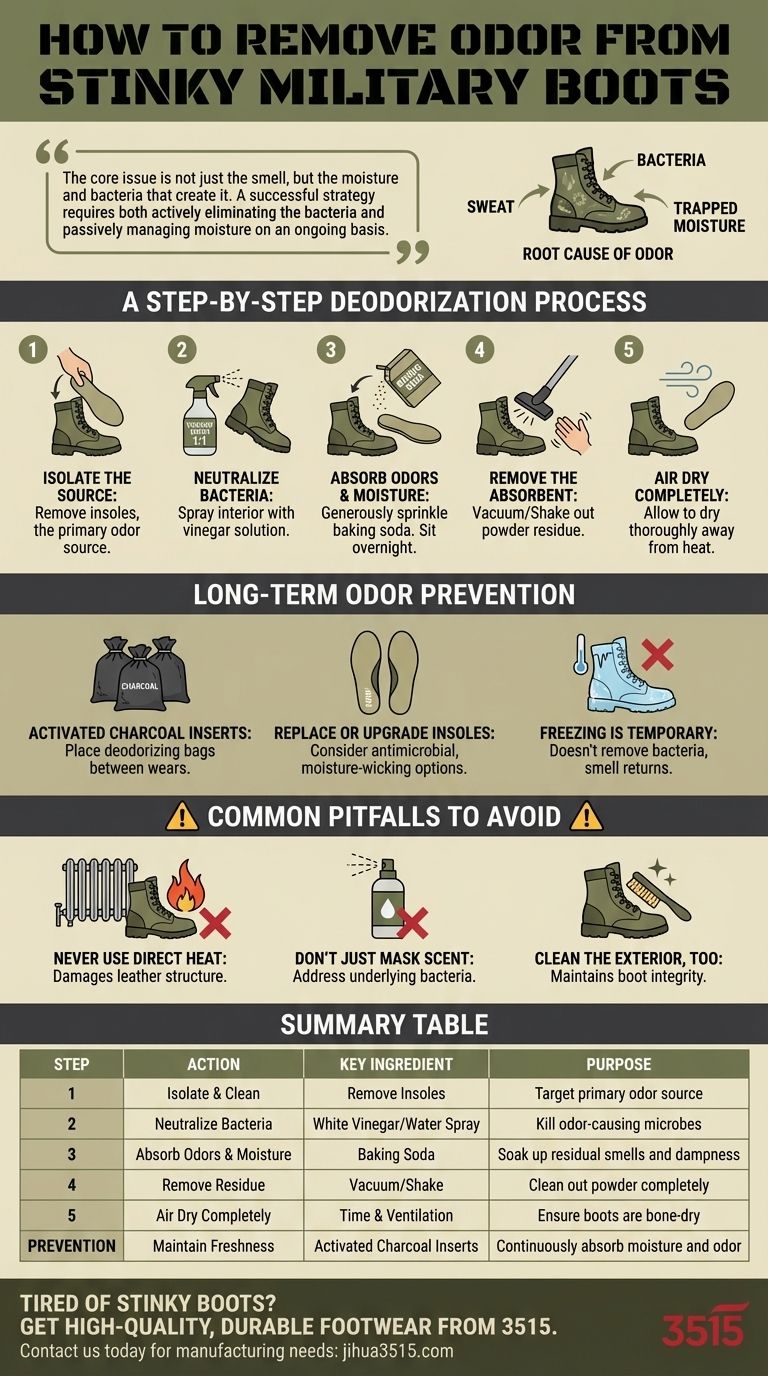
The core issue is not just the smell, but the moisture and bacteria that create it. A successful strategy requires both actively eliminating the bacteria and passively managing moisture on an ongoing basis.
Understanding the Root Cause of Odor
Before treating the problem, it's crucial to understand its origin. The intense environment inside a military boot creates a perfect breeding ground for odor-causing bacteria.
The Role of Sweat and Bacteria
Your feet produce sweat, which is initially odorless. However, the dark, damp, and warm interior of a boot allows bacteria to thrive, breaking down the sweat and producing the distinct, unpleasant smell.
Trapped Moisture is the Enemy
Military boots are built for durability and protection, which often means they have limited ventilation. This traps moisture from sweat, preventing it from evaporating and creating a perpetually damp environment where bacteria flourish.
A Step-by-Step Deodorization Process
A systematic approach is required to fully eliminate odors rather than just masking them. This involves disassembly, deep cleaning, and thorough drying.
Step 1: Isolate the Source
Always begin by removing the laces and, most importantly, the insoles. The insole absorbs the majority of sweat and harbors the highest concentration of bacteria, making it the primary source of odor.
Step 2: Kill Bacteria with a Neutralizing Agent
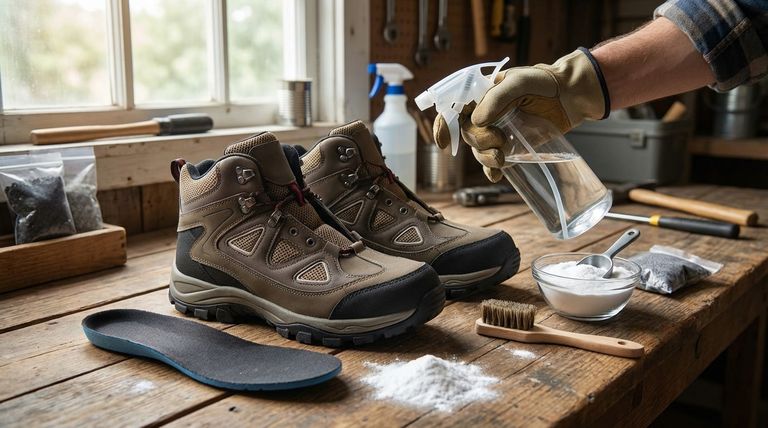
Create a solution of one part white vinegar and one part water in a spray bottle. Lightly spray the entire interior of the boots and both sides of the insoles. The acidity of the vinegar safely kills most odor-causing bacteria.
Step 3: Absorb Lingering Odors and Moisture
Once the vinegar solution has dried, generously sprinkle baking soda directly inside each boot and coat the insoles. Baking soda is excellent at absorbing residual moisture and neutralizing any remaining acidic odors. Let this sit overnight.
Step 4: Remove the Absorbent
The next day, clap the insoles together to remove the baking soda and thoroughly shake out the boots. A vacuum cleaner with a hose attachment is highly effective for removing all powder residue from the boot's interior.
Step 5: Air Dry Completely
Allow the boots and insoles to air dry completely in a well-ventilated area away from direct sunlight or heat, which can damage the leather. Ensure they are bone-dry before reinserting the insoles.
Long-Term Odor Prevention
Once your boots are fresh, the focus shifts to proactive maintenance. Preventing odor is far easier than removing it.
Use Activated Charcoal Inserts
When not in use, place activated charcoal or deodorizing bags inside your boots. These are highly porous and continuously absorb moisture and odor molecules from the air, keeping the boots dry and fresh.
Replace or Upgrade Your Insoles
If the insoles are heavily worn or the odor persists after cleaning, replace them. Modern insoles often have antimicrobial properties and better moisture-wicking capabilities than standard-issue ones.
The Freezing Method: A Temporary Fix
Placing your boots in a sealed plastic bag and freezing them overnight can kill some bacteria. However, this method doesn't remove the dead bacteria and sweat residue, so the smell will likely return quickly once the boots warm up.
Common Pitfalls to Avoid
Mistakes during the cleaning and drying process can damage your boots or lead to ineffective results.
Never Use Direct Heat
Do not place your boots near a radiator, fire, or use a hairdryer to speed up drying. High heat can cause leather to shrink, crack, and become brittle, permanently damaging the boot's structure.
Don't Just Mask the Scent
Scented sprays or dryer sheets only mask the odor temporarily. They do not address the underlying bacterial cause and will eventually wear off, allowing the foul smell to return.
Clean the Exterior, Too
While the odor comes from the inside, maintaining the exterior is also important. Brushing off dirt and cleaning the leather or fabric prevents material breakdown and maintains the boot's integrity.
Making the Right Choice for Your Goal
Your approach should be tailored to the severity of the odor and your long-term goals.
- If your primary focus is a quick refresh for mild odor: Use the baking soda method overnight and place charcoal inserts inside afterward.
- If your primary focus is eliminating strong, persistent odor: Follow the full process of cleaning insoles, spraying with a vinegar solution, and then using baking soda.
- If your primary focus is long-term prevention: Regularly rotate your boots if you have a second pair, use moisture-wicking socks, and always use charcoal deodorizers between wears.
Ultimately, keeping your boots clean, dry, and bacteria-free is the only sustainable solution to odor.
Summary Table:
| Step | Action | Key Ingredient | Purpose |
|---|---|---|---|
| 1 | Isolate & Clean | Remove Insoles | Target primary odor source |
| 2 | Neutralize Bacteria | White Vinegar/Water Spray | Kill odor-causing microbes |
| 3 | Absorb Odors & Moisture | Baking Soda | Soak up residual smells and dampness |
| 4 | Remove Residue | Vacuum/Shake | Clean out powder completely |
| 5 | Air Dry Completely | Time & Ventilation | Ensure boots are bone-dry |
| Prevention | Maintain Freshness | Activated Charcoal Inserts | Continuously absorb moisture and odor |
Tired of Dealing with Stinky Boots? Get High-Quality, Durable Footwear from 3515.
As a large-scale manufacturer, 3515 produces a comprehensive range of footwear for distributors, brand owners, and bulk clients. Our production capabilities encompass all types of durable shoes and boots, designed with performance and longevity in mind.
Let us help you provide your customers with reliable footwear that stands up to the toughest conditions.
Contact us today to discuss your manufacturing needs and discover how we can support your business with high-volume, quality production.
Visual Guide
Related Products
- Durable Military Combat Boots with Water Drainage for Wholesale & OEM
- High-Traction Suede Tactical Boots Wholesale & Custom Manufacturing
- Durable High-Ankle Tactical Boots for Wholesale & Custom Manufacturing
- Durable Mid-Cut Tactical Boots for Wholesale & Private Label
- Wholesale Waterproof Tactical Boots Custom Suede & High-Traction Soles
People Also Ask
- Why must gait validation for military applications be conducted in combat boots? Ensure Data Accuracy for Soldiers
- What are the common types of combat boots? Find the Right Boot for Your Mission
- What factors should be considered when choosing military boots for hiking? Durability vs. Weight for Your Terrain
- What are the key considerations when choosing military boots? Prioritize Compliance, Environment & Fit
- How should the midfoot and heel fit in military boots? Achieve a Snug, Secure Fit for Blister Prevention