
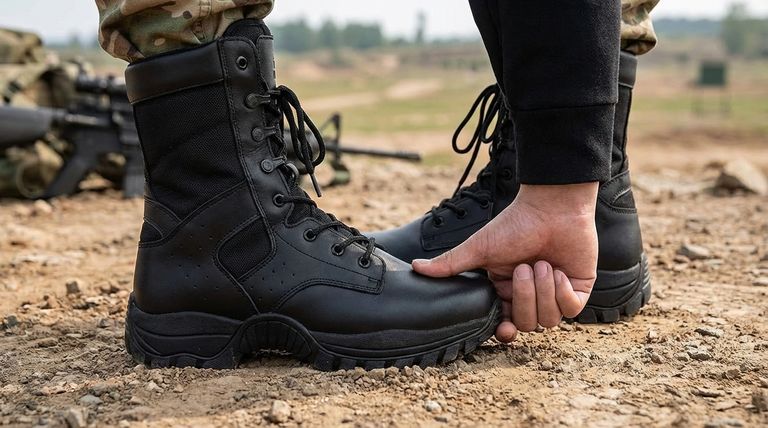
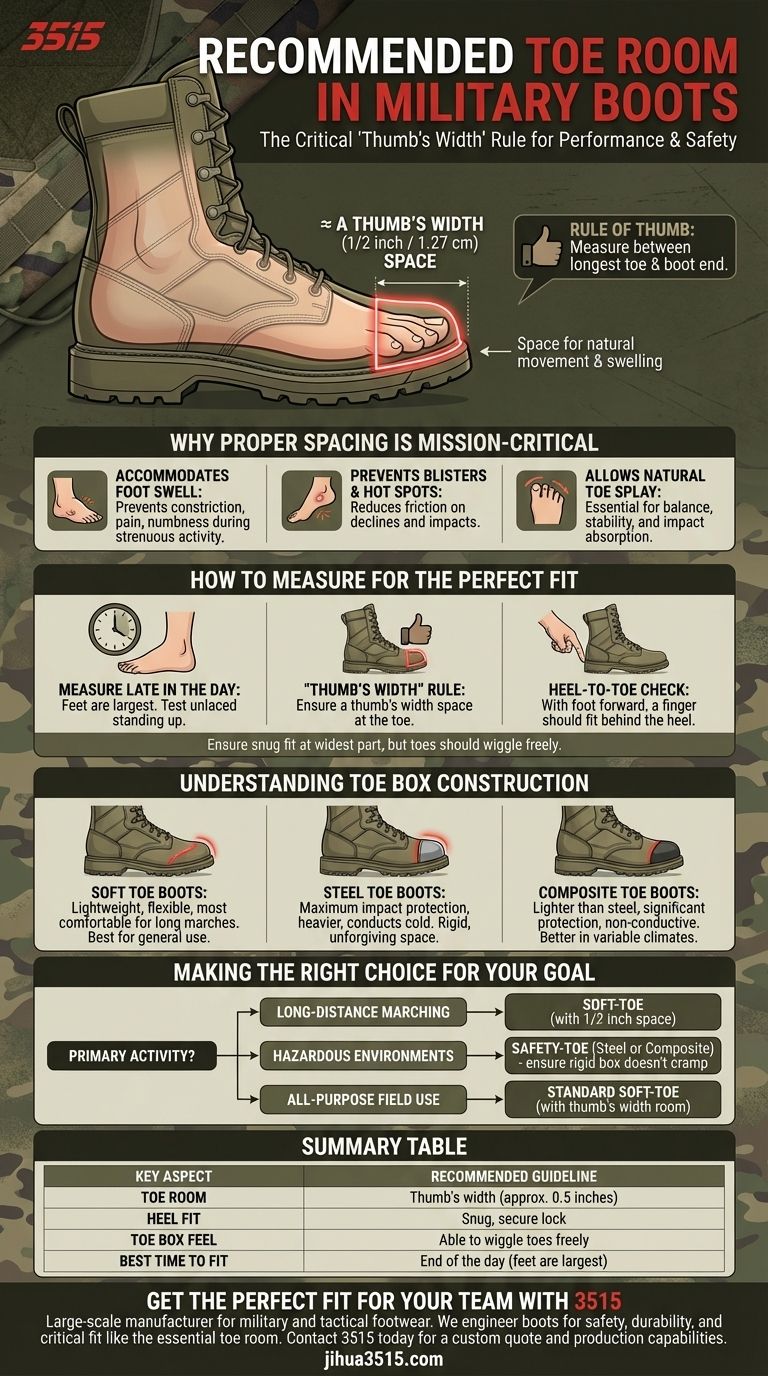
As a rule of thumb, the recommended toe room in military boots is approximately a thumb's width, or about half an inch, between your longest toe and the front of the boot. This critical space ensures your foot can swell and move naturally without causing injury or discomfort during demanding use.
A correctly sized military boot is not just about length; it's about providing a secure fit around the heel and midfoot while allowing ample room in the toe box for natural movement and swelling, which is essential for preventing long-term foot injuries.
Why Proper Spacing is Mission-Critical
A boot that feels "just right" when you first try it on can become a liability in the field. The demands of marching, running, and carrying weight cause significant changes to your feet that a proper fit must accommodate.
The Problem of Foot Swell
During any strenuous activity, your feet naturally swell. A boot without adequate toe room will begin to constrict your foot, leading to pain, numbness, and poor circulation.
Preventing Blisters and Hot Spots
When your toes are jammed against the front of the boot, especially on declines, the constant friction creates blisters and painful hot spots. The recommended space allows your foot to slide forward slightly without impact.
Allowing Natural Toe Splay
A healthy foot strike involves your toes spreading out, or "splaying," to absorb impact and maintain balance. A cramped toe box prevents this, leading to instability and discomfort.
How to Measure for the Perfect Fit
Achieving the correct amount of toe room requires a simple but specific measurement process. Always measure your feet at the end of the day when they are at their largest.
The "Thumb's Width" Rule
While standing upright in the unlaced boot, ensure there is about a thumb's width of space between your longest toe and the end of the boot. This is the most common and reliable field test for length.
The Heel-to-Toe Check
With your foot pushed all the way to the front of the boot, you should be able to slide a finger (about half an inch) between your heel and the back of the boot. This confirms the overall volume is correct.
Accounting for Both Length and Width
A proper fit isn't just about length. The boot should feel snug, but not tight, around the widest part of your foot. You should be able to wiggle your toes freely and comfortably inside the toe box.
Understanding Toe Box Construction
The type of toe protection built into a boot can influence the feel and fit, even if the interior dimensions are correct. This choice depends entirely on your operational requirements.
Soft Toe Boots
These are the standard for most general field use. They are lighter, more flexible, and offer the most comfortable fit for long marches or rucking.
Steel Toe Boots
Required for environments with a high risk of impact or crushing injuries, such as on naval vessels. While providing maximum protection, they are heavier, conduct cold, and have a rigid, unforgiving toe box.
Composite Toe Boots
A modern alternative to steel, composite toes offer significant impact protection but are much lighter. They do not conduct heat or cold, making them a more comfortable choice for safety-rated boots in variable climates.
Making the Right Choice for Your Goal
Selecting the right boot and ensuring a proper fit comes down to your primary activity.
- If your primary focus is long-distance marching: Prioritize a soft-toe boot with a confirmed half-inch of space to prevent swelling-related injuries.
- If your primary focus is working in hazardous environments: You must use a safety-toe boot (steel or composite), paying extra attention to ensure the rigid toe box doesn't cramp your toes.
- If your primary focus is all-purpose field use: A standard soft-toe boot with a thumb's width of toe room provides the best balance of protection, comfort, and durability.
Ultimately, the right fit is the one that allows your foot to function naturally under stress, protecting you from injury and enabling peak performance.
Summary Table:
| Key Aspect | Recommended Guideline |
|---|---|
| Toe Room | Thumb's width (approx. 0.5 inches) |
| Heel Fit | Snug, secure lock |
| Toe Box Feel | Able to wiggle toes freely |
| Best Time to Fit | End of the day (feet are largest) |
Get the Perfect Fit for Your Team with 3515
As a large-scale manufacturer, 3515 produces a comprehensive range of military and tactical footwear for distributors, brand owners, and bulk clients. Our expertise ensures every boot is engineered for the perfect balance of safety, durability, and critical fit—like the essential thumb's width of toe room.
Let us provide your personnel with boots that protect against injury and enable peak performance in the field.
Contact 3515 today for a custom quote and learn more about our production capabilities for all types of shoes and boots.
Visual Guide
Related Products
- Durable Military Combat Boots with Water Drainage for Wholesale & OEM
- High-Traction Suede Tactical Boots Wholesale & Custom Manufacturing
- Durable High-Ankle Tactical Boots for Wholesale & Custom Manufacturing
- Durable Mid-Cut Tactical Boots for Wholesale & Private Label
- Wholesale Waterproof Tactical Boots Custom Suede & High-Traction Soles
People Also Ask
- Why must gait validation for military applications be conducted in combat boots? Ensure Data Accuracy for Soldiers
- What are the common types of combat boots? Find the Right Boot for Your Mission
- What factors should be considered when choosing military boots for hiking? Durability vs. Weight for Your Terrain
- What are the key considerations when choosing military boots? Prioritize Compliance, Environment & Fit
- How should the midfoot and heel fit in military boots? Achieve a Snug, Secure Fit for Blister Prevention


















