Properly storing your Goodyear welt shoes is the most critical step in preserving your investment. The best method involves using cedar shoe trees to maintain shape and absorb moisture, placing the shoes in a breathable dust bag or their original box, and keeping them in a cool, dry environment away from direct sunlight.
Goodyear welt shoes are built for longevity, and their storage should be an active process of preservation, not a passive act of putting them away. The goal is to consistently combat the three primary forces of decay: moisture, shape deformation, and environmental damage from light and dust.
The Core Principles of Proper Shoe Storage
Understanding why certain storage methods are recommended is key to protecting the leather, cork, and stitching that make your shoes a durable asset. Each step directly counteracts a specific threat.
Combating Deformation with Shoe Trees
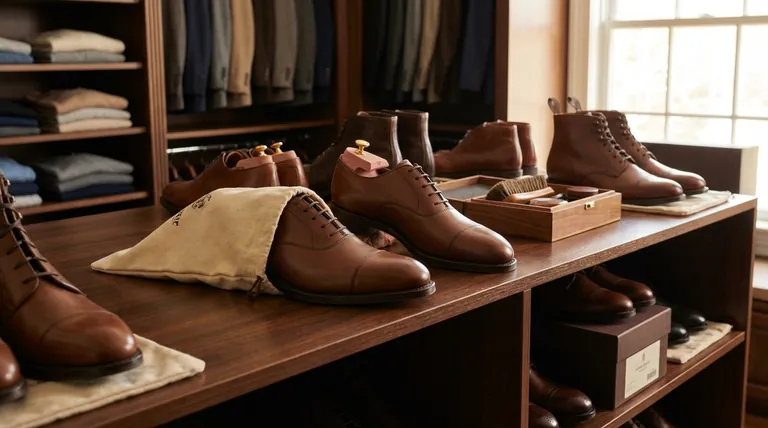
A quality pair of cedar shoe trees is the single most important storage tool you can own. As you wear your shoes, the leather warms and flexes, creating creases across the vamp.
Shoe trees gently stretch the leather back into its original shape, smoothing out these creases and preventing them from becoming deep, permanent cracks over time.
Managing Moisture and Humidity
Leather is a natural, porous material that absorbs moisture from your feet and the environment. Storing shoes without allowing them to dry properly degrades the leather and can lead to odor and rot.
Unfinished cedar shoe trees are essential because they naturally draw moisture out of the leather lining, allowing the shoe to dry completely from the inside out. Storing them in a cool, dry place prevents ambient humidity from causing damage.
Preventing Environmental Damage
Sunlight and dust are silent destroyers of quality footwear. The UV radiation in direct sunlight can dry out, crack, and discolor the leather in a remarkably short time.
Dust accumulation can draw essential oils out of the leather, leading to dryness. Storing your shoes in breathable dust bags or their original shoebox provides a crucial barrier against both of these threats.
Common Pitfalls to Avoid
As important as knowing what to do is knowing what not to do. These common mistakes can undo all your efforts and significantly shorten the life of your shoes.
The Danger of Plastic Containers
Never store leather shoes in a plastic box or sealed bag. While it may seem like a good way to protect them from dust, plastic traps moisture. This creates a humid microclimate perfect for mildew and mold growth, which can permanently ruin the leather.
The Impact of Stacking and Crowding
Avoid stacking your shoes on top of one another or crowding them tightly on a rack. This pressure can misshape the uppers and scuff the finish, causing physical damage that even shoe trees may not be able to correct.
Storing Shoes Immediately After Wear
Always allow your shoes to air out for a brief period after taking them off before inserting shoe trees. More importantly, if your shoes get significantly wet, let them air dry naturally away from any direct heat source for at least 24 hours before storing them.
A Simple Checklist for Maximizing Lifespan
Tailor your storage routine to how you use your shoes to ensure they are always protected, whether they are in daily rotation or stored for the season.
- If you wear them regularly: Immediately insert cedar shoe trees after taking them off and allow them to rest for at least one full day before their next wear.
- If you are storing them for the season: First, clean and condition the leather. Then, insert shoe trees and place them in a breathable dust bag or shoebox in a stable, climate-controlled area.
- If they are exposed to rain or snow: Allow them to dry naturally on their side (to let the sole breathe) and away from heat for 24-48 hours before inserting shoe trees.
This simple routine ensures your investment pays dividends in style and durability for years to come.
Summary Table:
| Storage Step | Purpose | Key Tool |
|---|---|---|
| Use Shoe Trees | Maintains shape & smooths creases | Cedar Shoe Trees |
| Control Moisture | Absorbs internal moisture & prevents rot | Breathable Storage (Dust Bag/Box) |
| Protect from Environment | Prevents UV damage & dust accumulation | Cool, Dry Location |
Need a reliable source for high-quality footwear? As a large-scale manufacturer, 3515 produces a comprehensive range of durable shoes and boots for distributors, brand owners, and bulk clients. Let us help you build a robust inventory with our expert production capabilities. Contact our team today to discuss your needs!
Visual Guide

Related Products
- Durable Goodyear Welt Leather Work Boots for Wholesale & Private Label
- Wholesale Durable Leather Work Boots | 8-Inch Goodyear Welt Manufacturer
- Wholesale Durable & Breathable Training Shoes for Custom Brands
- Custom OEM Training Shoes Wholesale Manufacturer Durable & Breathable
- Lightweight Breathable Training Shoes for Wholesale & Custom OEM Manufacturing
People Also Ask
- What is the difference between full-grain and top-grain leather? Premium Material Guide for Boot Manufacturers
- What are the advantages of leather as an upper material for work boots? Unmatched Durability & Custom Comfort
- Why is it important to waterproof leather work boots? Protect Your Investment and Performance
- How should new leather work boots be broken in? A Guide to Comfort and Durability
- What are the advantages of leather uppers in work boots? Unmatched Durability & Protection