
At its core, Goodyear welt construction is a superior method for attaching the upper of a shoe to its sole. The process involves stitching the upper to a distinct strip of leather or rubber, known as the welt, which is then stitched to the outsole, creating a remarkably durable and water-resistant bond.
The true significance of a Goodyear welt is not just its strength, but its brilliant separation of stitches. This allows the sole to be replaced multiple times without ever compromising the shoe's upper, making it the foundation for footwear built to last a lifetime.
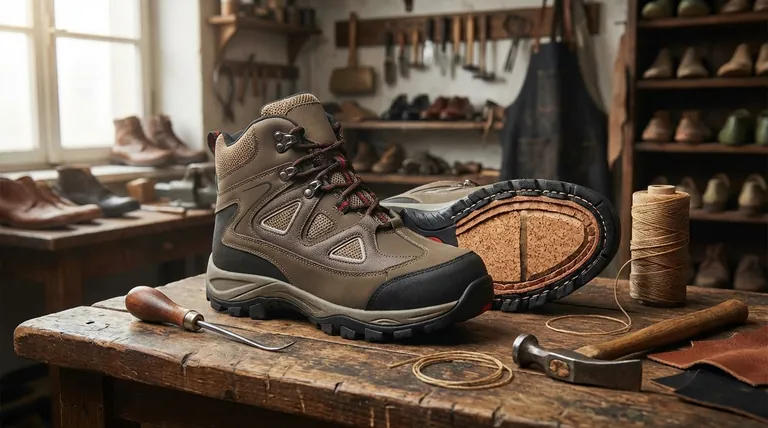
How Goodyear Welt Construction Actually Works
Understanding the process reveals why this method is revered for its craftsmanship and durability. It's a multi-step technique that locks the key components of the shoe together mechanically, rather than just with glue.
The Role of the Welt
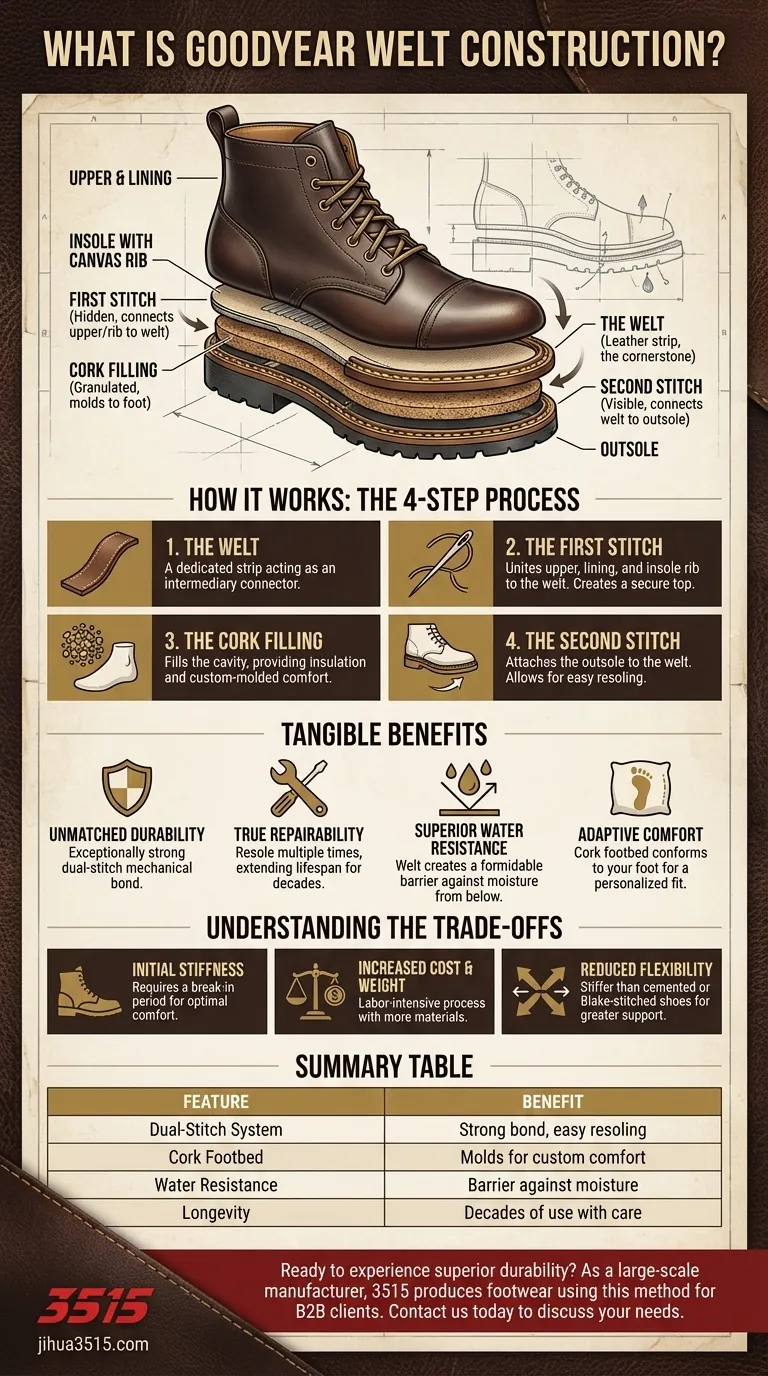
The welt is the cornerstone of this entire construction. It's a dedicated strip of material, typically leather, that runs along the perimeter of the sole's edge.
Its sole purpose is to act as an intermediary, providing a secure surface to stitch both the upper and the outsole to, without ever having one stitch pass through both.
The First Stitch: Uniting the Upper and Insole
The process begins by stitching the shoe's upper, lining, and a canvas rib (which is cemented to the insole) to the welt.
This first, hidden stitch creates a secure and unified top half of the shoe, forming a cavity in the center.
The Cork Filling: Creating a Custom Footbed
This cavity between the insole and the outsole is filled with a layer of granulated cork.
Cork is lightweight, an excellent insulator, and provides cushioning. Crucially, over time, it compresses and molds to the unique shape of your foot, creating a custom-fit footbed.
The Second Stitch: Attaching the Outsole
Finally, the outsole is attached by stitching it directly to the welt. This is the visible stitch you see running around the top edge of the sole.
Because this stitch only connects the outsole to the welt, a cobbler can easily cut it and replace the worn-out sole without ever disturbing the critical connection that holds the upper together.
The Tangible Benefits of This Method
The complexity of the Goodyear welt process directly translates into clear advantages for the wearer, justifying its place in high-quality footwear.
Unmatched Durability and Longevity
The dual-stitching system creates an exceptionally strong and stable shoe. This mechanical bond is far more robust than the chemical bonds of cemented or glued soles.
True Repairability
This is the most significant benefit. The ability to resole the footwear multiple times dramatically extends its lifespan. You can wear out the sole completely and have it replaced, allowing a high-quality leather upper to last for decades.
Superior Water Resistance
The welt creates a formidable barrier between the upper and the sole, making it very difficult for water to penetrate the shoe from below. While not fully waterproof, it is significantly more water-resistant than other common construction methods.
Adaptive Comfort Over Time
The cork footbed is initially firm, but as you wear the shoe, it conforms to the pressure points of your foot. This creates a personalized fit that offers exceptional support and comfort.
Understanding the Trade-offs
No construction method is perfect for every situation. Being an informed buyer means recognizing the potential downsides.
The Initial Stiffness and Break-in Period
The robust materials and complex construction result in a shoe that is often stiff out of the box. The cork needs time to mold, meaning a break-in period is almost always required to achieve optimal comfort.
Increased Cost and Weight
Goodyear welting is a labor-intensive process that uses more materials than simpler methods. This results in a higher initial purchase price and a heavier, more substantial shoe.
Reduced Flexibility
Compared to a shoe with a Blake stitch or a cemented sole, a Goodyear welted shoe is less flexible. This is a direct trade-off for its superior support and durability.
Making the Right Choice for Your Goal
Deciding if Goodyear welted footwear is for you depends entirely on your priorities.
- If your primary focus is maximum longevity and value over time: Goodyear welt is the definitive choice, as its repairability offers the lowest long-term cost of ownership.
- If your primary focus is out-of-the-box comfort and light weight: You may prefer a cemented or Blake-stitched shoe, but understand you are sacrificing durability and water resistance.
- If your primary focus is performance in wet or demanding conditions: The structural integrity and water resistance of a Goodyear welt provide a clear and reliable advantage.
Choosing Goodyear welted footwear is an investment in craftsmanship that pays dividends in durability, comfort, and enduring style.
Summary Table:
| Feature | Benefit |
|---|---|
| Dual-Stitch System | Creates a strong bond between upper and sole, allowing for easy resoling. |
| Cork Footbed | Molds to your foot over time for a custom, comfortable fit. |
| Water Resistance | The welt acts as a barrier, making it harder for moisture to penetrate. |
| Longevity | Designed to last for decades with proper care and sole replacements. |
Ready to experience the superior durability of Goodyear welt construction?
As a large-scale manufacturer, 3515 produces a comprehensive range of footwear using this time-tested method for distributors, brand owners, and bulk clients. Our production capabilities encompass all types of durable shoes and boots built to last.
Contact us today to discuss your footwear needs and discover how we can deliver lasting value and quality for your business.
Visual Guide
Related Products
- Durable Goodyear Welt Leather Work Boots for Wholesale & Private Label
- Wholesale Durable Leather Work Boots | 8-Inch Goodyear Welt Manufacturer
- Durable Leather Work Boots Wholesale Manufacturer & Custom Factory
- Wholesale Durable & Breathable Training Shoes for Custom Brands
- Premium Lightweight Safety Shoes for Wholesale & Bulk Orders
People Also Ask
- What is the difference between full-grain and top-grain leather? Premium Material Guide for Boot Manufacturers
- What are the advantages of leather as an upper material for work boots? Unmatched Durability & Custom Comfort
- Why is it important to waterproof leather work boots? Protect Your Investment and Performance
- How should new leather work boots be broken in? A Guide to Comfort and Durability
- What are the advantages of leather uppers in work boots? Unmatched Durability & Protection














