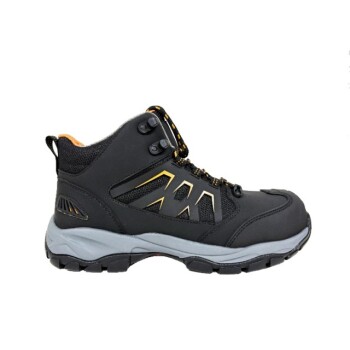
In short, industries with minimal risk of heavy impact or compression injuries benefit most from soft-toe boots. These roles, common in sectors like light warehousing, retail, and general office or service work, prioritize all-day comfort and agility over the heavy-duty protection required in more hazardous environments.
The decision to use soft-toe boots is not about the industry itself, but about a careful assessment of the specific job's daily hazards. They are the ideal choice only when the risk of heavy falling objects or crushing forces is negligible.
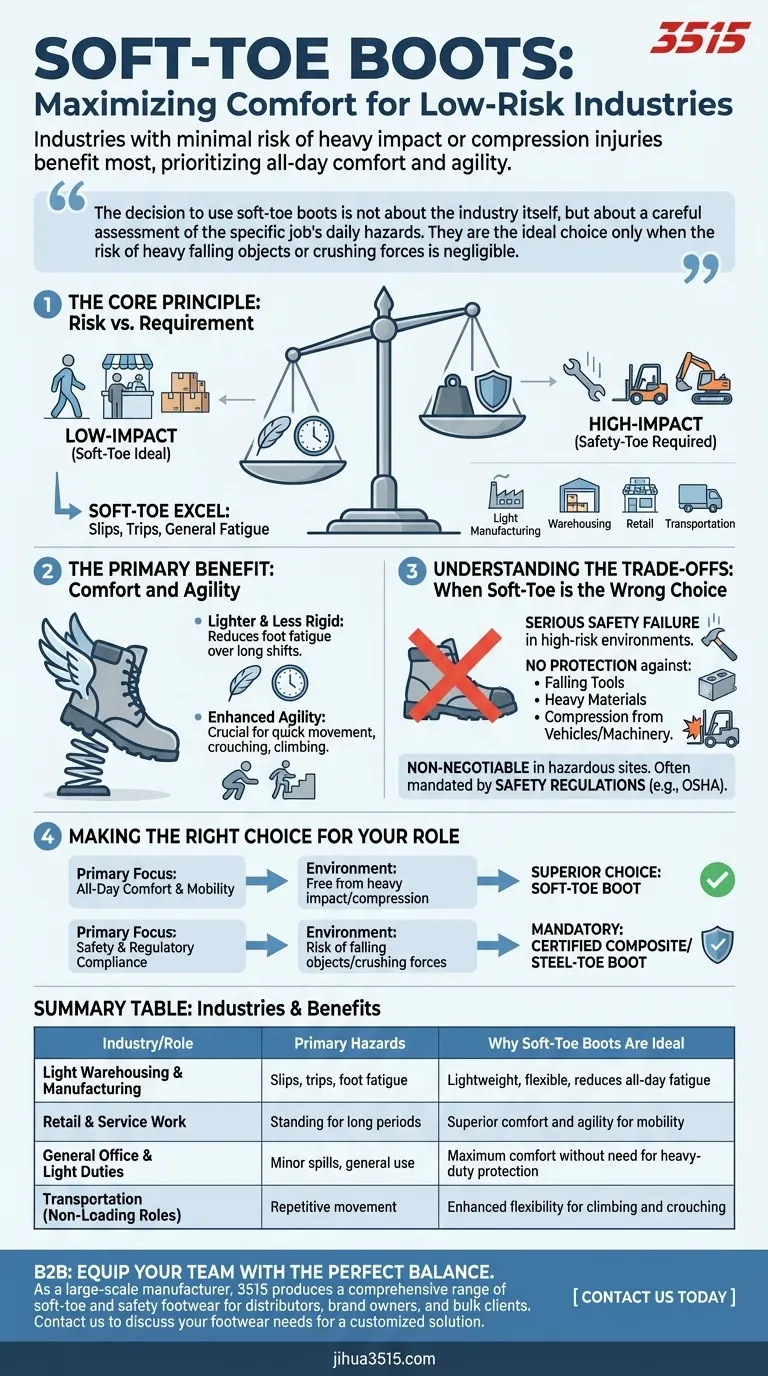
The Core Principle: Risk vs. Requirement
The fundamental choice in work footwear comes down to a simple question: What is the real, day-to-day risk profile of the job? A boot is a tool, and you must select the right tool for the task at hand.
Defining "Low-Impact" Environments
Soft-toe boots excel in environments where the primary hazards are slips, trips, or general foot fatigue, not acute impact.
This includes roles in light manufacturing, warehousing, retail, and transportation, where an employee might be on their feet all day but is not handling materials heavy enough to cause a crush injury.
The Primary Benefit: Comfort and Agility
The main advantage of forgoing a protective toe cap is a significant increase in comfort and flexibility.
Soft-toe boots are lighter and less rigid, which reduces foot fatigue over long shifts. This agility is crucial for workers who need to move quickly, crouch, or climb frequently.
Understanding the Trade-offs: When Soft-Toe Is the Wrong Choice
Choosing a soft-toe boot for a high-risk environment is a serious safety failure. Objectivity requires acknowledging where their protective limits lie.
The Clear Line: Impact and Compression Hazards
If a job involves moving heavy objects, operating heavy machinery, or working on construction sites, a soft-toe boot is entirely inappropriate.
These boots offer no protection against falling tools, heavy materials, or compression from vehicles like forklifts. In such cases, a composite or steel-toe boot is non-negotiable and often mandated by safety regulations.
Compliance and Employer Standards
Many job sites have specific safety standards, such as those from the Occupational Safety and Health Administration (OSHA), that legally require footwear with a certified protective toe cap.
Wearing a soft-toe boot in such a setting not only puts you at risk but may also violate company policy and official safety protocols.
Making the Right Choice for Your Role
To determine the correct footwear, analyze the specific tasks and environment rather than relying on a broad industry label.
- If your primary focus is all-day comfort and mobility: A soft-toe boot is the superior choice, provided your work environment is free from heavy impact or compression hazards.
- If your primary focus is safety and regulatory compliance: You must choose a certified composite or steel-toe boot if your job involves any risk of heavy falling objects or crushing forces.
Ultimately, the right boot is the one that correctly matches its protective features to your daily operational risks.
Summary Table:
| Industry/Role | Primary Hazards | Why Soft-Toe Boots Are Ideal |
|---|---|---|
| Light Warehousing & Manufacturing | Slips, trips, foot fatigue | Lightweight, flexible, reduces all-day fatigue |
| Retail & Service Work | Standing for long periods | Superior comfort and agility for mobility |
| General Office & Light Duties | Minor spills, general use | Maximum comfort without need for heavy-duty protection |
| Transportation (Non-Loading Roles) | Repetitive movement | Enhanced flexibility for climbing and crouching |
Equip your team with the perfect balance of comfort and performance. As a large-scale manufacturer, 3515 produces a comprehensive range of soft-toe and safety footwear for distributors, brand owners, and bulk clients. Whether you need lightweight boots for retail staff or durable options for light industrial roles, our production capabilities cover all types of shoes and boots to meet your exact specifications. Contact us today to discuss your footwear needs and receive a customized solution that enhances worker comfort and productivity.
Visual Guide
Related Products
- Durable Leather Moc Toe Work Boots for Wholesale & Custom Manufacturing
- Wholesale Durable Safety Boots Manufacturer Customizable Steel Toe Work Boots
- Durable Leather Safety Boots for Wholesale & Custom OEM Manufacturing
- Puncture-Resistant Velcro Safety Boots for Wholesale & Custom Manufacturing
- Wholesale Customizable Safety Boots Durable & Protective Footwear Manufacturing
People Also Ask
- What are moc toe work boots designed for? Superior Comfort and Mobility for Tradespeople
- What are the key features to look for when purchasing moc toe boots? A Guide to Durability & Fit
- How did moc toe boots originate? A Legacy of Workwear Durability and Style
- What clothing items complement the Outdoorsman/Heritage Look with moc toe boots? Build a Timeless, Rugged Wardrobe
- What types of outfits can moc toe boots be worn with? Versatile Style Guide