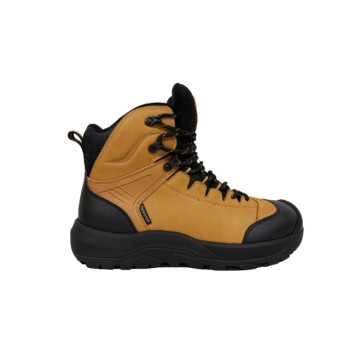
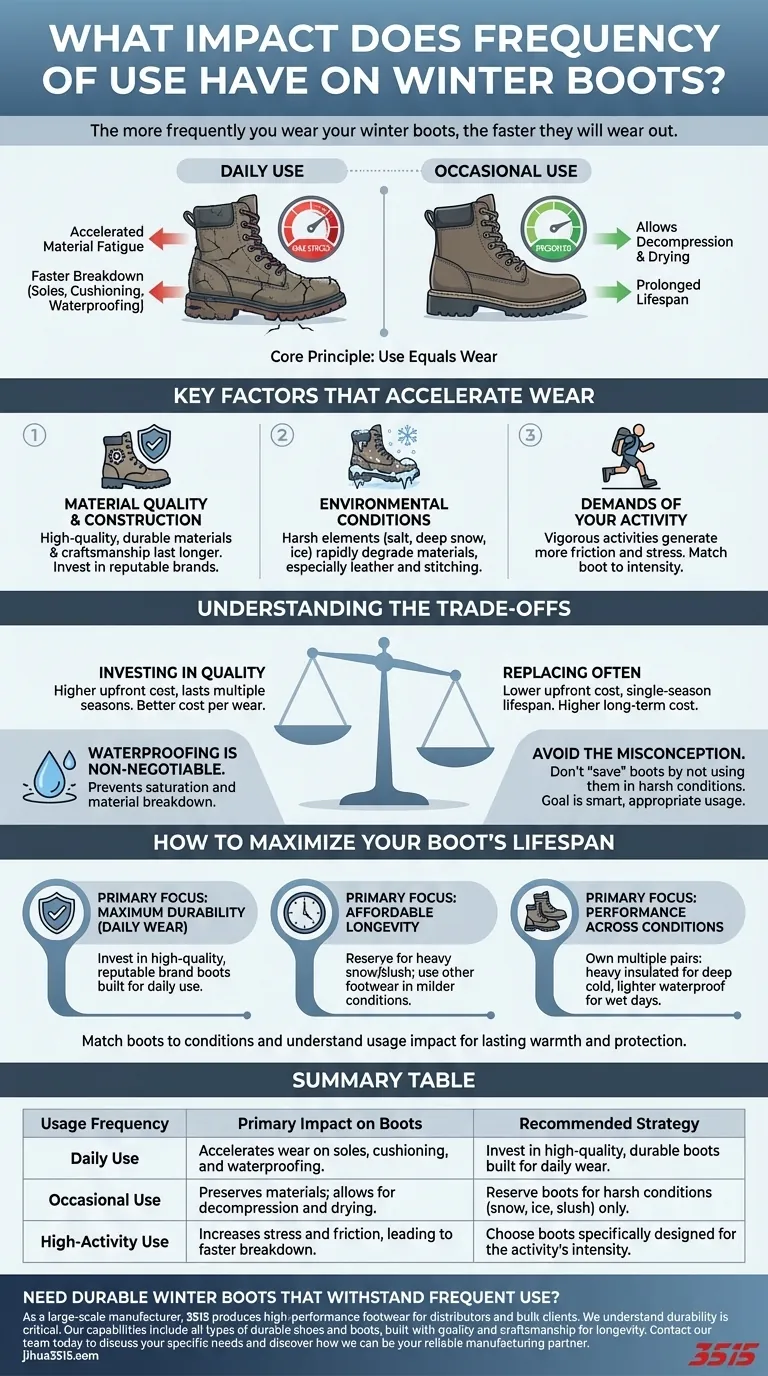
Simply put, the more frequently you wear your winter boots, the faster they will wear out. Daily use subjects the materials to constant stress, abrasion, and compression, significantly shortening their lifespan compared to reserving them for only the most necessary winter conditions.
While frequency of use is a primary driver of wear, the true lifespan of your boots is determined by a combination of usage habits, the quality of their materials, and the harshness of the conditions they face.
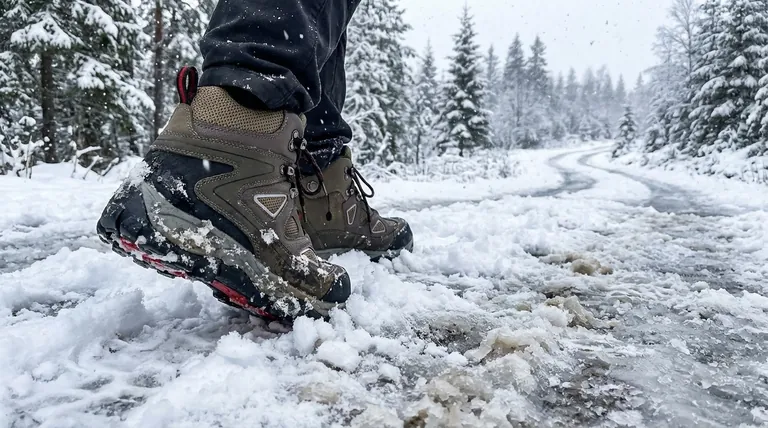
The Core Principle: Use Equals Wear
Understanding how usage impacts your boots is the first step toward maximizing their value. Every step you take contributes to the gradual breakdown of the materials.
The Impact of Daily Use
When worn daily, boot components like the outsole, midsole cushioning, and waterproof membranes are under constant strain. This consistent pressure and flexion accelerates material fatigue, leading to cracks, leaks, and a loss of support much sooner.
Occasional Use as a Preservation Strategy
Reserving your winter boots for their intended purpose—heavy snow, slush, and extreme cold—is the most effective way to prolong their life. This allows the materials, especially insulation and cushioning, time to decompress and dry out between uses.
Key Factors That Accelerate Wear
Frequency is just one part of the equation. Several other factors can dramatically speed up the degradation of your winter boots, turning a multi-season investment into a single-season expense.
Material Quality and Construction
High-quality boots made with durable materials and superior craftsmanship will inherently last longer under the same usage conditions. Investing in reputable brands known for durability is a direct investment in the longevity of your footwear.
The Role of Environmental Conditions
The environment your boots face is critical. Harsh conditions involving deep snow, ice, and especially road salt can rapidly accelerate wear and tear. Salt is particularly corrosive to leather, stitching, and even some synthetic materials.
The Demands of Your Activity
The type of activity also matters. Vigorous activities like hiking or running generate more friction and stress on the boot than casual walking. Using a boot designed for the specific intensity of your activity is key.
Understanding the Trade-offs
Making your boots last involves balancing cost, purpose, and usage patterns. There is no single perfect strategy for everyone.
Investing in Quality vs. Replacing Often
A high-quality, expensive boot may withstand daily wear for several seasons. A cheaper, lower-quality option might not even survive one winter of daily use. Consider the "cost per wear" to determine the true value of your investment.
Waterproofing is Non-Negotiable
Waterproof boots consistently last longer in wet winter conditions than non-waterproof options. Moisture saturation breaks down materials, compromises insulation, and can lead to premature failure.
The Misconception of "Saving" Your Boots
While limiting use preserves your boots, remember they are tools designed for a specific job. Not wearing your boots in harsh conditions to "save" them defeats their purpose. The goal is smart, appropriate usage, not non-usage.
How to Maximize Your Boot's Lifespan
By aligning your strategy with your primary needs, you can get the best possible performance and value from your winter footwear.
- If your primary focus is maximum durability for daily wear: Invest in a high-quality boot from a reputable brand known for durable materials and waterproof construction.
- If your primary focus is making an affordable pair last longer: Reserve them specifically for days with heavy snow or slush, and opt for other footwear in milder conditions.
- If your primary focus is performance across different conditions: Consider owning more than one pair, such as a heavily insulated boot for deep cold and a lighter waterproof hiker for warmer, wet days.
By matching your boots to the conditions and understanding the impact of your usage, you can ensure your feet stay warm, dry, and protected for many winters to come.
Summary Table:
| Usage Frequency | Primary Impact on Boots | Recommended Strategy |
|---|---|---|
| Daily Use | Accelerates wear on soles, cushioning, and waterproofing. | Invest in high-quality, durable boots built for daily wear. |
| Occasional Use | Preserves materials; allows for decompression and drying. | Reserve boots for harsh conditions (snow, ice, slush) only. |
| High-Activity Use | Increases stress and friction, leading to faster breakdown. | Choose boots specifically designed for the activity's intensity. |
Need Durable Winter Boots That Withstand Frequent Use?
As a large-scale manufacturer, 3515 produces a comprehensive range of high-performance footwear for distributors, brand owners, and bulk clients. We understand that durability under frequent use is critical for your customers and your brand's reputation.
Our production capabilities encompass all types of durable shoes and boots, built with quality materials and superior craftsmanship to ensure longevity, even under demanding conditions. Let us help you source or create the perfect winter footwear that balances performance, comfort, and exceptional value.
Contact our team today to discuss your specific needs and discover how we can be your reliable manufacturing partner.
Visual Guide
Related Products
- Premium Insulated Safety Boots and Shoes for Wholesale & Bulk Orders
- Factory Direct Wholesale Rain Boots Durable Waterproof & Fully Customizable
- Durable Waterproof Rain Boots | Custom Manufacturer for Wholesale & Brands
- Wholesale Waterproof Tactical Boots Custom Suede & High-Traction Soles
- Premium Waterproof High-Cut Industrial Safety Boots for Wholesale and Bulk Orders
People Also Ask
- What are the recommended insulation ratings for mild winter conditions? A Guide for Active & Stationary Workers
- How does insulation thickness correlate with temperature ranges? A Guide to Choosing the Right Warmth
- What insulation level is needed for severe cold and stationary work? 1200g or Higher is Essential
- What safety advantages do insulated boots offer beyond warmth? Dielectric Protection & Superior Grip
- How does fleece lining contribute to the warmth of insulated boots? Trapping Air for Superior Cold Protection