
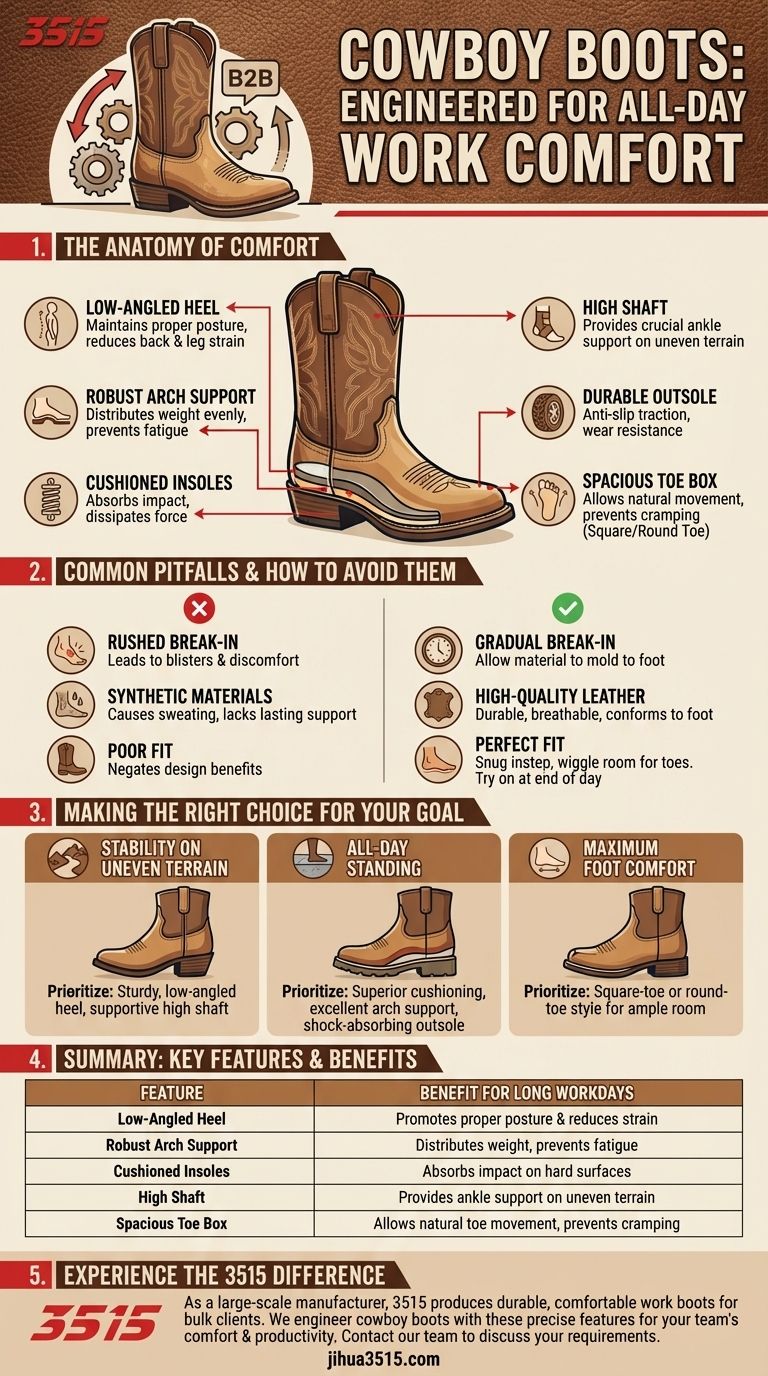
Contrary to their rugged appearance, cowboy boots are intentionally engineered for comfort during long workdays through a combination of structural support, shock absorption, and ergonomic design. Key features include a stable, low-angled heel for proper posture, robust arch support to reduce fatigue, and cushioned insoles that absorb impact with every step.
The comfort of a modern cowboy boot is not an accident. It is a direct result of a purpose-built design that prioritizes stability, support, and protection for individuals who spend extensive hours on their feet in demanding environments.

The Anatomy of a Comfortable Work Boot
Understanding how a cowboy boot provides comfort requires looking at its core components, each designed to address a specific physical stressor associated with long hours of work.
The Foundation: Heel and Arch Support
A cowboy boot’s low-angled, sturdy heel is its primary source of stability. This design helps maintain proper posture and alignment, reducing strain on your back and legs over the course of a day.
This is paired with integrated arch support, which is critical for distributing weight evenly across your foot. Proper support prevents the arch from collapsing, a common cause of foot fatigue and long-term issues.
Shock Absorption and Cushioning
Modern work-focused cowboy boots feature cushioned insoles that act as shock absorbers. These padded layers dissipate the force generated from walking on hard or uneven surfaces, which significantly reduces the impact on your joints.
Many designs follow an ergonomic and anatomical shape, supporting the foot's natural structure and further reducing fatigue.
Structural Integrity and Protection
The characteristic high shaft of a cowboy boot is not just for style. It provides crucial ankle support, which helps prevent twists and other injuries, especially when navigating unpredictable terrain.
Furthermore, the durable outsoles are built for anti-slip traction and resistance to wear and tear, ensuring a secure and stable footing.
The Importance of Toe Shape
While traditional pointed-toe boots exist, styles designed for work often feature a spacious toe box. Square-toe and round-toe designs allow for natural toe movement and splay, preventing the cramping and discomfort that can arise after hours of wear.
Common Pitfalls and How to Avoid Them
Achieving comfort in a cowboy boot involves more than just the boot's features; it also depends on selection and proper care.
The Critical Break-in Period
High-quality boots, especially those made of genuine leather, require a break-in period. It is essential to wear them gradually at first to allow the material to mold to the unique shape of your foot. Rushing this process can lead to blisters and discomfort.
Material Quality Is Non-Negotiable
Investing in boots made from high-quality, genuine leather is paramount. Premium materials offer durability, breathability, and the ability to conform to your foot over time, whereas cheaper synthetic materials often cause sweating and fail to provide lasting support.
Achieving the Perfect Fit
A poor fit will negate any design benefit. The boot should be snug around your instep, preventing your foot from sliding, but you should still have enough room to wiggle your toes freely.
For the most accurate sizing, it's best to try on boots at the end of the day when your feet are slightly swollen, and always wear the type of socks you would typically use for work.
Making the Right Choice for Your Goal
Selecting the ideal boot depends on your specific daily demands.
- If your primary focus is stability on uneven terrain: Prioritize a boot with a sturdy, low-angled heel and a supportive high shaft.
- If your primary focus is all-day standing on hard surfaces: Look for superior cushioned insoles, excellent arch support, and shock-absorbing outsoles.
- If your primary focus is maximum foot comfort and space: Choose a square-toe or round-toe style to ensure your toes have ample room to move naturally.
Ultimately, choosing the right cowboy boot is an investment in your daily performance and long-term physical well-being.
Summary Table:
| Feature | Benefit for Long Workdays |
|---|---|
| Low-Angled Heel | Promotes proper posture and reduces back/leg strain. |
| Robust Arch Support | Distributes weight evenly to prevent foot fatigue. |
| Cushioned Insoles | Absorbs impact from walking on hard surfaces. |
| High Shaft | Provides essential ankle support on uneven terrain. |
| Spacious Toe Box | Allows natural toe movement, preventing cramping. |
Experience the 3515 Difference in Your Work Boots
As a large-scale manufacturer, 3515 produces a comprehensive range of durable, comfortable footwear for distributors, brand owners, and bulk clients. Our production capabilities encompass all types of work boots, including cowboy boots engineered with the precise features detailed above to ensure your team's comfort and productivity.
We can help you source or develop the perfect boot for your market's needs. Contact our team today to discuss your requirements and discover how we can support your business.
Visual Guide
Related Products
- High-Traction Suede Tactical Boots Wholesale & Custom Manufacturing
- Wholesale High-Traction Camo Boots - Custom Manufacturer for Brands
- Wholesale Lightweight Tactical Boots Custom Manufacturer for Desert & Combat Use
- Durable Leather Tactical Boots Wholesale & Custom Manufacturing for Brands
- Wholesale Durable Mid-Cut Tactical Boots for Custom & Private Label Brands
People Also Ask
- Why is sequential analysis utilized to evaluate tactical boots? Master Dynamic Boot Development and Ergonomic Performance
- How does the material of tactical boots affect their performance? Choose the Right Material for Your Mission
- How do tactical boots differ from regular boots? Performance, Durability & Design Explained
- How do military uniforms and tactical boots impact the prediction of thermal risk? Essential Safety Insights
- What are the benefits of integrating FES and sEMG into tactical boots? Safety, Reliability & Field-Ready Performance


















