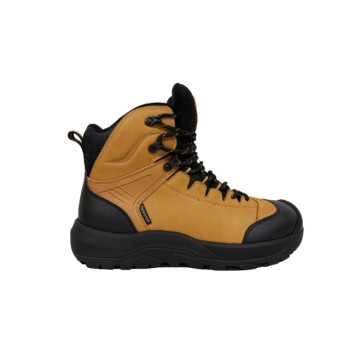
For optimal warmth, winter boots must have three core features: a high-quality insulation material to trap body heat, a waterproof membrane to keep your feet dry from external moisture, and a secure fit that eliminates air gaps without restricting circulation. These elements work together to create a protective barrier against the cold.
The warmest winter boot isn't just the one with the thickest insulation. True warmth comes from a complete system that manages both external moisture and internal sweat, starting with the boot's construction and extending to the socks you wear.
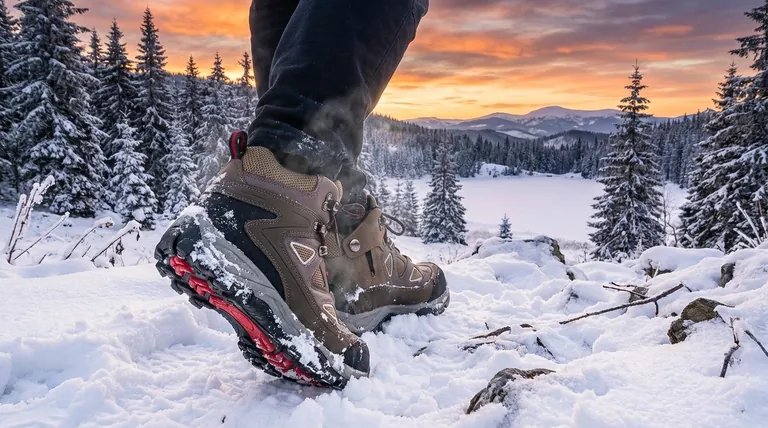
The Three Pillars of a Warm Winter Boot
The effectiveness of any winter boot can be judged by its performance in three fundamental areas. Each is critical; a failure in one will compromise the others.
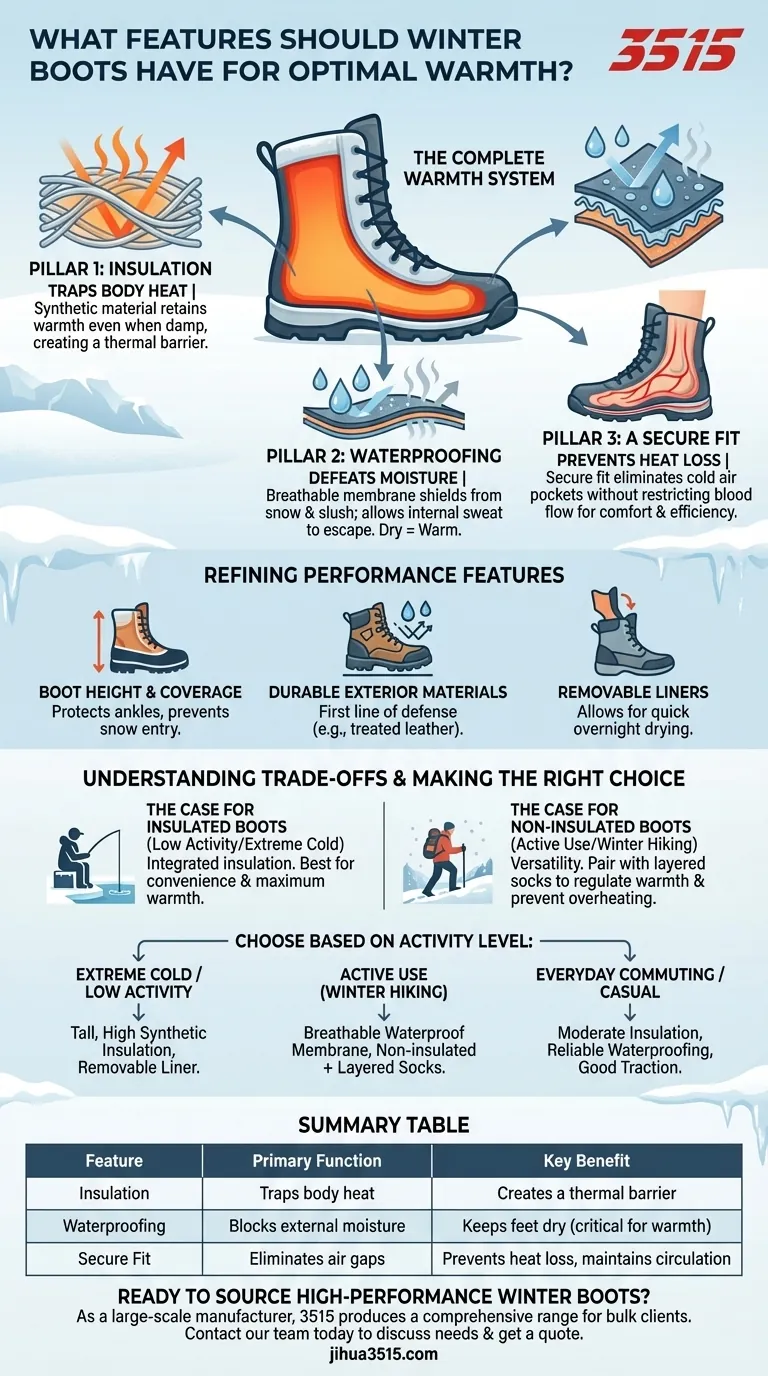
Pillar 1: Insulation Traps Your Body Heat
Insulation is the primary feature responsible for retaining warmth. It works by trapping air within its fibers, creating a thermal barrier that slows the escape of your body's natural heat.
Most modern winter boots use synthetic insulation, which retains its warming properties even when damp, a significant advantage over materials like down.
Pillar 2: Waterproofing Defeats Moisture
The fastest way to get cold feet is to get them wet. Waterproofing is a non-negotiable feature that shields you from snow, slush, and ice.
However, the best systems are also breathable. A waterproof, breathable membrane allows water vapor from sweat to escape, keeping your socks dry from the inside. Dry feet are warm feet.
Pillar 3: A Secure Fit Prevents Heat Loss
A proper fit is crucial for both comfort and thermal efficiency. A boot that is too loose creates large air pockets that your body has to work harder to heat.
Conversely, a boot that is too tight can restrict blood flow, which is essential for keeping your extremities warm. The ideal fit feels secure and stable, much like a comfortable hiking boot, with enough room to wiggle your toes.
Beyond the Basics: Features That Refine Performance
While the three pillars are essential, several other features contribute to a boot's overall warmth and usability in winter conditions.
Boot Height and Coverage
The height of a boot directly impacts its warmth. Taller boots provide more coverage, protecting your ankles and lower legs from cold and preventing snow from getting inside.
Durable Exterior Materials
The outer material of the boot acts as the first line of defense. Durable materials like treated leather or rugged nylon add an extra layer of protection against wind, moisture, and abrasion.
The Role of Removable Liners
Some heavy-duty winter boots feature removable liners. This allows you to take them out and dry them quickly overnight, ensuring your boots are completely dry for the next day's use—a critical factor for multi-day trips.
Understanding the Trade-offs
Choosing the right boot involves understanding the different philosophies behind winter footwear design. The biggest debate centers on integrated insulation versus a layered sock system.
The Case for Insulated Boots
Integrated insulation offers maximum convenience and warmth for less-active pursuits. For activities like ice fishing, spectating winter sports, or everyday use in frigid climates, a well-insulated boot is often the simplest and most effective choice.
The Case for Non-Insulated Boots
Some active users, like winter hikers, prefer non-insulated but fully waterproof boots. This approach provides greater versatility. Warmth is regulated by choosing the thickness of your socks, allowing you to adapt to changing conditions and activity levels without your feet overheating and sweating excessively.
Making the Right Choice for Your Goal
Your choice depends entirely on your intended use. Use your activity level as your primary guide to select the right system for keeping your feet warm and dry.
- If your primary focus is extreme cold or low activity: Choose a taller boot with a high amount of built-in synthetic insulation and a removable liner.
- If your primary focus is active use like winter hiking: Prioritize a breathable, waterproof membrane and consider a non-insulated boot that you can pair with high-quality merino wool or synthetic socks of varying thickness.
- If your primary focus is everyday commuting and casual wear: A boot with moderate insulation, reliable waterproofing, and good traction will provide the best balance of warmth and comfort.
By understanding how these features function as a system, you can confidently select a winter boot that will meet the demands of your environment.
Summary Table:
| Feature | Primary Function | Key Benefit |
|---|---|---|
| Insulation | Traps body heat | Creates a thermal barrier to retain warmth |
| Waterproofing | Blocks external moisture | Keeps feet dry, which is critical for warmth |
| Secure Fit | Eliminates air gaps | Prevents heat loss without restricting blood flow |
Ready to Source the Perfect Winter Boots for Your Market?
As a large-scale manufacturer, 3515 produces a comprehensive range of high-performance winter footwear for distributors, brand owners, and bulk clients. Our production capabilities encompass all types of insulated and non-insulated boots, built with the precise features detailed in this guide. We help you deliver the quality, warmth, and durability your customers demand.
Contact our team today to discuss your specific needs and get a quote.
Visual Guide
Related Products
- Premium Insulated Safety Boots and Shoes for Wholesale & Bulk Orders
- Factory Direct Wholesale Rain Boots Durable Waterproof & Fully Customizable
- Durable Waterproof Rain Boots | Custom Manufacturer for Wholesale & Brands
- Wholesale Waterproof Tactical Boots Custom Suede & High-Traction Soles
- Premium Waterproof High-Cut Industrial Safety Boots for Wholesale and Bulk Orders
People Also Ask
- What are the recommended insulation ratings for mild winter conditions? A Guide for Active & Stationary Workers
- How does insulation thickness correlate with temperature ranges? A Guide to Choosing the Right Warmth
- What insulation level is needed for severe cold and stationary work? 1200g or Higher is Essential
- What safety advantages do insulated boots offer beyond warmth? Dielectric Protection & Superior Grip
- How does fleece lining contribute to the warmth of insulated boots? Trapping Air for Superior Cold Protection