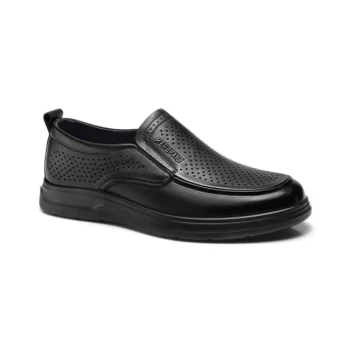
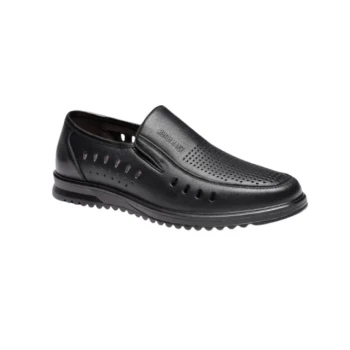
To choose the right slip-resistant shoes, you must look beyond a simple "non-slip" label and focus on the specific design of the sole, the quality of its material, and features that ensure all-day comfort and durability. The most effective models feature soft rubber soles with deep, wide-set, and multidirectional tread patterns designed to channel liquids away and maintain grip from multiple angles.
The best slip-resistant shoe is a complete system. While the tread pattern provides the critical grip, its effectiveness is inseparable from the shoe's overall fit, comfort, and durability, which ensure you can wear it safely and consistently throughout a demanding workday.
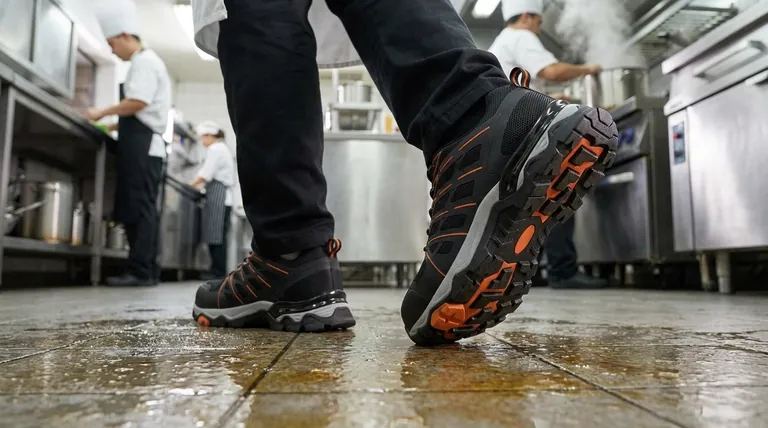
Deconstructing the Sole: The Engine of Slip Resistance
The sole is the most critical safety component of the shoe. Its design and material directly determine how well it will perform on hazardous surfaces.
Tread Pattern: More Than Just Grooves
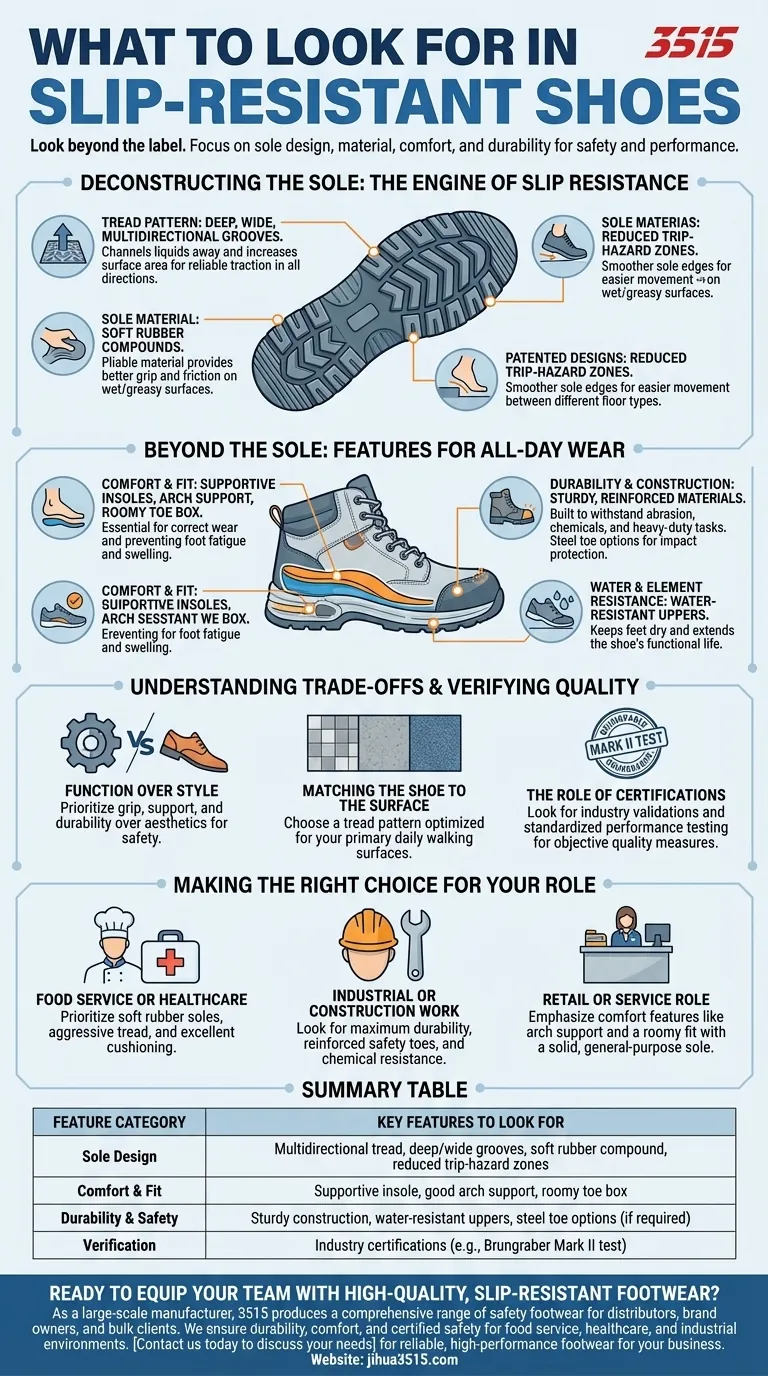
The pattern of the outsole is engineered for one primary purpose: to increase the surface area in contact with the floor while channeling away contaminants like water and oil. Look for deep, wide grooves that prevent hydroplaning. The most effective patterns are multidirectional, providing reliable traction as you pivot and change direction.
Sole Material: The Point of Contact
The material itself is just as important as the pattern. Soft rubber compounds offer the best grip, especially on wet or greasy surfaces, because they are more pliable and can create more friction. This is a key differentiator from standard shoes, which often use harder, less grippy materials.
Patented Designs and Trip-Hazards
Advanced designs often include patented features like specific groove patterns that mimic the foot's natural movement. Some also incorporate reduced trip-hazard zones—smoother areas on the sole's edge that allow for easier movement between different floor types, such as from a wet kitchen floor to a carpeted dining area.
Beyond the Sole: Features for All-Day Wear
True performance isn't just about preventing a single slip; it's about providing the support and protection needed to get through an entire shift safely and comfortably.
Comfort and Fit: The Non-Negotiable Foundation
If a shoe is uncomfortable, you're less likely to wear it correctly, compromising its safety benefits. Look for supportive insoles, good arch support, and a roomy toe box. This last feature is crucial because feet naturally swell after hours of standing.
Durability and Construction: Built for the Job
Workplace shoes endure far more stress than casual footwear. They require sturdy construction with reinforced materials designed to withstand abrasion, chemicals, and the rigors of heavy-duty tasks. Some roles may also require features like reinforced or steel toes for impact protection.
Water and Element Resistance
In many environments where slips are a risk, water is a constant. Water-resistant uppers not only keep your feet dry and comfortable but also protect the shoe's materials from breaking down prematurely, extending its functional life.
Understanding the Trade-offs and Verifying Quality
Choosing the right shoe involves balancing competing factors and knowing how to identify genuine quality.
Function Over Style
While manufacturers offer more styles than ever, the primary goal must always be safety. Prioritize the functional aspects—grip, support, and durability—over aesthetics to ensure you have the right protection for your specific work environment.
Matching the Shoe to the Surface
No single shoe is perfect for every floor. A tread pattern optimized for wet, greasy kitchen tiles may perform differently on an industrial concrete floor. Consider the primary surfaces you walk on daily when making your selection.
The Role of Certifications
Look for industry certifications that validate a shoe's slip-resistant claims. While specific standards may vary, a certification like the Brungraber Mark II test indicates that the shoe has undergone standardized performance testing, offering an objective measure of its quality.
Making the Right Choice for Your Role
Your specific job function dictates which features to prioritize. Use this as a guide to select the best shoe for your needs.
- If your primary focus is food service or healthcare: Prioritize shoes with soft rubber soles and aggressive, multidirectional treads to handle wet and greasy floors, along with excellent cushioning for long hours on your feet.
- If your primary focus is industrial or construction work: Look for maximum durability, reinforced safety toes, and resistance to chemicals or abrasion in addition to a high-traction sole.
- If your primary focus is all-day standing in a less hazardous retail or service role: Emphasize comfort features like superior arch support and a roomy fit, balanced with a solid, general-purpose slip-resistant sole.
Ultimately, investing in the right footwear is a critical investment in your personal safety and well-being at work.
Summary Table:
| Feature Category | Key Features to Look For |
|---|---|
| Sole Design | Multidirectional tread, deep/wide grooves, soft rubber compound, reduced trip-hazard zones |
| Comfort & Fit | Supportive insole, good arch support, roomy toe box |
| Durability & Safety | Sturdy construction, water-resistant uppers, steel toe options (if required) |
| Verification | Industry certifications (e.g., Brungraber Mark II test) |
Ready to equip your team with high-quality, slip-resistant footwear?
As a large-scale manufacturer, 3515 produces a comprehensive range of safety footwear for distributors, brand owners, and bulk clients. Our production capabilities encompass all types of slip-resistant shoes and boots, designed to meet the specific demands of food service, healthcare, and industrial environments.
We ensure durability, comfort, and certified safety in every pair. Contact us today to discuss your needs and discover how we can provide reliable, high-performance footwear for your business.
Visual Guide
Related Products
- Premium Suede Sport Safety Shoes for Wholesale & Bulk Orders
- Advanced KPU Athletic Safety Shoe with Steel Toe Cap Anti-Slip Rotary Lacing System
- Heavy-Duty Waterproof Nubuck Safety Boots Safety Shoes for Bulk Supply
- Durable High-Traction Canvas Sneakers Wholesale & Custom Manufacturing
- Durable Leather Moc Toe Work Boots for Wholesale & Custom Manufacturing
People Also Ask
- What industries have specific OSHA footwear requirements? Ensure Compliance & Protect Your Workforce
- What are the primary functions of professional safety shoes? Maximize Safety in Water Supply Confined Spaces
- What role do specialized safety shoes play in preventing falls? Engineering Stability in Industrial Environments
- How do gait analysis algorithms ensure accuracy in footwear? Master Step Length Precision for Boots & Sneakers
- What are the main components of safety shoes? A Guide to Protective Footwear Design