
At its core, a high-quality gardening boot must be completely waterproof, provide excellent comfort for long hours of work, and be constructed from durable, easy-to-clean materials. These foundational features ensure your feet stay dry and supported while preventing the boot from degrading prematurely due to mud and moisture.
The search for the perfect gardening boot is not about finding a single "best" product, but about understanding the balance between three key principles: absolute protection from the elements, structural support for physical work, and all-day wearable comfort.
The Foundation: Material and Construction
The quality of a gardening boot begins with its fundamental build. The materials chosen and the way they are assembled dictate the boot's performance in its most critical functions: keeping water out and providing a stable platform.
Waterproofing is Non-Negotiable
A boot that isn't 100% waterproof is not a true gardening boot. The best options are typically made from a single, seamless piece of high-quality natural rubber. This construction eliminates stitches and joints where water could potentially seep in over time.
While some boots use waterproof membranes like GORE-TEX, the simple, impenetrable nature of rubber is often superior for the constant mud and water exposure in a garden.
The Importance of the Outsole
The outsole is your connection to the ground. A high-quality boot features a deep, multi-directional tread pattern designed to grip securely on wet grass, slick mud, and uneven soil.
Look for outsoles made of a hard-wearing rubber compound that resists wear and tear. Premium brands may even use specialized soles, like Vibram, known for exceptional durability and traction in demanding environments.
Why Ease of Cleaning Matters
Proper care extends the life of your boots, and that starts with easy cleaning. Boots made from supple, flexible rubber with a smooth finish allow mud to slide off with a simple rinse.
This isn't just about convenience; caked-on mud can draw moisture out of the rubber over time, potentially leading to cracking. An easy-to-clean design is a feature of a long-lasting boot.
Beyond the Basics: Comfort and Support
While waterproofing is essential, what separates an adequate boot from a great one is the internal design. Features that provide support and comfort reduce fatigue and make your time in the garden more enjoyable.
Structural Support: The Hidden Shank
For serious digging, a reinforced shank is one of the most important yet overlooked features. The shank is a rigid piece of material, often steel, built into the midsole of the boot, directly under your arch.
This reinforcement prevents the boot from collapsing around the edge of a shovel, distributing pressure across your entire foot. This drastically reduces foot fatigue and protects you from arch strain during heavy work.
All-Day Comfort: Insoles and Linings
A boot's interior determines its feel. Look for padded insoles and cushioned midsoles that absorb shock as you walk. High-quality boots also feature premium linings.
A moisture-wicking jersey or wool lining pulls sweat away from your skin, keeping your feet dry and comfortable from the inside. This breathability is critical for preventing the clammy feeling that can occur in non-breathable rubber boots.
The Right Fit and Flexibility
Finally, the boot must allow for natural movement. The rubber should be durable but also flexible enough to bend and crouch comfortably. The fit should be snug enough to prevent your heel from lifting but with enough room to wiggle your toes.
Understanding the Trade-offs
No single boot is perfect for every task. Choosing the right one involves understanding the inherent compromises in boot design.
Heavy-Duty Protection vs. Lightweight Agility
A robust, shank-reinforced boot is ideal for digging and heavy landscaping but can feel cumbersome for lighter tasks. In contrast, a lighter boot or sabot offers greater flexibility and a less restrictive feel, making it perfect for weeding or greenhouse work but poor for digging.
Breathability vs. Absolute Waterproofing
A completely sealed rubber boot offers maximum waterproofing but can trap sweat. A boot with a breathable membrane or moisture-wicking liner improves interior climate but may be less robust over the long term. The key is finding the right balance for your climate and work intensity.
Durability vs. Cost
Higher-quality materials, better construction techniques like shank reinforcement, and premium linings all increase the cost of a boot. However, this initial investment often pays off in significantly longer lifespan and superior comfort, making it a better value over time.
Making the Right Choice for Your Garden
Select your boot based on the primary type of work you do.
- If your primary focus is heavy-duty digging and landscaping: Prioritize a boot with a reinforced shank and a deep, aggressive outsole tread.
- If your primary focus is light weeding and greenhouse work: A lighter, more flexible boot or even a slip-on sabot will provide sufficient protection and superior comfort.
- If your primary focus is working in consistently wet, muddy conditions: Ensure the boot is tall enough to prevent splashes and is made of a seamless, one-piece rubber construction.
Choosing the right gardening boot is an investment in your comfort, safety, and long-term enjoyment of your work.
Summary Table:
| Key Feature | Why It Matters | What to Look For |
|---|---|---|
| Waterproofing | Keeps feet dry in mud and water | Seamless, one-piece rubber construction |
| Durable Outsole | Provides secure grip on wet, uneven ground | Deep, multi-directional tread (e.g., Vibram) |
| Comfort & Support | Reduces fatigue during long hours | Reinforced shank, cushioned insole, moisture-wicking lining |
| Easy to Clean | Extends boot lifespan | Smooth, flexible rubber that sheds mud easily |
Ready to find the perfect gardening boots for your needs?
As a large-scale manufacturer, 3515 produces a comprehensive range of durable, comfortable, and 100% waterproof footwear for distributors, brand owners, and bulk clients. Our production capabilities encompass all types of gardening boots, designed with the features that matter most to serious gardeners.
Let us help you equip your customers with footwear that combines superior protection, lasting comfort, and unmatched durability. Contact us today to discuss your specific requirements and explore our extensive catalog.
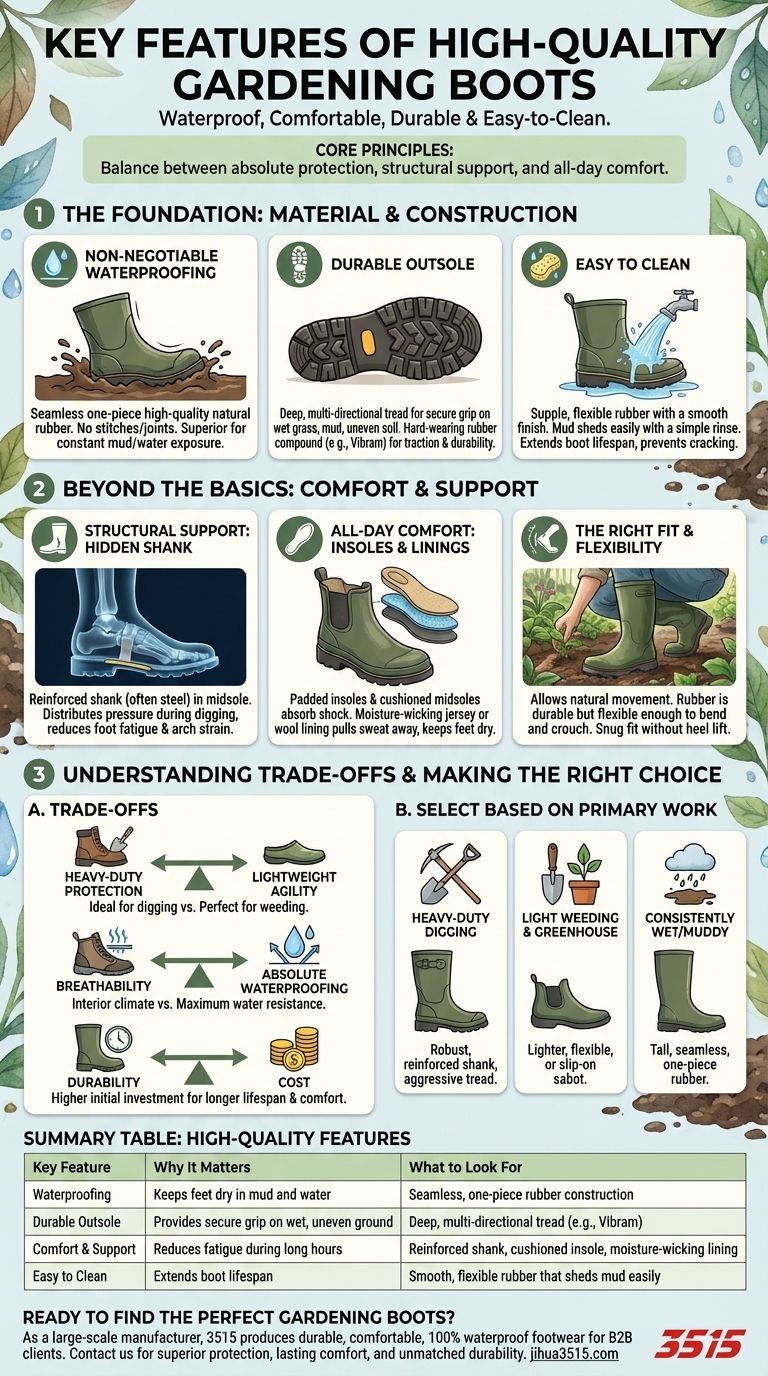
Visual Guide
Related Products
- Durable Goodyear Welt Leather Work Boots for Wholesale & Private Label
- Factory Direct Wholesale Rain Boots Durable Waterproof & Fully Customizable
- Wholesale High-Traction Camo Boots - Custom Manufacturer for Brands
- Wholesale Tactical Boots High-Traction & Reflective for Bulk & Brand Orders
- Durable Moc-Toe Wedge Work Boots | Wholesale Manufacturing for Brands
People Also Ask
- What is the difference between full-grain and top-grain leather? Premium Material Guide for Boot Manufacturers
- What are the advantages of leather as an upper material for work boots? Unmatched Durability & Custom Comfort
- Why is it important to waterproof leather work boots? Protect Your Investment and Performance
- How should new leather work boots be broken in? A Guide to Comfort and Durability
- What are the advantages of leather uppers in work boots? Unmatched Durability & Protection
















