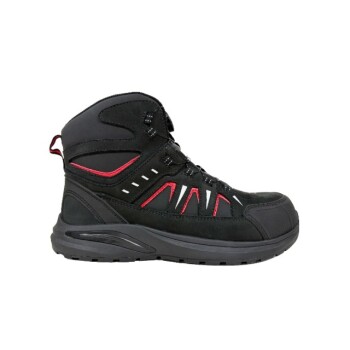
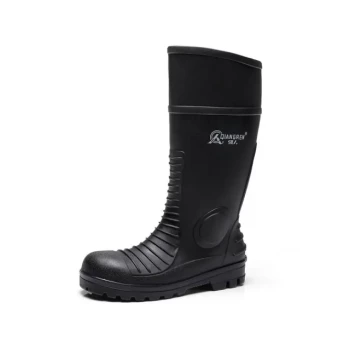
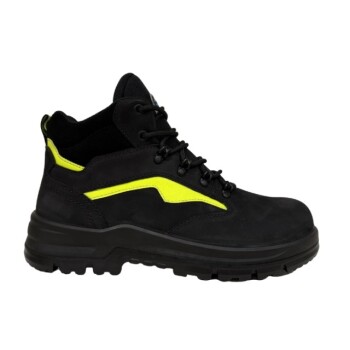
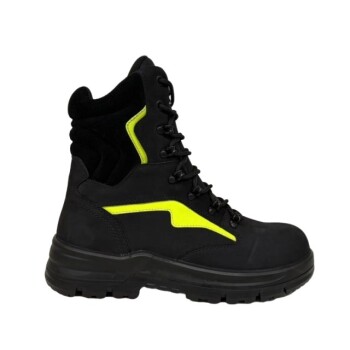
For an HVAC technician, the right work boot is a critical piece of personal protective equipment. The essential features to look for are a certified safety toe, a dedicated Electrical Hazard (EH) rating, and a slip-resistant outsole. These elements provide a foundational layer of protection against the diverse and unpredictable environments you face daily.
Your work demands a unique blend of protection and agility. The ideal HVAC boot isn't just about guarding against a single hazard; it's about providing a comprehensive safety system that protects you from slips, impacts, and electrical currents without causing fatigue over a long day.
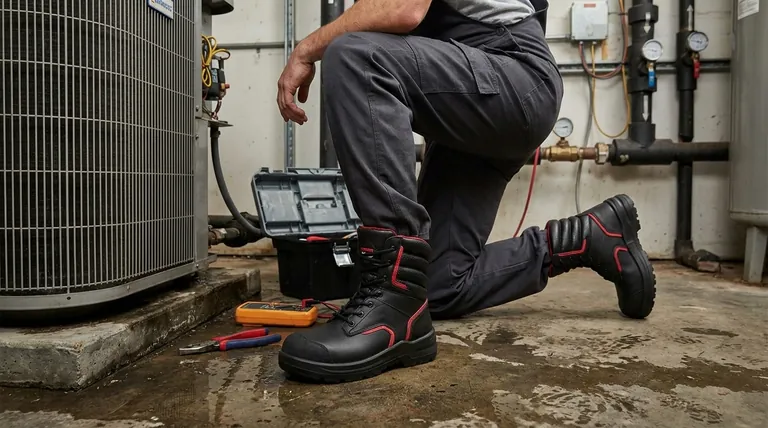
The Core Pillars of an HVAC Work Boot
Your job sites change constantly, from slippery basements and hot attics to rooftops and commercial installation sites. Your footwear must be versatile enough to handle every scenario safely and effectively.
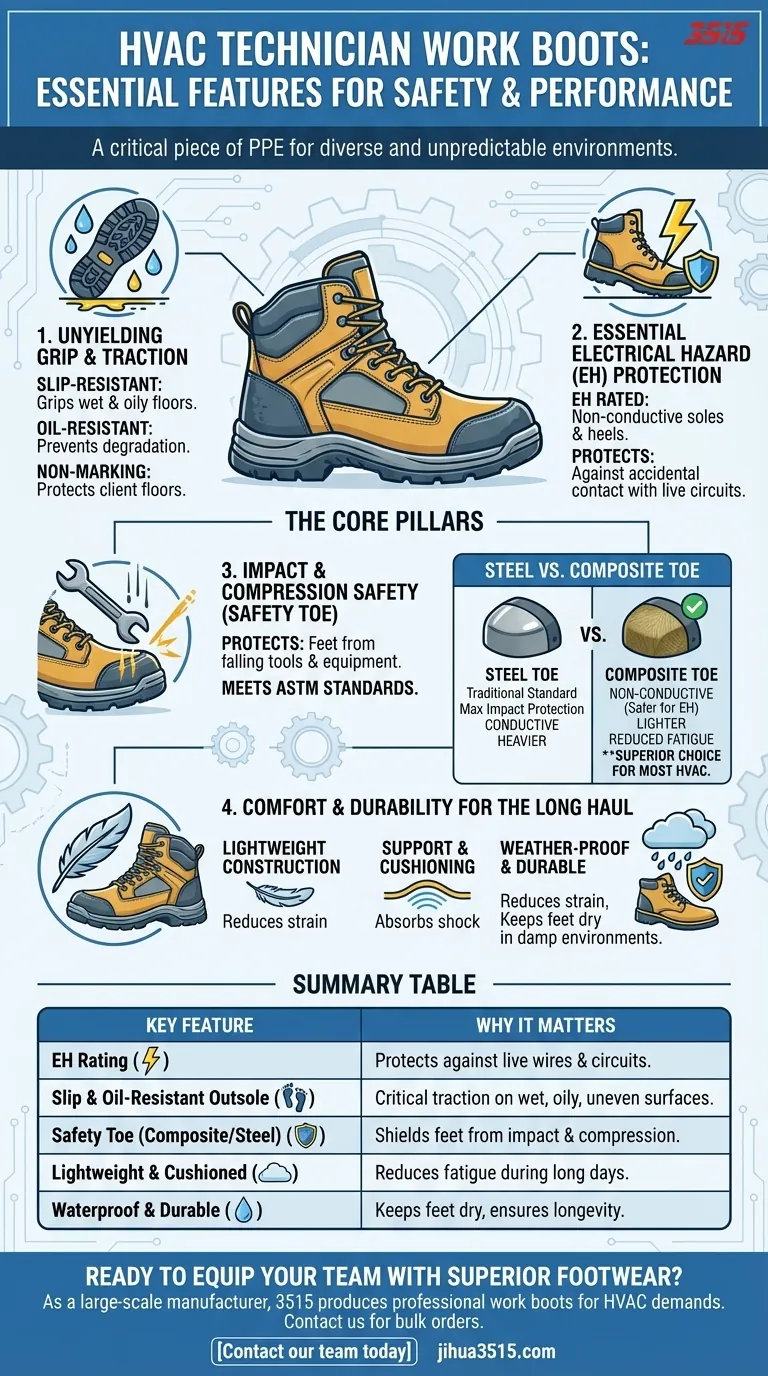
Unyielding Grip and Traction
The most common workplace injuries are slips, trips, and falls. A high-traction outsole is non-negotiable.
Look for boots with slip-resistant soles, specifically designed to grip wet or oily surfaces common in mechanical rooms. An oil-resistant sole also prevents the rubber from degrading when exposed to chemicals, extending the life of your boot.
As a professional courtesy, consider non-marking outsoles to avoid leaving scuffs on a client's finished floors.
Essential Electrical Hazard (EH) Protection
You regularly work around live wires, capacitors, and energized equipment. Standard boots offer no protection from electric shock.
An Electrical Hazard (EH) rated boot is designed with non-conductive soles and heels. This construction can protect you from accidental contact with live electrical circuits, making it one of the most important safety features for an HVAC technician.
Impact and Compression Safety
Protecting your feet from falling tools, parts, or equipment is fundamental. This is the job of the safety toe.
You have two primary choices: steel or composite. Both must meet the same ASTM safety standards for impact and compression, but they have key differences that matter for your trade.
Understanding the Trade-offs: Steel vs. Composite Toe
The choice between a steel and composite toe cap directly impacts your safety and comfort. While both are protective, one has a distinct advantage for HVAC work.
The Case for Steel Toes
Steel toes are the traditional standard for maximum impact protection. They have a long track record of performance in heavy industrial and construction environments where the risk of crushing from extremely heavy objects is high.
However, steel is a conductor. While an EH-rated boot with a steel toe is safe, the metal's conductivity is a factor to consider. Steel also transfers temperature, making boots feel colder in the winter and hotter in the summer.
The Advantage of Composite Toes
For most HVAC technicians, composite toes are the superior choice. They are made from non-metallic materials like Kevlar, carbon fiber, or plastic.
The primary benefit is that they are non-conductive, which adds another layer of safety to your EH-rated boot. They are also significantly lighter than steel, which reduces foot fatigue over a long day of walking, climbing, and kneeling.
Comfort and Durability for the Long Haul
Safety features are pointless if the boots are too uncomfortable to wear. The physical demands of your job require features that support you through a full shift.
Prioritizing Lightweight Construction
Every ounce on your feet matters. A lightweight design, often achieved with composite toes and modern sole materials, directly translates to less energy expended and reduced strain on your legs and back.
The Importance of Support and Cushioning
You spend hours standing on concrete, climbing ladders, and holding awkward positions. Good boots should have superior arch support and heel cushioning. These features help distribute pressure evenly and absorb shock, preventing common foot pain.
Weather-Proofing and Durability
Your work doesn't stop for bad weather. A waterproof membrane is crucial for keeping your feet dry when working in damp basements, crawlspaces, or outdoors in the rain. This, combined with durable upper materials like full-grain leather, ensures your investment lasts.
Making the Right Choice for Your Work
Select your boot based on the specific demands of your typical workday.
- If your primary focus is residential service calls: A lightweight, EH-rated boot with a composite toe and non-marking sole is your ideal choice for mobility and client care.
- If your primary focus is commercial or industrial installation: Prioritize durable, waterproof uppers and a robust safety toe, ensuring the boot still carries a non-negotiable EH rating.
- If your primary focus is reducing all-day fatigue: Look specifically for boots marketed with advanced cushioning, strong arch support, and a lightweight composite toe design.
Ultimately, investing in the right boot is an investment in your daily safety, long-term health, and professional performance.
Summary Table:
| Key Feature | Why It Matters for HVAC Technicians |
|---|---|
| Electrical Hazard (EH) Rating | Protects against accidental contact with live wires and circuits. |
| Slip & Oil-Resistant Outsole | Provides critical traction on wet, oily, and uneven surfaces. |
| Safety Toe (Composite/Steel) | Shields feet from impact and compression from falling tools/equipment. |
| Lightweight & Cushioned | Reduces foot and leg fatigue during long days of climbing and kneeling. |
| Waterproof & Durable | Keeps feet dry in damp environments and ensures the boot lasts. |
Ready to Equip Your Team with Superior Footwear?
As a large-scale manufacturer, 3515 produces a comprehensive range of professional work boots designed for the specific demands of HVAC technicians. We provide distributors, brand owners, and bulk clients with durable, EH-rated, and comfortable footwear that enhances safety and reduces on-the-job fatigue.
Contact our team today to discuss your bulk order needs and discover how 3515 can be your reliable manufacturing partner.
Visual Guide
Related Products
- Custom Wholesale Leather Safety Boots Direct Factory Manufacturing
- Customizable Anti-Smash Safety Boots for Wholesale & Private Label Manufacturing
- Heavy Duty Nubuck Safety Boots Safety Shoes for Global Distribution
- Premium Grain Leather Safety Boots for Bulk Supply
- Heavy-Duty Waterproof Nubuck Safety Boots Safety Shoes for Bulk Supply
People Also Ask
- Why are oil-resistant and anti-slip properties critical for industrial safety boots? Expert Outsole Engineering Guide
- What are the primary protective functions of industrial safety boots in oil palm plantations? Master Rough Terrain Safety
- What are the protective functions of industrial safety boots in sugar factory clarification stations? Thermal & Slip Experts
- What protective functions do industrial-grade safety boots provide in construction and mining? Maximize Worker Safety
- What are the primary protective functions of industrial safety boots in granite quarry environments? Essential Guide