
Choosing a work boot for both the job site and casual wear requires a careful balance between rugged protection and versatile style. The most important features to consider are a certified safety toe, high-quality traction for your specific environment, durable and waterproof construction, and an aesthetic that doesn't look out of place off the clock.
The challenge isn't just finding a boot with the right features, but understanding the inherent trade-offs between maximum worksite protection and all-day casual comfort. The ideal dual-use boot makes intelligent compromises to serve both needs effectively.
The Foundation: Non-Negotiable Work Features
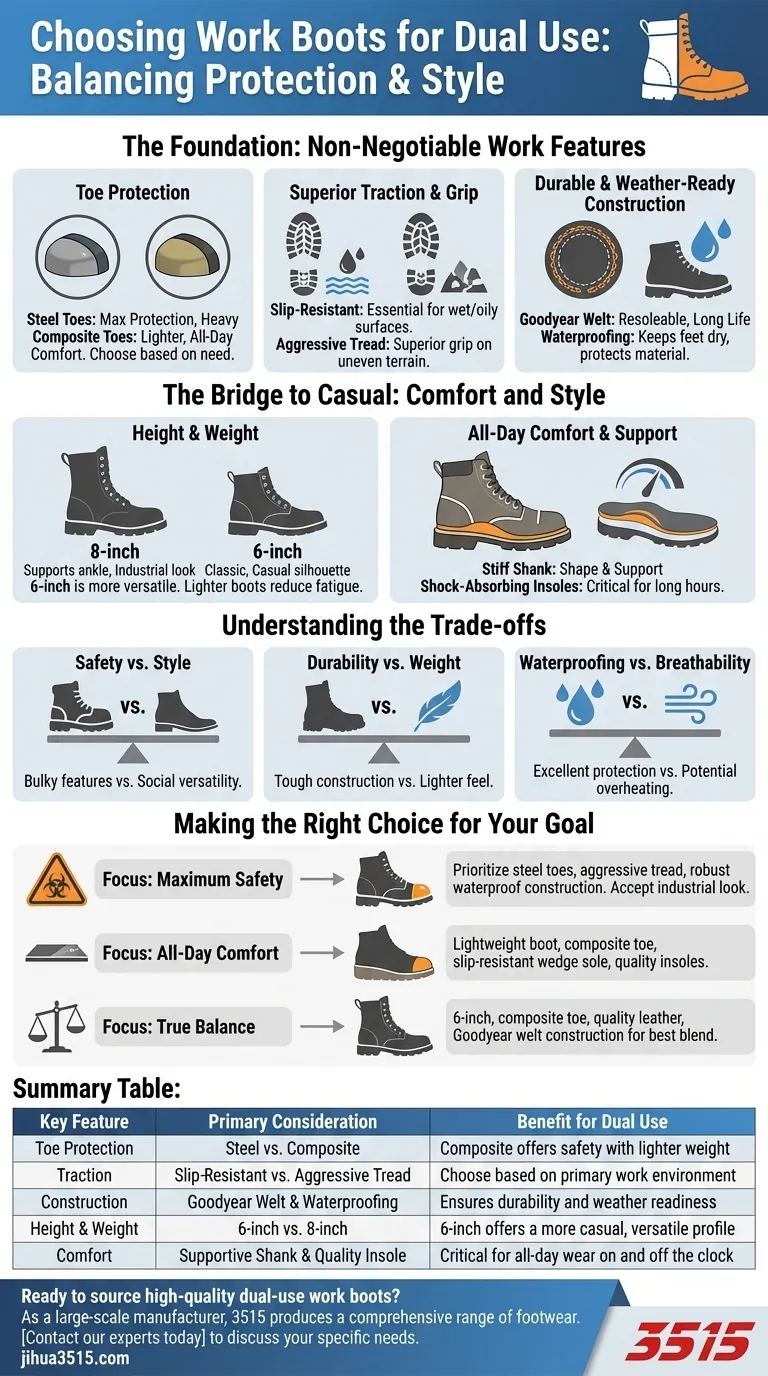
Before considering style, a work boot must first meet the demands of your job. Prioritizing these core protective features ensures your safety and the boot's longevity.
Toe Protection: Steel vs. Composite
Your first decision is how to protect your feet from impact and compression.
Steel toes offer the maximum level of protection and are the traditional standard. However, they add significant weight and can be less comfortable in cold weather.
Composite toes, made from materials like carbon fiber or Kevlar, are much lighter than steel. They still meet industry safety standards but provide a more comfortable, less bulky fit that is better suited for all-day wear.
Superior Traction and Grip
The outsole is your boot's connection to the ground, and its design is critical.
A slip-resistant sole is essential for environments with oil or water, like a mechanic's shop or a plumbing site. Look for patterns designed to channel liquids away.
For surveyors or those on varied terrain, a sole with a deeper, more aggressive tread provides superior grip on uneven or loose surfaces.
Durable and Weather-Ready Construction
How a boot is built determines how it holds up to daily abuse.
Goodyear welt construction is a hallmark of high-quality, durable boots. This method stitches the upper to the sole, allowing the boot to be resoled and extending its life significantly.
For wet environments, waterproof materials and a sealed construction are crucial. This not only keeps your feet dry but also protects the boot's leather from damage.
The Bridge to Casual: Comfort and Style
Features that enhance comfort and aesthetics are what transform a piece of equipment into a versatile, everyday boot.
Finding the Right Height and Weight
The physical profile of the boot has a major impact on its wearability.
An 8-inch boot provides excellent ankle support and protection, which is ideal for demanding jobs. However, a 6-inch boot offers a more classic, casual silhouette that pairs more easily with everyday clothes.
Lighter boots reduce fatigue, making them far more comfortable for extended wear both on and off the job site. This is where a lighter composite toe has a distinct advantage over steel.
All-Day Comfort and Support
Internal features are just as important as the external ones for a boot you'll wear for long hours.
A stiff shank is a supportive piece between the insole and outsole that helps the boot maintain its shape and reduces strain on your arches.
High-quality, shock-absorbing insoles with contoured arch support are critical for anyone who spends most of their day on their feet.
Understanding the Trade-offs
Choosing a dual-use boot is an exercise in balancing competing priorities. Being aware of these compromises is key to making an informed decision.
Safety vs. Style
The most protective boots often feature bulky safety toes, thick rubber guards, and an industrial look. While essential for hazardous jobs, these features can make a boot look out of place in a social setting. You must decide what level of protection is truly necessary for your work.
Durability vs. Weight
The toughest construction methods, like a Goodyear welt, add weight and rigidity. While this ensures a long service life, it can make the boot feel heavier and less flexible for casual walking compared to lighter, more modern construction techniques.
Waterproofing vs. Breathability
A fully waterproof membrane is excellent for outdoor work but can limit breathability. This may lead to hot, sweaty feet when wearing the boots indoors for an extended period. A water-resistant leather may be a better compromise for mixed-use scenarios.
Making the Right Choice for Your Goal
Your final decision should be guided by the primary demands you will place on the boot.
- If your primary focus is maximum safety in a hazardous environment: Prioritize certified steel toes, aggressive tread, and robust waterproof construction, accepting a more industrial look as a necessary trade-off.
- If your primary focus is all-day comfort on hard, flat surfaces: Look for a lightweight boot with a composite toe, a slip-resistant wedge sole, and superior shock-absorbing insoles.
- If your primary focus is a true balance of work and casual wear: A 6-inch boot with a composite toe, high-quality leather, and Goodyear welt construction offers the best blend of protection, durability, and timeless style.
By balancing non-negotiable safety needs with thoughtful style considerations, you can find a single boot that serves you reliably both on and off the clock.
Summary Table:
| Key Feature | Primary Consideration | Benefit for Dual Use |
|---|---|---|
| Toe Protection | Steel vs. Composite | Composite offers safety with lighter weight for comfort. |
| Traction | Slip-Resistant vs. Aggressive Tread | Choose based on your primary work environment. |
| Construction | Goodyear Welt & Waterproofing | Ensures durability and weather readiness. |
| Height & Weight | 6-inch vs. 8-inch | 6-inch offers a more casual, versatile profile. |
| Comfort | Supportive Shank & Quality Insole | Critical for all-day wear on and off the clock. |
Ready to source high-quality dual-use work boots that perfectly balance safety, durability, and style?
As a large-scale manufacturer, 3515 produces a comprehensive range of footwear for distributors, brand owners, and bulk clients. Our production capabilities encompass all types of shoes and boots, ensuring you get the right product for your market.
Contact our experts today to discuss your specific needs and discover how we can help you build a successful product line.
Visual Guide
Related Products
- Durable Leather Work Boots for Wholesale & Custom Manufacturing
- Durable Leather Work Boots for Wholesale & Custom OEM Manufacturing
- Durable Leather Work Boots Wholesale Manufacturer & Custom Factory
- Durable Leather Moc Toe Work Boots for Wholesale & Custom Manufacturing
- Wholesale Leather Work Boots with Customizable Wedge Sole for Brands
People Also Ask
- What is the difference between full-grain and top-grain leather? Premium Material Guide for Boot Manufacturers
- What are the common workplace hazards that can be mitigated with the right work boots? Protect Your Workforce
- What are the common foot issues workers face due to uncomfortable work boots? Prevent Pain & Deformities
- What are the advantages of leather versus synthetic work boots? A Guide to Choosing the Right Material
- What are the key components of modern work boots? Engineered for Ultimate Durability and Comfort












