
At their core, motorcycle riding boots are purpose-built safety equipment, while regular shoes are designed solely for walking. Riding boots integrate specific features to provide abrasion resistance for slides, impact protection against crushing forces, and structural support to prevent severe ankle injuries—protections completely absent in standard footwear.
The fundamental difference isn't just about durability. It's about a specialized system designed to manage the unique and severe risks of a motorcycle crash, from high-speed slides on asphalt to the crushing weight of the bike itself.
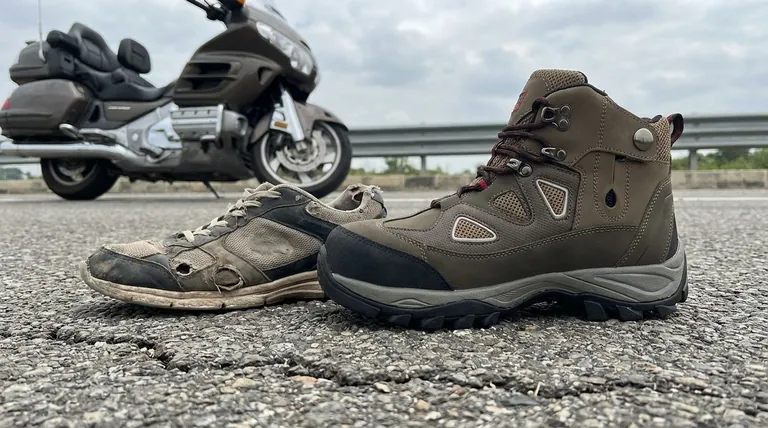
The Anatomy of Protection: Beyond Simple Durability
Regular shoes, even sturdy work boots, fail to address the three primary types of foot and ankle injuries common in motorcycle accidents.
Abrasion Resistance: Surviving the Slide
In a crash, the road surface acts like a high-speed belt sander. Materials like canvas, suede, or standard leather will disintegrate in seconds, exposing skin and bone.
Motorcycle boots are constructed from thick, highly abrasion-resistant materials like competition-grade leather or specialized textiles like Kevlar to withstand this friction.
Impact Absorption: Guarding Against Force
Your feet and ankles are vulnerable to direct impacts from the road or the motorcycle itself.
To counter this, riding boots incorporate armor and reinforcement in critical areas. This includes hardened cups at the heel and toe box, as well as rigid protectors or impact-absorbing padding over the ankles and shin.
Structural Integrity: Preventing Twists and Breaks
One of the most severe risks is the violent twisting of the ankle. Regular shoes offer virtually no protection against this.
Motorcycle boots are engineered with torsional and lateral stiffness. This rigid structure is designed to prevent the ankle from bending, flexing, or rotating beyond its natural limits during a crash, significantly reducing the risk of debilitating fractures and ligament damage.
Enhancing Rider Control and Comfort
Beyond pure protection, riding boots are designed to improve your connection with the motorcycle.
Specialized Soles: The Foundation of Control
A secure footing is critical for managing a motorcycle, especially when stopped.
The soles of riding boots are made from oil- and slip-resistant compounds to ensure a firm grip on various surfaces. They are also designed to be stiff enough to provide stable support on the footpegs without flexing uncomfortably.
Ergonomics for Riding: Built for the Bike
The shape and features of a riding boot are optimized for the act of riding.
They often feature a reinforced shifter pad on the toe to withstand the wear of changing gears and a molded shape that suits the typical riding posture, reducing fatigue on longer journeys.
Secure Closure Systems: Keeping the Boot in Place
For a boot to offer protection, it must stay on your foot during the violent tumbling of an accident.
Riding boots use robust closure systems—such as heavy-duty zippers, buckles, or specialized lacing systems with retention straps—to ensure they remain securely in place when you need them most.
Understanding the Trade-offs
It's tempting to think a sturdy work boot is a sufficient substitute, but key differences remain.
Why Work Boots Aren't a Substitute
While durable, most work boots lack the specific safety features required for riding. They offer minimal torsional ankle support, lack dedicated impact armor, and their tread pattern is not optimized for motorcycle footpegs.
A steel toe, designed for top-down impacts, provides no protection from the side or crushing forces and can even deform and trap your toes in a crash.
The Cost of Protection: Stiffness and Comfort
The rigidity that makes a riding boot protective also makes it less comfortable for walking.
Highly protective race or off-road boots are extremely stiff and are not intended for extended periods off the bike. Commuter-focused boots strike a better balance, but there is always a trade-off between maximum protection and off-bike walkability.
Making the Right Choice for Your Goal
Selecting the right footwear means matching the boot's features to your primary riding needs.
- If your primary focus is daily commuting or casual riding: Seek out boots that blend key safety features like ankle armor and abrasion resistance with off-bike flexibility and comfort.
- If your primary focus is high-performance track or sport riding: Prioritize maximum protection, including rigid torsional support, replaceable sliders, and extensive impact armor.
- If your primary focus is off-road or adventure touring: You need the most robust boots available, with heavy shin plating and extremely stiff construction to guard against impacts and crushing forces.
Ultimately, choosing to wear dedicated motorcycle boots is one of the most critical safety decisions a rider can make.
Summary Table:
| Feature | Motorcycle Boots | Regular Shoes |
|---|---|---|
| Abrasion Resistance | High (e.g., Kevlar, thick leather) | Low |
| Impact Protection | Armor at heel, toe, ankle | Minimal/None |
| Ankle Support | Rigid, prevents twisting | Flexible, minimal support |
| Sole Grip | Oil/slip-resistant compound | Varies, not specialized |
| Closure System | Heavy-duty zippers/buckles/straps | Standard laces or zippers |
As a large-scale manufacturer, 3515 produces a comprehensive range of safety footwear for distributors, brand owners, and bulk clients. Our production capabilities encompass all types of protective motorcycle boots, engineered with the critical features detailed above to ensure rider safety. Whether you need boots for commuting, sport riding, or off-road adventures, we can deliver high-quality, purpose-built footwear. Contact us today to discuss your specific requirements and learn how we can enhance your product line with reliable, protective footwear.
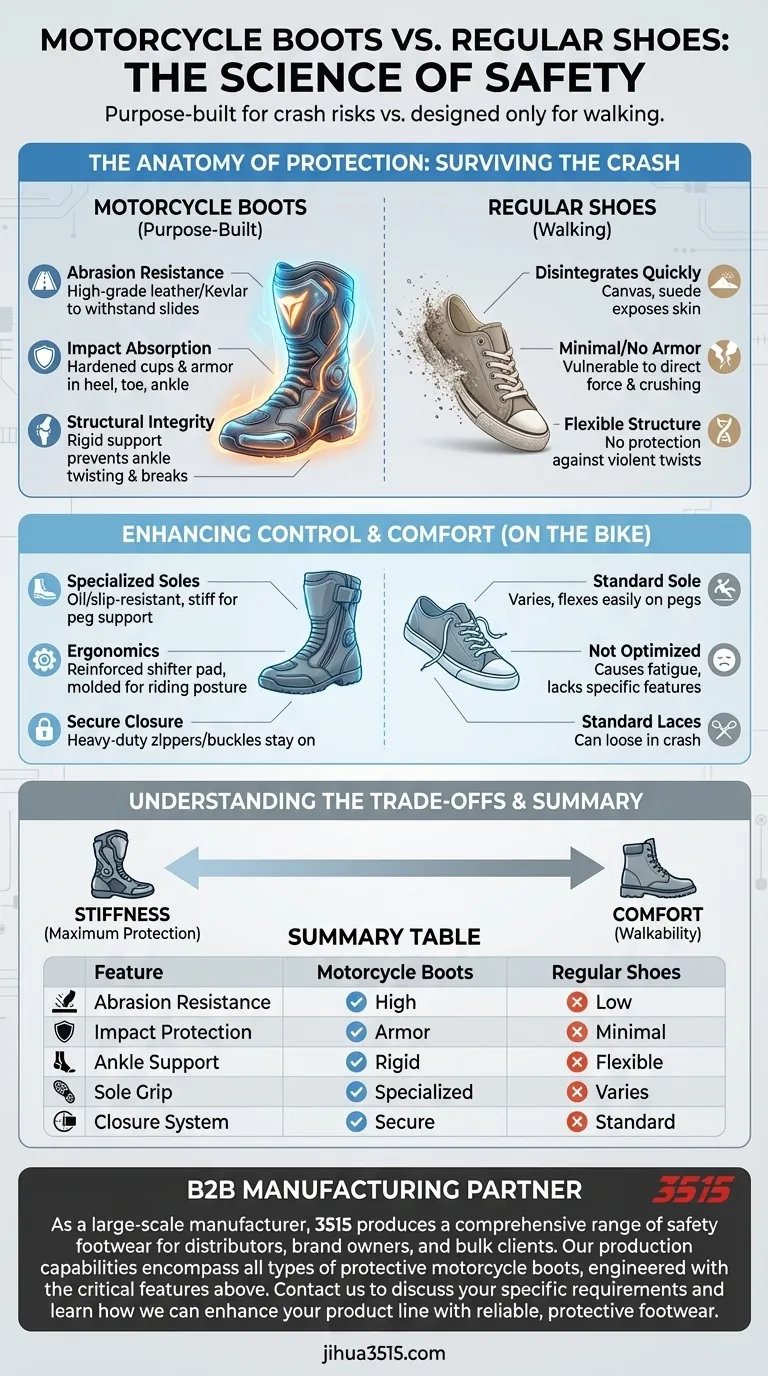
Visual Guide
Related Products
- High Performance Fire-Retardant Waterproof Safety Boots
- Premium Wholesale Tactical Style Safety Shoes Boots with Quick Lacing
- Durable Goodyear Welt Leather Work Boots for Wholesale & Private Label
- Wholesale Tactical Boots High-Traction & Reflective for Bulk & Brand Orders
- Wholesale Waterproof Tactical Boots Custom Suede & High-Traction Soles
People Also Ask
- Why are waterproof safety boots recommended for certain work environments? Essential Protection for Wet & Hazardous Jobs
- What roles do 3D vision systems and industrial robots play in the manufacturing of fire safety boots? Smart Automation
- What's the difference between waterproof and water-resistant boots? Choose the Right Footwear for Your Environment
- What should you look for to ensure boots are fully waterproof? The Essential 2-Part System
- What is a drawback of waterproof boots? The Hidden Cost of Trapped Sweat and Heat



















