
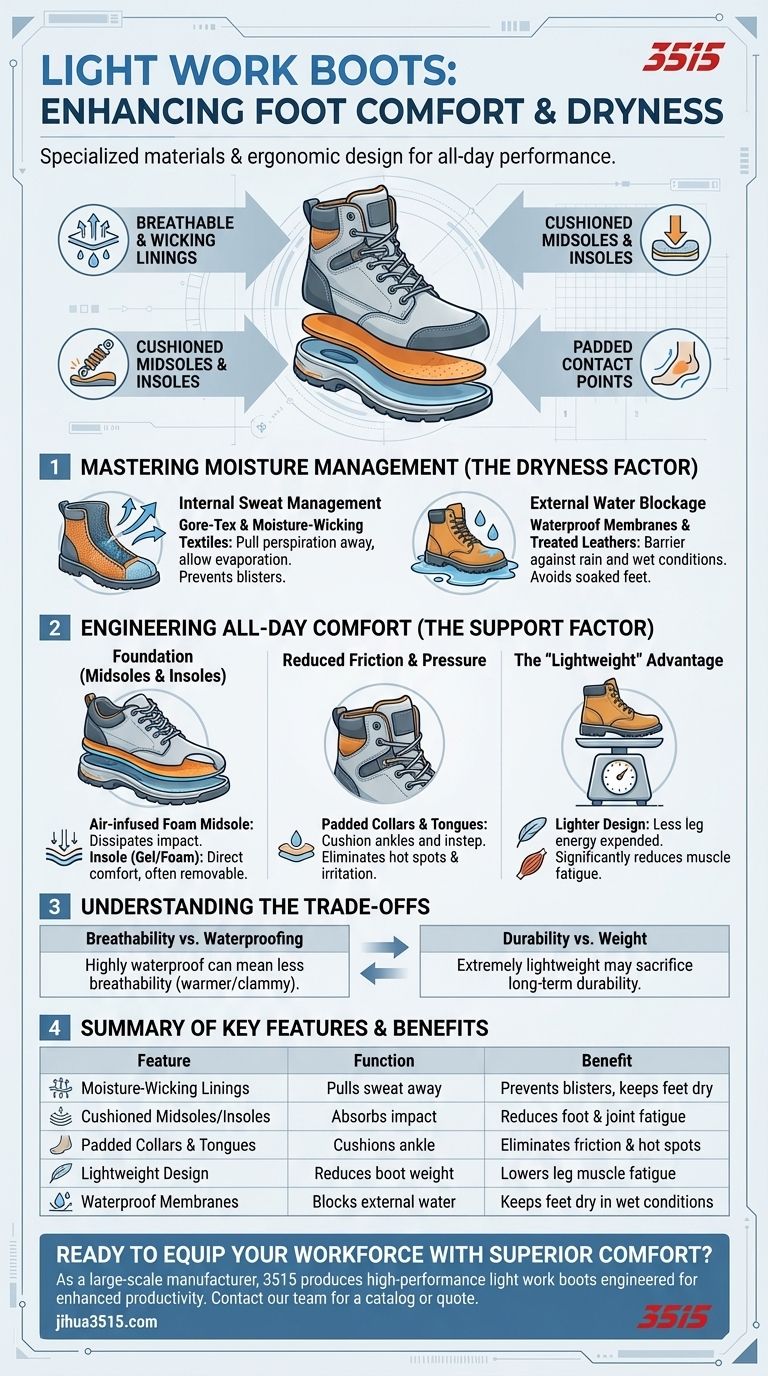
Light work boots achieve all-day comfort and dryness through a combination of specialized materials and ergonomic design. Key features include breathable, moisture-wicking linings to manage sweat, cushioned midsoles and insoles to absorb impact, and padded contact points to prevent friction.
The most effective light work boots are not just footwear; they are engineered systems. They work to manage moisture from both inside (sweat) and out (environment) while providing structural support and cushioning to actively combat foot fatigue.
Mastering Moisture Management (The Dryness Factor)
Keeping feet dry is a two-part problem: managing internal sweat and blocking external water. Modern boots address both.
The Role of Breathable Linings
The interior lining is your first defense against moisture buildup from sweat.
Materials like Gore-Tex or other proprietary textiles are designed to be moisture-wicking. They pull perspiration away from your skin and move it toward the outer layer of the boot, allowing it to evaporate.
This process is critical for preventing the damp, uncomfortable feeling that leads to blisters and foot health issues.
The Importance of Waterproofing
While linings manage sweat, the boot's exterior must prevent water from getting in.
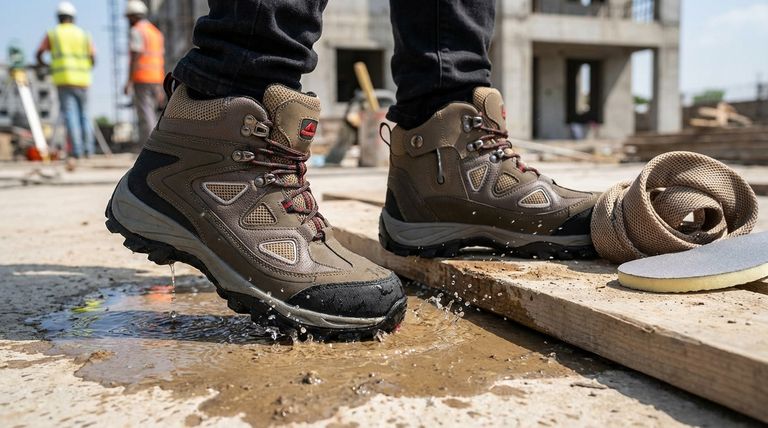
Waterproof boots use membranes and treated leathers to create a barrier against rain, puddles, and wet working conditions. This is essential for avoiding soaked feet, which can cause severe discomfort and skin breakdown.
Engineering All-Day Comfort (The Support Factor)
Comfort is not just about softness; it's about reducing the strain on your feet, joints, and muscles over thousands of steps.
The Foundation: Midsoles and Insoles
The sole system provides the primary shock absorption and underfoot comfort.
The midsole, often made of air-infused foam, is the main cushioning layer that dissipates impact. The insole (or footbed) provides direct comfort and often includes features like gel inserts or foam padding.
Many work boots feature removable insoles, allowing you to insert custom orthotics or replace worn-out footbeds for renewed arch support and comfort.
Reducing Friction and Pressure Points
Constant rubbing and pressure create hot spots and blisters.
Padded collars and tongues are specifically designed to cushion the area around your ankle and the top of your foot. This small detail dramatically reduces friction during movement, preventing irritation over a long workday.
The "Lightweight" Advantage
The overall weight of the boot is a critical comfort feature in itself.
Lighter designs mean your legs expend less energy with every step. This directly reduces muscle fatigue, making a significant difference by the end of a shift.
Understanding the Trade-offs
No single boot is perfect for every condition. Understanding the inherent compromises is key to making an informed choice.
Breathability vs. Waterproofing
There is often a trade-off between how well a boot keeps water out and how well it lets sweat escape.
The most advanced waterproof membranes are also highly breathable, but they come at a premium. Less expensive waterproof boots may sacrifice some breathability, potentially feeling warm or clammy in hot conditions.
Durability vs. Weight
Extremely lightweight boots may use less dense materials in the sole or upper.
While this enhances comfort by reducing fatigue, it may come at the cost of long-term durability compared to heavier, more traditionally constructed boots. Consider your job's physical demands when weighing this factor.
Making the Right Choice for Your Goal
Select a boot by prioritizing the features that solve the biggest challenges of your specific work environment.
- If your primary focus is working in wet conditions: Prioritize boots with a certified waterproof membrane to keep external moisture out.
- If your primary focus is working in hot, dry climates: Look for maximum breathability and superior moisture-wicking linings to manage sweat effectively.
- If your primary focus is standing on hard surfaces all day: Focus on boots with advanced midsole cushioning and supportive, removable insoles to combat impact fatigue.
By understanding these features, you can select a boot that functions as a true piece of performance equipment for your feet.
Summary Table:
| Feature | Function | Benefit |
|---|---|---|
| Moisture-Wicking Linings | Pulls sweat away from skin | Prevents blisters, keeps feet dry |
| Cushioned Midsoles/Insoles | Absorbs impact from walking/standing | Reduces foot and joint fatigue |
| Padded Collars & Tongues | Cushions ankle and instep | Eliminates friction and hot spots |
| Lightweight Design | Reduces boot weight | Lowers leg muscle fatigue over long shifts |
| Waterproof Membranes | Blocks external water | Keeps feet dry in wet conditions |
Ready to equip your workforce with superior comfort?
As a large-scale manufacturer, 3515 produces a comprehensive range of high-performance light work boots for distributors, brand owners, and bulk clients. Our boots are engineered with the precise features discussed—advanced moisture management, superior cushioning, and ergonomic support—to enhance worker productivity and well-being.
Let's discuss how we can meet your specific needs. Contact our team today to request a catalog or get a quote.
Visual Guide
Related Products
- Durable Leather Work Boots for Wholesale & Custom Manufacturing
- Durable Leather Work Boots for Wholesale & Custom OEM Manufacturing
- Durable Leather Work Boots Wholesale Manufacturer & Custom Factory
- Wholesale Leather Work Boots with Customizable Wedge Sole for Brands
- Durable Leather Moc Toe Work Boots for Wholesale & Custom Manufacturing
People Also Ask
- What is the difference between full-grain and top-grain leather? Premium Material Guide for Boot Manufacturers
- What are the common workplace hazards that can be mitigated with the right work boots? Protect Your Workforce
- What are the common foot issues workers face due to uncomfortable work boots? Prevent Pain & Deformities
- What are the advantages of leather versus synthetic work boots? A Guide to Choosing the Right Material
- What are the key components of modern work boots? Engineered for Ultimate Durability and Comfort














