
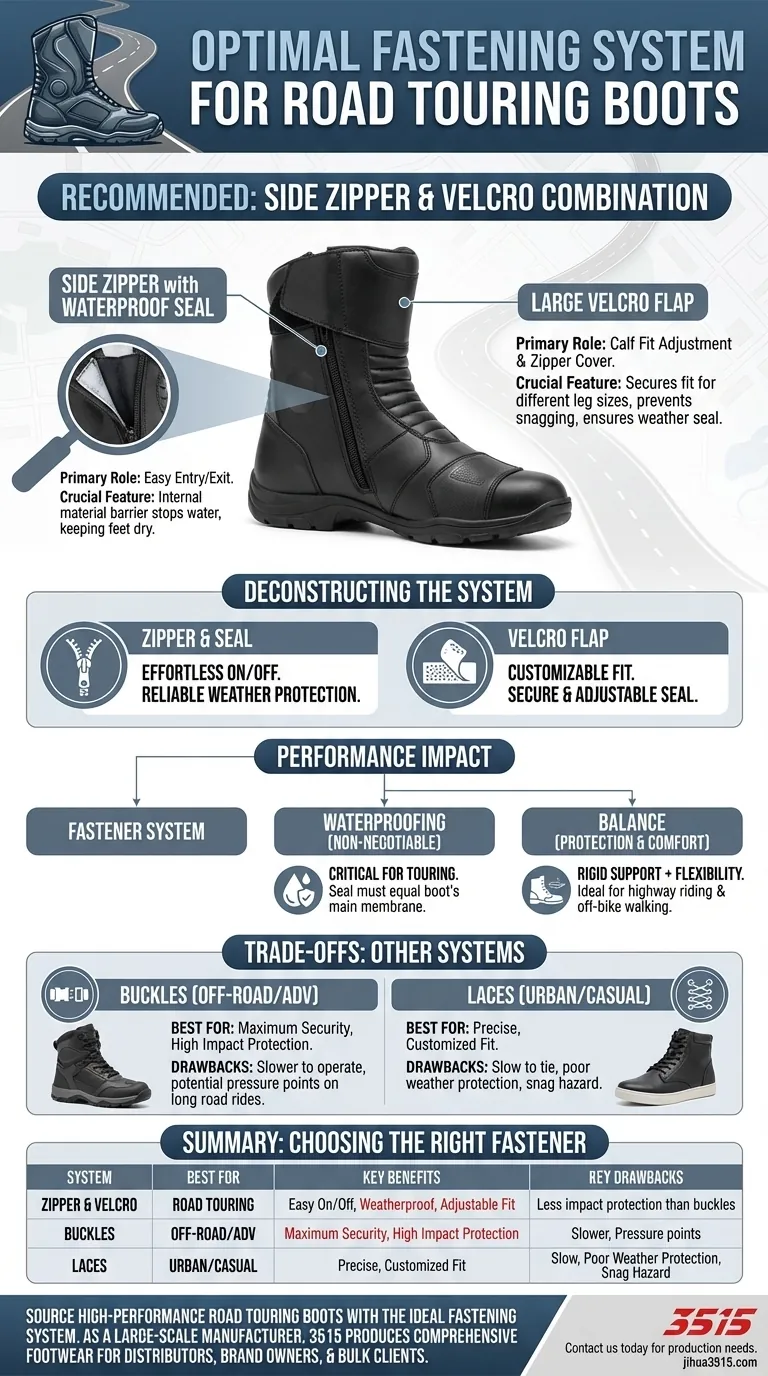
For road touring boots, the most recommended fastening system is a combination of a side zipper with a waterproof seal and a large Velcro fastener at the top. This design provides the ideal balance of a secure, adjustable fit, all-weather protection, and the convenience required for long-distance travel.
The core challenge for a road touring boot is to be easy to put on, comfortable for all-day wear, and completely weatherproof. The side-zipper and Velcro combination has become the industry standard because it solves all three of these problems more effectively than any other system.
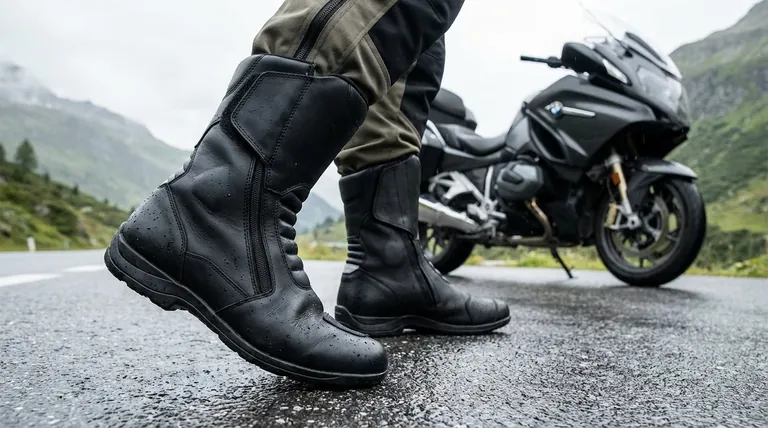
Deconstructing the Recommended System
To understand why this combination is so effective, it's best to look at the role of each component. They work together to create a boot that is both secure on the bike and practical off it.
The Role of the Side Zipper
The primary function of the zipper, typically located on the inner side of the boot, is to allow for easy entry and exit. After a long day of riding, you want a boot that comes off without a struggle.
Critically, for a true touring boot, this zipper must be backed by a waterproof gusset or seal. This internal material barrier is what actually stops water from entering through the zipper teeth, keeping your feet dry in a downpour.
The Purpose of the Velcro Flap
The large Velcro flap at the top of the boot serves two essential functions. First, it covers the zipper pull, preventing it from catching on your bike or flapping in the wind.
More importantly, it allows for fine-tuning the fit around the calf. This adjustability is crucial for accommodating different leg sizes and for deciding whether to wear your riding pants inside or outside the boot, ensuring a snug and secure seal against the elements.
Understanding the Trade-offs: Other Systems
While the zipper and Velcro system is ideal for road touring, other systems exist that are optimized for different types of riding. Understanding them highlights the specific benefits of the touring setup.
Buckles for Off-Road and ADV
Boots designed for dirt biking or adventure riding often use a series of rigid, ski-boot-style buckles. This system offers unparalleled security and impact protection, locking the foot and ankle in place.
However, buckles can be slower to operate and may create pressure points during long, continuous hours on paved roads. They prioritize maximum protection over the all-day comfort and convenience that are hallmarks of road touring.
Laces for Urban and Casual Riding
Laces offer a highly customized, precise fit across the entire foot and ankle. They are common on shorter, more casual riding boots.
The downsides for touring are significant. Laces are slow to tie, can be a snagging hazard if not properly secured, and offer inferior weather protection compared to a gusseted zipper system.
How the Fastener Impacts Overall Boot Performance
The fastening system doesn't exist in a vacuum. It is a key part of the boot's overall design, directly influencing its comfort, protection, and versatility.
The Non-Negotiable Waterproofing
For a touring boot, weather protection is paramount. The effectiveness of the fastening system's waterproof seal is just as important as the waterproof membrane used in the boot's main body, such as Gore-Tex.
The Balance of Protection and Comfort
Road touring demands a boot that is protective enough for highway speeds but comfortable enough for walking around at a rest stop. The zipper/Velcro system allows for a rigid, protective structure around the ankle and shin while still offering the quick access and fit adjustment needed for long-term comfort.
Making the Right Choice for Your Goal
Your ideal boot depends entirely on your primary type of riding.
- If your primary focus is long-distance road touring: The side-zipper and Velcro combination is the proven standard for all-weather comfort and convenience.
- If your primary focus involves mixed-surface adventure riding: Consider boots with buckles for their superior impact protection and ankle security, even at the cost of some convenience.
- If your primary focus is short-distance urban commuting: Laced boots can provide a great fit and casual style, but be aware of their limitations in wet weather and safety.
Ultimately, choosing a boot with the right fastening system is a critical step in ensuring your comfort and safety on any ride.
Summary Table:
| Fastening System | Best For | Key Benefits | Key Drawbacks |
|---|---|---|---|
| Side Zipper & Velcro | Road Touring | Easy on/off, weatherproof, adjustable fit | Less impact protection than buckles |
| Buckles | Off-Road/Adventure | Maximum security, high impact protection | Slower, potential pressure points |
| Laces | Urban/Casual | Precise, customized fit | Slow, poor weather protection, snag hazard |
Ready to source high-performance road touring boots with the ideal fastening system?
As a large-scale manufacturer, 3515 produces a comprehensive range of footwear for distributors, brand owners, and bulk clients. Our production capabilities encompass all types of shoes and boots, including touring models built with the recommended side-zipper and Velcro fastening for optimal comfort and protection. We can help you bring reliable, market-ready footwear to your customers.
Contact us today to discuss your production needs and get a quote!
Visual Guide
Related Products
- Durable Goodyear Welt Leather Work Boots for Wholesale & Private Label
- Durable Rubber Sole Outdoor Shoes Wholesale & Custom Manufacturing
- Wholesale Waterproof Tactical Boots Custom Suede & High-Traction Soles
- Durable Leather Tactical Boots Wholesale & Custom Manufacturing for Brands
- Wholesale Tactical Boots High-Traction & Reflective for Bulk & Brand Orders
People Also Ask
- What is the difference between full-grain and top-grain leather? Premium Material Guide for Boot Manufacturers
- What are the advantages of leather as an upper material for work boots? Unmatched Durability & Custom Comfort
- Why is it important to waterproof leather work boots? Protect Your Investment and Performance
- How should new leather work boots be broken in? A Guide to Comfort and Durability
- What are the advantages of leather uppers in work boots? Unmatched Durability & Protection



















