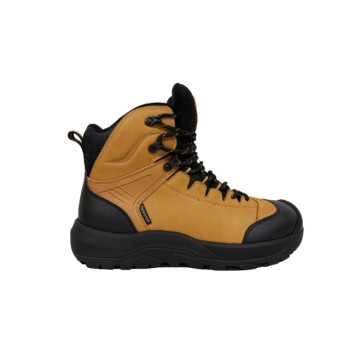
Determining the correct fit for winter cycling footwear requires a precise balance between thermal insulation and mechanical efficiency. To achieve this, one must account for the increased volume of winter-weight socks while maintaining a snug fit that prevents water ingress without restricting blood circulation.
For brand owners and distributors, the "correct fit" is a technical metric that balances user safety, thermal retention, and power transfer. Selecting a manufacturing partner with a rich heritage in precision engineering ensures these variables are consistently met across large-volume production runs.
Engineering the Optimal Fit for Thermal Efficiency
The Critical Role of Volume Management
When sourcing winter-specific cycling shoes, it is vital to account for the increased thickness of winter socks. A shoe designed with the same internal volume as a summer shoe will become too tight when paired with thermal layers.
This constriction is more than an inconvenience; it is a thermal failure point. Compressed insulation and restricted blood flow lead to colder feet, regardless of the shoe's external temperature rating.
Balancing Snugness with Circulation
A snug fit is mandatory to prevent the foot from sliding, which ensures efficient power transfer to the pedals. However, the fit must never be "tight," as pressure on the dorsal aspect of the foot can impede vascular circulation.
Manufacturers with state-of-the-art equipment and deep OEM/ODM experience utilize advanced last designs. These designs provide enough toe box room for air to circulate—a critical factor in retaining heat—while maintaining a firm hold on the heel.
Material Selection and Structural Integrity
Waterproofing vs. Mechanical Safety
Winter footwear must feature waterproof construction and often incorporates knee-length gaiters or booties. A fit that is too loose creates a significant safety hazard, as excess material can catch on bike components or the drivetrain.
Advanced manufacturing since 1951 has allowed for the development of contoured closures and lacing systems. These systems ensure the shoe remains streamlined while providing the necessary barrier against deep snow and slush.
Sole Rigidity and Pedaling Efficiency
While snow boots prioritize walking, cycling footwear requires a stiff sole to maximize energy return. However, extreme rigidity can sometimes lead to "hot spots" if the internal padding is insufficient.
Premium winter shoes feature padded sides and supportive structures that bridge the gap between a rigid power platform and a comfortable winter boot. This dual-purpose engineering is a hallmark of internationally certified manufacturing facilities.
Understanding the Trade-offs
Temperature Ratings vs. Active Realities
One of the most common pitfalls in winter footwear is relying on static temperature ratings. A boot rated for -50°C in a stationary environment may perform differently during the high-airflow, high-moisture conditions of active cycling.
Flexibility vs. Thermal Retention
Increasing the insulation often increases the bulk, which can reduce the flexibility needed for natural ankle movement. Finding the "sweet spot" requires a robust supply chain capable of sourcing high-tech, low-bulk insulators that don't compromise the shoe's profile.
Waterproofing vs. Breathability
Total waterproofing can lead to internal moisture buildup from sweat, which eventually freezes. High-end production focuses on breathable membranes that allow vapor to escape while preventing liquid water from entering.
How to Apply This to Your Product Strategy
Recommendations for Sourcing and Distribution
To ensure your inventory meets the rigorous demands of winter cyclists, consider the following technical priorities based on your business goals:
- If your primary focus is Professional Performance: Prioritize shoes with carbon-composite stiff soles and precision lacing systems that allow for micro-adjustments even when wearing heavy gloves.
- If your primary focus is Commuter Versatility: Focus on designs with high-visibility reflective materials, anti-slip soles for walking on ice, and wider lasts to accommodate a variety of everyday thermal socks.
- If your primary focus is High-Volume Reliability: Partner with a manufacturer that offers massive production scale and a proven heritage since 1951 to ensure consistent fit and quality across every unit delivered.
The foundation of a successful winter cycling line lies in the intersection of traditional craftsmanship and modern technical precision.
Summary Table:
| Key Factor | Technical Requirement | Performance Impact |
|---|---|---|
| Volume Management | Accommodate thick thermal socks | Prevents insulation compression and cold spots |
| Vascular Circulation | Snug fit without dorsal pressure | Ensures blood flow to maintain extremity warmth |
| Sole Rigidity | Stiff platform (Carbon/Composite) | Maximizes energy return and pedaling efficiency |
| Waterproofing | Breathable membranes + gaiters | Keeps moisture out while allowing sweat vapor to escape |
| Safety Profile | Streamlined, contoured closures | Prevents excess material from catching in the drivetrain |
Partner with 3515: Your Strategic Manufacturing Ally Since 1951
As a large-scale manufacturer serving global distributors and brand owners, 3515 delivers the technical precision required for high-performance winter footwear. We offer massive production scale and premium OEM/ODM capabilities, ensuring your product line benefits from robust supply chain stability and consistent large-volume delivery.
Our extensive portfolio meets diverse bulk requirements, including:
- Flagship Safety Shoes: Internationally certified for maximum protection.
- Specialized Boots: High-performance tactical, work, and rugged outdoor boots.
- Athletic & Casual: Premium training shoes, sneakers, and elegant Dress & Formal shoes.
Elevate your brand with a partner that understands the intersection of heritage craftsmanship and state-of-the-art equipment. Contact us today to discuss your bulk production needs and request a quote.
Related Products
- Premium Insulated Safety Boots and Shoes for Wholesale & Bulk Orders
- Wholesale Durable Camouflage Canvas Shoes with High-Traction Cleated Rubber Sole
- Premium Suede Sport Safety Shoes for Wholesale & Bulk Orders
- Durable Waterproof Rain Boots | Custom Manufacturer for Wholesale & Brands
- Heavy-Duty Waterproof Nubuck Safety Boots Safety Shoes for Bulk Supply
People Also Ask
- What are the recommended insulation ratings for mild winter conditions? A Guide for Active & Stationary Workers
- How does insulation thickness correlate with temperature ranges? A Guide to Choosing the Right Warmth
- What insulation level is needed for severe cold and stationary work? 1200g or Higher is Essential
- What safety advantages do insulated boots offer beyond warmth? Dielectric Protection & Superior Grip
- How does fleece lining contribute to the warmth of insulated boots? Trapping Air for Superior Cold Protection