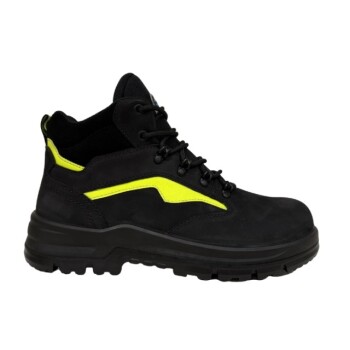
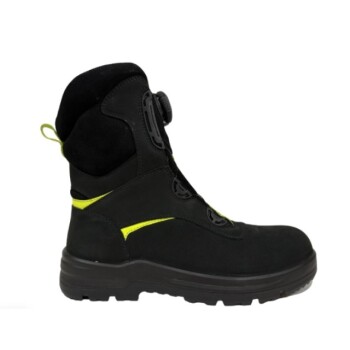
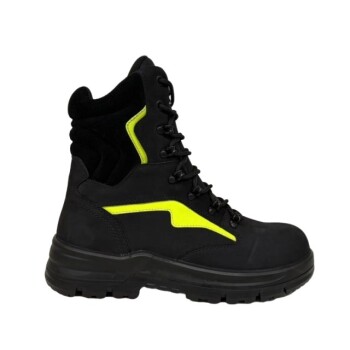
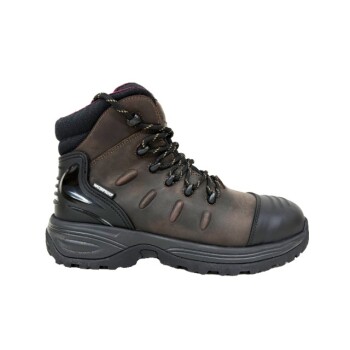
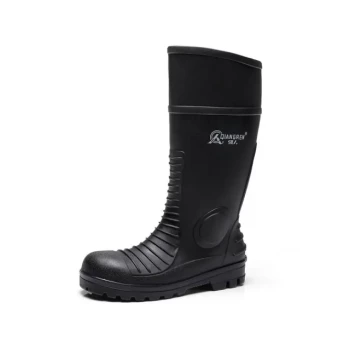
In the critical stages of concrete joint connection and grouting, waterproof and anti-slip safety boots serve as a primary defense system against both chemical injury and worksite accidents. By providing a sealed barrier against corrosive cement-based slurries and utilizing specialized treads to navigate slick surfaces, these boots ensure worker safety during steel sleeve grouting and the application of non-shrink mortar.
Core Takeaway The essential value of this footwear lies in its dual-protection capability: isolating the skin from the chemical erosion caused by wet slurry while simultaneously generating necessary friction to prevent slip-and-fall incidents in environments comprised of viscous, slippery grouting materials.
The Critical Role of Chemical Isolation
Protection Against Chemical Erosion
During the grouting phase, workers handle cement-based materials and non-shrink mortar. These substances are not merely wet; they are chemically active.
Waterproof boots are essential here, not just for comfort, but to prevent chemical erosion. Continued exposure to wet slurry can cause severe skin irritation or cement burns, making a fully sealed boot a medical necessity rather than a luxury.
Navigating Sharp Structural Elements
The joint connection stage often involves working around sharp structural connectors and steel sleeves.
High-quality safety boots provide a physical shield against these hazards. The durable construction required for waterproofing often doubles as a protective layer against punctures or cuts from these jagged metal components.
Stability in Viscous Environments
Combating the "Slurry Effect"
Walking on wet slurry presents a different hazard profile than walking on plain water. The viscosity of grouting materials creates an exceptionally slippery surface.
Anti-slip safety boots utilize specialized tread designs engineered to increase friction specifically in these wet slurry areas. This prevents the loss of footing that is common when standard footwear encounters the slick residue of grouting work.
Maintaining Operator Focus
Wet feet lead to cold, discomfort, and distraction.
By utilizing fully waterproof footwear—rather than merely water-resistant options—workers keep their feet dry regardless of the depth of the slurry or mud. This maintains body temperature and allows the operator to remain focused on the precision required for joint connections.
Understanding the Trade-offs
Waterproof vs. Water-Resistant
It is critical to distinguish between these two terms. Water-resistant boots may repel a light splash, but they will fail during the sustained exposure common in grouting tasks.
For this specific application, you must accept the trade-off of potentially lower breathability to ensure the absolute impermeability provided by fully waterproof ratings.
Tread Design Limitations
While aggressive treads provide excellent traction in slurry, they can accumulate debris.
Deep treads designed for anti-slip performance require regular cleaning. If the mortar creates a "cake" in the tread, the anti-slip properties are negated, turning the boot into a smooth surface.
Making the Right Choice for Your Goal
To ensure safety during concrete construction phases, align your equipment choice with your specific operational risks:
- If your primary focus is Grouting and Mortar Application: Prioritize chemical resistance and full waterproofing to prevent skin damage from long-term exposure to wet slurry.
- If your primary focus is Joint Connection in Rough Terrain: Prioritize puncture resistance and ankle support to navigate around sharp connectors and uneven, muddy ground.
The correct safety boot transforms the grouting environment from a chemical and physical hazard zone into a manageable, stable workspace.
Summary Table:
| Feature | Protection Value | Benefit in Concrete Construction |
|---|---|---|
| Full Waterproofing | Chemical Isolation | Prevents cement burns and skin erosion from wet slurry. |
| Specialized Anti-Slip Treads | High Friction | Ensures stability on viscous, slippery grouting surfaces. |
| Puncture Resistance | Physical Shield | Protects feet from sharp steel sleeves and structural connectors. |
| Thermal Regulation | Moisture Control | Keeps feet dry to maintain focus and prevent cold-related fatigue. |
Partner with 3515 for High-Performance Industrial Footwear
As a large-scale manufacturer serving global distributors and brand owners, 3515 offers comprehensive production capabilities for all footwear types. Our flagship Safety Shoes series is specifically engineered to withstand the rigorous demands of concrete construction, providing the chemical resistance and traction your clients need.
Our extensive portfolio includes:
- Work & Tactical Boots for high-intensity environments.
- Outdoor & Training Shoes for versatile durability.
- Dress & Formal Shoes for professional bulk requirements.
Ready to elevate your product line with industry-leading safety standards?
Contact Us Today to Discuss Bulk Orders & Custom Manufacturing
References
- Hosang Hyun, Jinsung Kim. Integrated Off-Site Construction Design Process including DfMA Considerations. DOI: 10.3390/su14074084
This article is also based on technical information from 3515 Knowledge Base .
Related Products
- Wholesale Premium Waterproof Nubuck Safety Shoes Boots
- Heavy-Duty Waterproof Nubuck Safety Boots Safety Shoes for Bulk Supply
- Premium Wholesale Waterproof Safety Boots High Performance Protection for Industrial Markets
- Premium High-Cut Waterproof Safety Boots Manufacturing & Wholesale Solutions
- Premium Waterproof Nubuck Safety Boots for Wholesale
People Also Ask
- Why are waterproof safety boots recommended for certain work environments? Essential Protection for Wet & Hazardous Jobs
- What materials are commonly used in waterproof boots? The Complete Guide to Durable, Breathable Protection
- What are the drawbacks of waterproof boots? The Breathability vs. Protection Trade-Off
- What is the advantage of one-piece construction in waterproof boots? Unbeatable Seamless Protection
- What is the difference between waterproof, water-resistant, and water-repellent boots? Choose the Right Protection for Your Feet