
First, I need to understand that the user isn't just asking "what are the features?". They're overwhelmed by choices. They're asking "How do I choose?". My goal is to give them a process, not just a list. I see three core boot types across the references: Everyday, work, and hunting. I need to make the framework universal.
Here's the plan:
- Opening: I'll start with a direct answer: The factors are Purpose, Environment, Fit, and Materials. Simple, but it addresses the question directly.
- Core Takeaway: I'll immediately frame the core insight. The right boot is a solution to a specific problem.
- Main Body: I'll dive into the details. I'll use headings to keep it structured and scannable.
- Context First: The foundation of the framework is the user's need. I'll make sure it's clear: Define the goal and environment. This will drive all other choices.
- Boot Breakdown: I'll then break down the boot features (safety, materials, fit). All those features must relate back to the use case.
- Trade-offs: This is crucial. I'll show that every choice has implications. Durability vs. Weight, Waterproofing vs. Breathability, etc. It's not about the "best" boot; it's about the right balance.
- Conclusion: I'll end with actionable advice, tailored to the user's specific goals (work, hunting, everyday).
The core of the response will be this thought: Choosing a boot isn't about finding the best option; it's about finding the best option for you.
I'll lean heavily on:
- Use Case: The boot's purpose guides all other choices.
- Fit & Comfort: Must be comfortable for the use case.
- Durability: The materials have to fit the environment and task.
- Safety (Where Relevant): Prioritize safety features for work and certain outdoor activities.
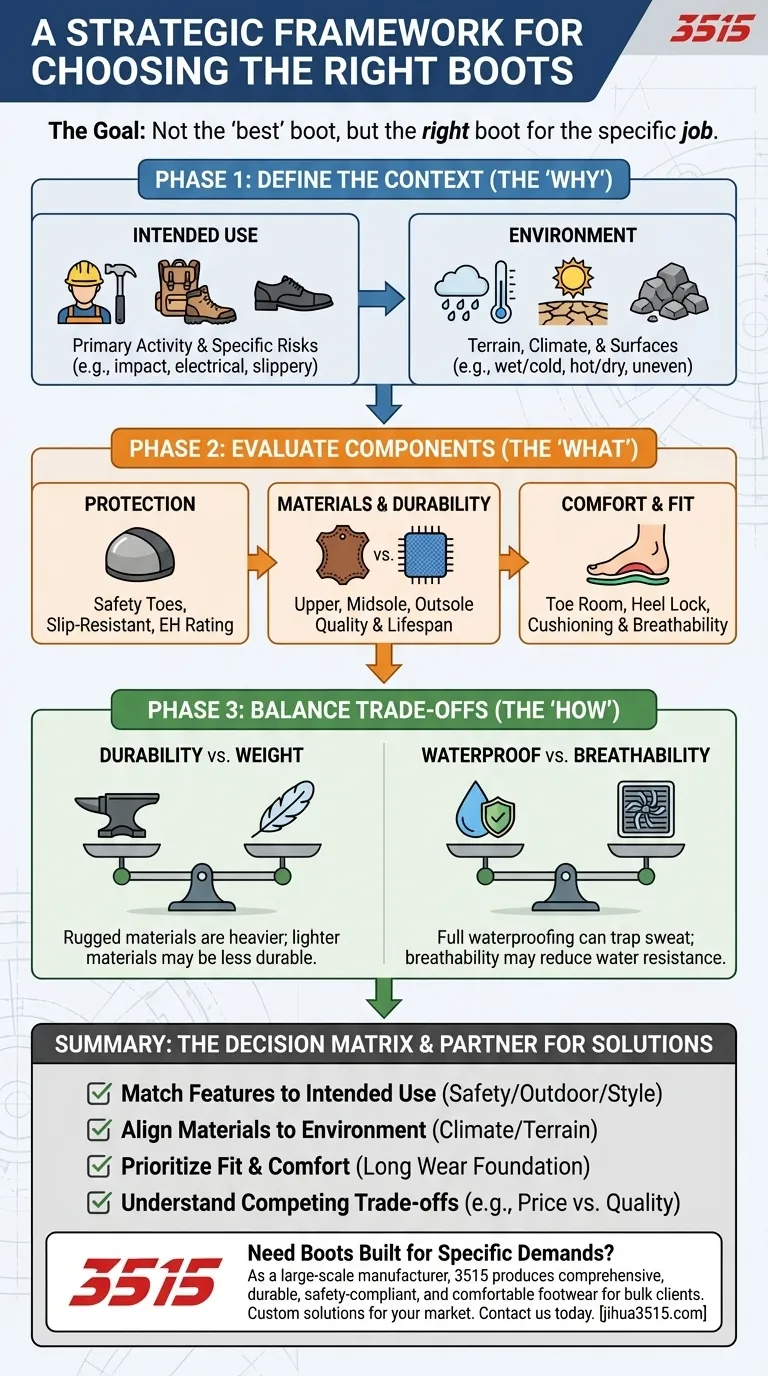
I'll synthesize the information into a structure, focusing on a clear, user-centric process to arrive at a confident choice. I'm providing an expert framework, not just a list of features. The most critical factors in choosing boots are your intended use, the environment you'll be in, the specific features required for that context, and a proper, comfortable fit. These elements must work in harmony, with your primary activity dictating the priority of all other features, from materials to safety components.
The goal is not to find the single "best" boot, but to accurately identify the best boot for a specific job. By clearly defining your primary context—be it a worksite, a mountain trail, or a city street—you create a framework that makes the right choice obvious.

Start with Your Primary Context: The "Why"
Before evaluating any specific boot, you must first define its purpose. This foundational step prevents you from buying a boot that looks right but functions poorly for your actual needs.
Defining Your Intended Use
What is the primary activity you will be doing? The demands of a construction site are fundamentally different from those of a multi-day hunt or daily office wear.
Be specific. A "work boot" is too vague. Do you need protection from falling objects, electrical hazards, or slippery floors? Each answer points to a different set of essential features.
Analyzing Your Environment
Where will you be wearing these boots? The terrain and climate are non-negotiable factors that dictate requirements for traction, waterproofing, and insulation.
Consider the surfaces you will encounter. A factory floor requires slip-resistant outsoles, while uneven, rocky trails demand strong ankle support and aggressive tread.
Also, evaluate the weather. Cold, wet conditions necessitate boots with certified waterproofing and thermal insulation, whereas hot, dry climates prioritize breathability to prevent blisters and discomfort.
Deconstructing the Boot: The "What"
Once your context is clear, you can effectively evaluate a boot's components. Each part serves a function, and its suitability is measured against the job you need it to do.
Core Protective Features
Safety and protection are the most critical functions for any work or outdoor boot. Look for features that directly mitigate the risks of your environment.
This includes safety toe caps (steel, composite, or aluminum) for impact protection, slip-resistant outsoles for traction, and electrical hazard (EH) ratings for high-risk jobs. For outdoor use, robust ankle support is a key protective feature.
Materials and Durability
The materials used in the upper, midsole, and outsole determine the boot's lifespan, flexibility, and weight. High-quality materials are an investment in long-term performance.
Full-grain leather uppers offer maximum durability and water resistance, while synthetics like Cordura provide a lighter, more breathable alternative. The outsole's material and lug pattern determine its traction and longevity.
The Foundation of Comfort and Fit
Even the most feature-rich boot is useless if it's painful to wear. A proper fit is the absolute foundation of a good boot, directly impacting comfort, safety, and long-term foot health.
Ensure there is adequate room in the toe box and that your heel is locked in place without slipping. Pay close attention to cushioning, arch support, and breathability, as these elements prevent fatigue and injury during long hours of wear.
Understanding the Trade-offs
Choosing the perfect boot always involves balancing competing priorities. Understanding these trade-offs is key to making an informed decision rather than a compromised one.
Durability vs. Weight
Heavier, rugged materials like thick leather provide exceptional durability but can lead to fatigue over long distances. Lighter boots with synthetic components are more comfortable for high-mileage days but may not withstand the same level of abuse.
Waterproofing vs. Breathability
A fully waterproof membrane is essential for keeping your feet dry in wet conditions. However, this same barrier can trap sweat, leading to moisture buildup from the inside. The right choice depends on whether you face more external water or internal perspiration.
Maximum Safety vs. Flexibility
A steel toe cap offers the highest level of impact protection but is also the heaviest and most conductive option. A composite toe is lighter and doesn't conduct cold, but may be bulkier. You must weigh the specific hazards of your job against the need for comfort and mobility.
Price vs. Quality
While it's tempting to save money, quality is the most important factor for safety and work boots. A higher upfront cost often translates to superior materials, better construction, and a longer lifespan, representing a better long-term investment in your safety and comfort.
Making the Right Choice for Your Goal
Filter your options through the lens of your primary objective. This will simplify your decision and ensure the boot you choose is a perfect tool for the task.
- If your primary focus is workplace safety: Prioritize certified safety features like toe protection, sole penetration resistance, and slip resistance that directly address your specific job hazards.
- If your primary focus is outdoor performance: Match the boot's insulation, waterproofing, and ankle support directly to the climate, season, and terrain you will encounter.
- If your primary focus is everyday style and versatility: Select classic designs from quality materials that provide all-day comfort, and ensure the aesthetic aligns with your personal style.
By starting with your specific need, you transform a confusing choice into a clear and confident decision.
Summary Table:
| Factor | Key Considerations |
|---|---|
| Intended Use | Work (safety toes, EH rating), Outdoor (ankle support, traction), Everyday (style, comfort) |
| Environment | Terrain (slippery, rocky), Climate (waterproofing, insulation, breathability) |
| Fit & Comfort | Toe room, heel lock, arch support, cushioning for long wear |
| Materials & Durability | Leather (durability), Synthetics (lightweight), Outsole type (traction, longevity) |
| Safety Features | Steel/composite toes, slip-resistant soles, puncture protection |
Need boots built for your specific demands? As a large-scale manufacturer, 3515 produces a comprehensive range of durable, safety-compliant, and comfortable footwear for distributors, brand owners, and bulk clients. Whether you need rugged work boots, high-performance outdoor footwear, or versatile everyday styles, our production capabilities cover all types of shoes and boots. Contact us today to discuss your custom or bulk order requirements and get the perfect solution for your market.
Visual Guide
Related Products
- Wholesale Durable Safety Boots | Custom Steel Toe & Puncture-Resistant Manufacturing
- Premium Wholesale Tactical Style Safety Shoes Boots with Quick Lacing
- Premium Wholesale Waterproof Safety Boots High Performance Protection for Industrial Markets
- Durable Leather Work Boots for Wholesale & Custom Manufacturing
- Durable Goodyear Welt Leather Work Boots for Wholesale & Private Label
People Also Ask
- What are the consequences of not wearing safety boots? Protect Your Finances and Career
- What materials are commonly used for outsoles in safety boots? A Guide to Durability, Grip, and Comfort
- How should safety boots be cleaned to avoid damage? A Gentle Guide to Preserve Your Boots
- Why is proper storage important for safety boots? Preserve Protection and Extend Lifespan
- What are the risks of using ordinary rubber boots in forest clearing? Why professional safety boots are essential



















