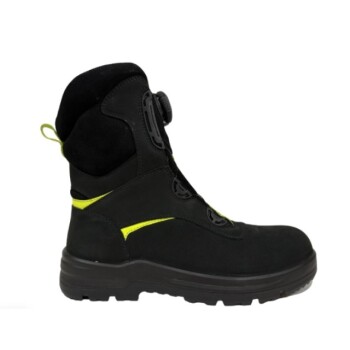
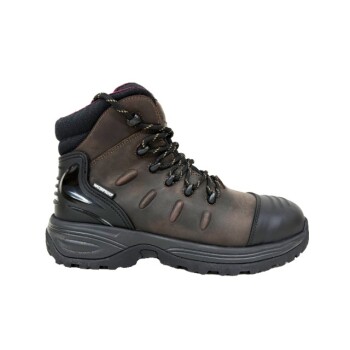
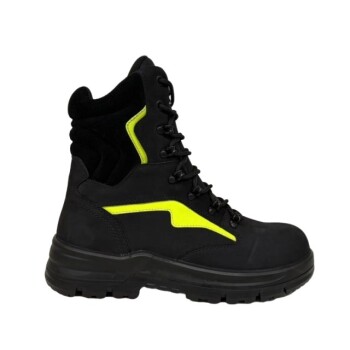
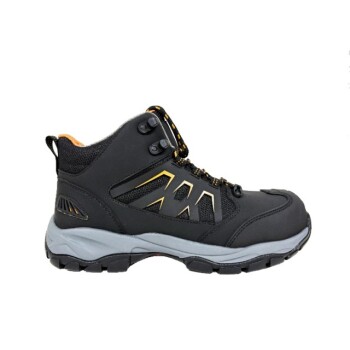
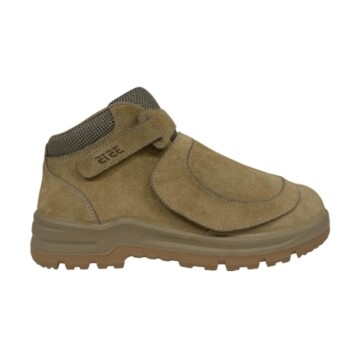
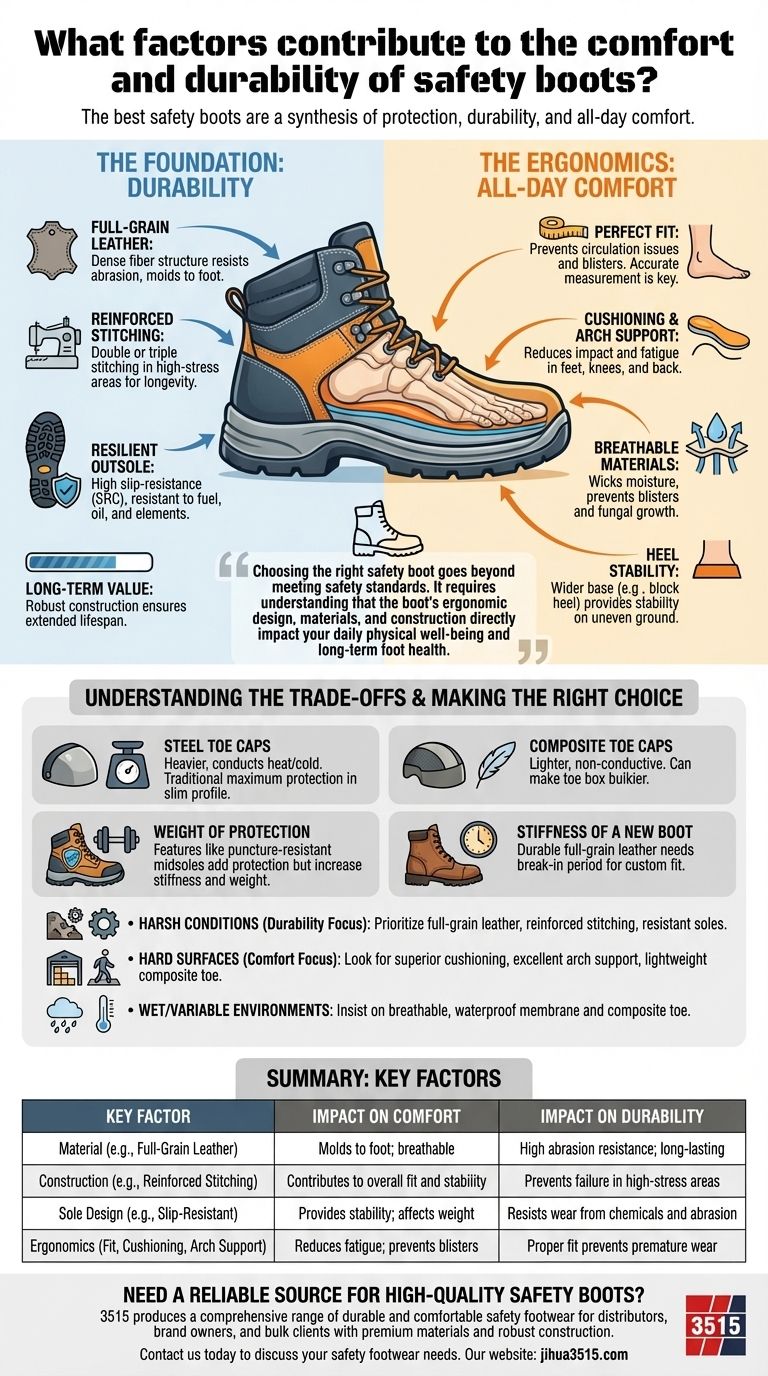
The best safety boots are a synthesis of protection, durability, and all-day comfort. The key factors that contribute to this balance are a proper fit that avoids being too tight or loose, effective cushioning and arch support to reduce fatigue, the use of breathable materials to manage moisture, and high-quality construction, such as full-grain leather and reinforced stitching.
Choosing the right safety boot goes beyond meeting safety standards. It requires understanding that the boot's ergonomic design, materials, and construction directly impact your daily physical well-being and long-term foot health.
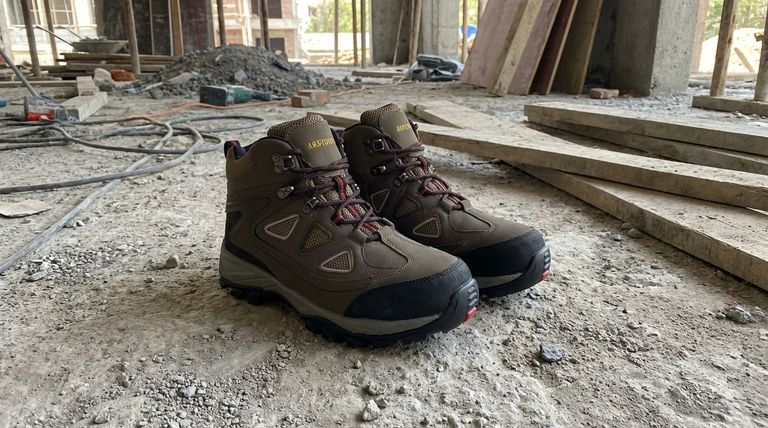
The Foundation: How a Boot is Built for Durability
A boot's lifespan is determined long before you wear it for the first time. It begins with the selection of materials and the methods used to assemble them.
The Role of High-Quality Materials
The most critical component is often the upper. Full-grain leather is a benchmark for durability due to its dense fiber structure, which resists abrasion and wear while molding to your foot over time.
Construction Methods That Matter
How the boot is put together is as important as what it's made of. Look for signs of robust construction like reinforced, double or triple stitching, especially in high-stress areas. The method used to attach the sole to the upper also significantly impacts longevity.
The Sole: Your Connection to the Ground
The outsole is the point of contact with the world and must be resilient. A durable sole will have a high slip-resistance rating (SRC is the highest standard, combining SRA and SRB tests) and resistance to elements like fuel and oil, which can degrade lesser materials.
The Ergonomics of All-Day Comfort
While durability ensures the boot lasts, ergonomic design ensures you can last through a long workday. Comfort is not a luxury; it's a critical component of safety and productivity.
Achieving the Perfect Fit
This is the most fundamental aspect of comfort. A boot that is too tight restricts circulation and causes chafing, while one that is too loose allows your foot to slide, leading to blisters and instability. An accurate foot measurement is essential.
Cushioning and Arch Support
Standing on hard surfaces for hours creates significant impact on your joints. Quality safety boots incorporate cushioning midsoles and energy-absorbing heels to dissipate this force. Proper arch support aligns your foot correctly, reducing fatigue in your feet, knees, and back.
Managing Heat and Moisture
Your feet will sweat. A boot without breathable materials traps this moisture, creating an environment for blisters and fungal growth. Look for boots with linings designed to wick moisture away from your skin.
Heel Design and Stability
The shape of the heel directly influences stability. A wider base, such as a block heel or a wedge, provides a more stable platform than a narrow one, reducing the risk of ankle rolls and improving comfort on uneven ground.
Understanding the Trade-offs
Selecting a safety boot often involves balancing competing priorities. What makes a boot safer or more durable might slightly compromise its initial comfort or weight.
Steel vs. Composite Toe Caps
Both steel and composite toe caps provide 200-joule impact protection. Steel is the traditional standard, offering maximum protection in a slim profile. However, it is heavier and conducts heat and cold.
Composite caps are made from materials like Kevlar, carbon fiber, or plastic. They are significantly lighter and do not conduct temperature, but they can make the toe box of the boot appear bulkier.
The Weight of Protection
Features like a puncture-resistant midsole are critical for protecting you from sharp objects on the ground but add stiffness and weight to the boot. Each protective layer contributes to the overall load you lift with every step.
The Stiffness of a New Boot
The most durable materials, like thick full-grain leather, are often very stiff when new. This "break-in" period is a direct trade-off: you sacrifice some initial, out-of-the-box comfort for a boot that will provide superior long-term durability and a custom fit once molded to your foot.
Making the Right Choice for Your Work Environment
Use your specific needs to guide your decision.
- If your primary focus is maximum durability in harsh conditions: Prioritize full-grain leather uppers, reinforced stitching, and soles with high resistance to chemicals and abrasion.
- If your primary focus is all-day comfort for walking on hard surfaces: Look for superior cushioning, excellent arch support, and a lightweight composite toe cap to reduce fatigue.
- If your primary focus is working in wet or variable temperature environments: Insist on boots with a breathable, waterproof membrane and consider a composite toe to avoid temperature conduction.
A truly effective safety boot protects you not just from immediate hazards, but from the cumulative strain of your daily work.
Summary Table:
| Key Factor | Impact on Comfort | Impact on Durability |
|---|---|---|
| Material (e.g., Full-Grain Leather) | Molds to foot; breathable | High abrasion resistance; long-lasting |
| Construction (e.g., Reinforced Stitching) | Contributes to overall fit and stability | Prevents failure in high-stress areas |
| Sole Design (e.g., Slip-Resistant) | Provides stability; affects weight | Resists wear from chemicals and abrasion |
| Ergonomics (Fit, Cushioning, Arch Support) | Reduces fatigue; prevents blisters | Proper fit prevents premature wear |
Need a reliable source for high-quality safety boots?
As a large-scale manufacturer, 3515 produces a comprehensive range of durable and comfortable safety footwear for distributors, brand owners, and bulk clients. Our production capabilities ensure boots built with premium materials and robust construction, tailored to meet the demands of any work environment.
Contact us today to discuss your safety footwear needs and discover how we can provide the perfect balance of protection and comfort for your customers.
Visual Guide
Related Products
- Puncture-Resistant Velcro Safety Boots for Wholesale & Custom Manufacturing
- Wholesale Durable Safety Boots | Custom Steel Toe & Puncture-Resistant Manufacturing
- Premium Grain Leather Safety Boots for Bulk Supply
- Heavy-Duty Waterproof Nubuck Safety Boots Safety Shoes for Bulk Supply
- Premium High-Cut Waterproof Safety Boots Manufacturing & Wholesale Solutions
People Also Ask
- Why are industrial safety boots with steel toes necessary for machine operators? Essential Foot Protection for Safety
- What are the characteristics of steel toe safety boots? Maximum Protection, Key Trade-offs
- Is it true that steel toes can cause toes to get cut off? Debunking the Dangerous Myth
- What are the primary safety functions of safety boots with steel-toe designs? Essential Protection for Industry
- What are the different types of safety toe boots available? Choose the Right Protection for Your Job