
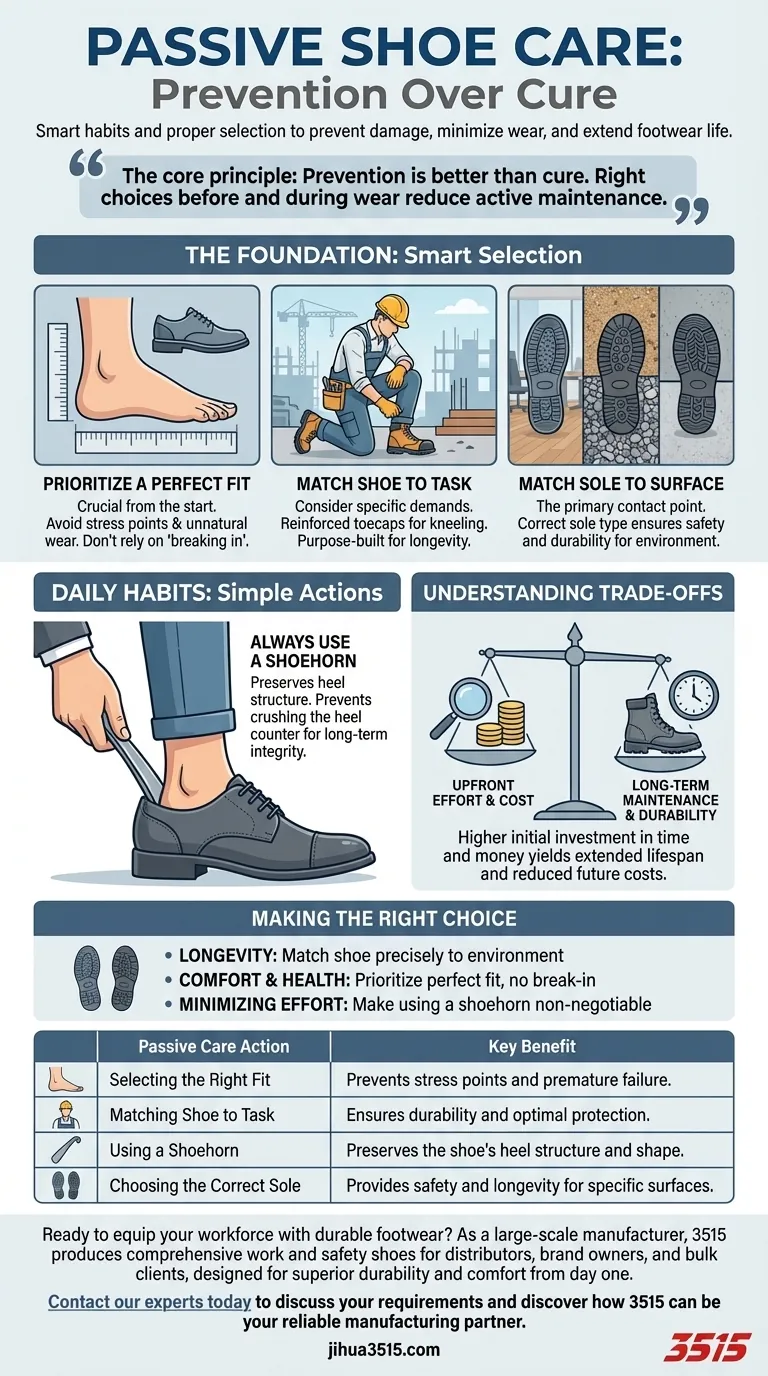
In short, passive shoe care is the practice of preventing shoe damage through smart habits and proper selection, rather than actively cleaning or repairing them. It focuses on choosing the right shoe for the job and wearing it correctly to minimize wear and tear from the very beginning.
The core principle of passive shoe care is that prevention is better than cure. By making the right choices before and during wear, you drastically reduce the need for active maintenance and extend the life of your footwear.
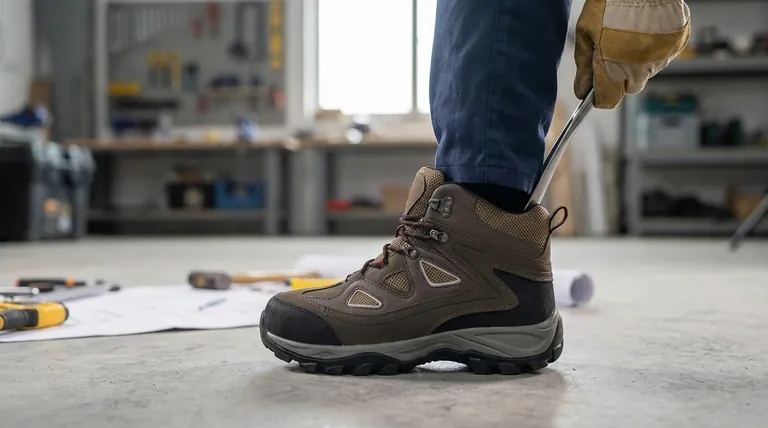
The Foundation: Selecting the Right Shoe
Passive care starts before you even own the shoes. The initial selection is the single most important factor in determining their longevity and your comfort, especially for work or safety footwear.
Prioritize a Perfect Fit
Your shoes must fit correctly from the moment you try them on. Unlike casual trainers, structured work and safety shoes do not significantly "wear in" or stretch over time.
An improper fit doesn't just cause discomfort. It creates unnatural stress points on the shoe's materials and seams, leading to premature failure. It also negatively affects your gait, potentially causing foot, knee, or back problems.
Match the Shoe to the Task
Consider the specific demands of your environment. A shoe that is well-suited to its purpose will naturally last longer and protect you better.
For instance, if you frequently work on your knees, a shoe with a reinforced toecap or scuff guard is essential to prevent abrasion.
Match the Sole to the Surface
The sole is the primary point of contact with your environment. Different surfaces demand different sole characteristics.
An office shoe is not built for a construction site, and a warehouse-floor shoe may not have the right grip for outdoor terrain. Choosing the correct sole type ensures both safety and durability.
The Daily Habits of Passive Care
Once you've selected the right shoe, simple daily habits are crucial for minimizing wear and tear. These actions require minimal effort but have a significant impact over the life of the shoe.
Always Use a Shoehorn
Forcing your foot into a shoe is one of the quickest ways to destroy its structure. This action crushes the heel counter—the rigid piece that supports your heel.
Using a shoehorn allows your foot to slide in effortlessly, preserving the shape and integrity of the shoe's heel. This simple tool is the best defense against unnecessary wear.
Understanding the Trade-offs
The primary trade-off in passive shoe care is the initial investment of time and potentially money.
Upfront Effort vs. Long-Term Maintenance
Choosing the perfect shoe requires more initial research and careful consideration than simply buying the first available pair. This upfront effort, however, saves you significant time and money on replacements and active care down the line.
Cost vs. Durability
A shoe that is perfectly suited for its task and made from quality materials may have a higher initial price. However, this cost is often offset by its extended lifespan and the comfort it provides, making it a more economical choice over time.
Making the Right Choice for Your Goal
Passive care is about establishing a foundation for shoe longevity. Your focus will determine your approach.
- If your primary focus is longevity: Invest the time to select a shoe that precisely matches your work environment, from the sole to the upper materials.
- If your primary focus is comfort and health: Prioritize a perfect fit above all else, ensuring the shoe feels right from the first wear without needing a "break-in" period.
- If your primary focus is minimizing effort: Make using a shoehorn a non-negotiable daily habit to protect the shoe's fundamental structure.
Ultimately, passive shoe care is a mindset that treats your footwear as an essential tool for your work and well-being.
Summary Table:
| Passive Care Action | Key Benefit |
|---|---|
| Selecting the Right Fit | Prevents stress points and premature failure. |
| Matching Shoe to Task | Ensures durability and optimal protection. |
| Using a Shoehorn | Preserves the shoe's heel structure and shape. |
| Choosing the Correct Sole | Provides safety and longevity for specific surfaces. |
Ready to equip your workforce with durable, long-lasting footwear?
As a large-scale manufacturer, 3515 produces a comprehensive range of work and safety shoes for distributors, brand owners, and bulk clients. Our production capabilities encompass all types of shoes and boots designed for superior durability and comfort from day one, reducing the need for constant maintenance.
Let us help you select the perfect footwear for your specific needs and environment. Contact our experts today to discuss your requirements and discover how 3515 can be your reliable manufacturing partner.
Visual Guide
Related Products
- Premium Suede Sport Safety Shoes for Wholesale & Bulk Orders
- Premium Lightweight Safety Shoes for Wholesale & Bulk Orders
- Wholesale Anti-Smash & Puncture-Proof Safety Shoes Custom Manufacturing for Brands
- Premium KPU Injection Athletic Style Safety Shoes
- Premium Safety Shoes with Rotating Buckle Safety Sneakers
People Also Ask
- What are the primary functions of professional safety shoes? Maximize Safety in Water Supply Confined Spaces
- What industries have specific OSHA footwear requirements? Ensure Compliance & Protect Your Workforce
- What role do specialized safety shoes play in preventing falls? Engineering Stability in Industrial Environments
- Why are customized foot sensors or professional safety shoes incorporated into biomechanical testing? Precision Insights
- How do the 3R principles influence green footwear design? Master Sustainable Safety Shoe Manufacturing



















