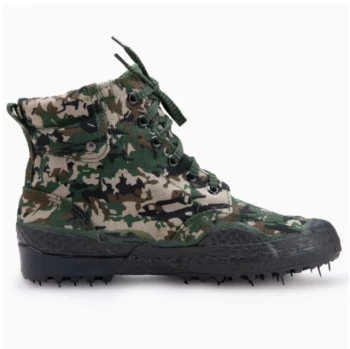
At their core, military camouflage boots are engineered for performance and endurance, integrating several key features to ensure operational readiness. The most critical comfort components are cushioned insoles for shock absorption, moisture-wicking linings to keep feet dry, and substantial ankle support to prevent injuries on unpredictable terrain.
The concept of "comfort" in a military boot is not about luxury. It is a tactical necessity designed to minimize foot fatigue, prevent debilitating blisters, and reduce the risk of injury, thereby ensuring a soldier remains effective over extended, demanding operations.
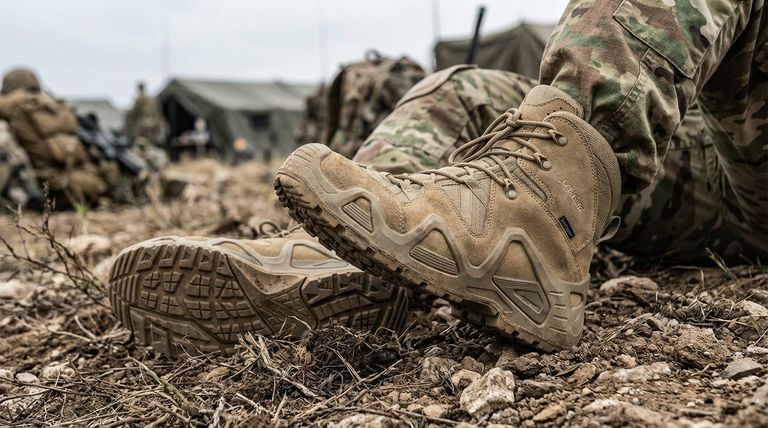
The Foundation: Mitigating Fatigue and Impact
The primary goal of a boot's sole system is to protect the foot from the relentless stress of marching, running, and carrying heavy loads.
Cushioned Insoles
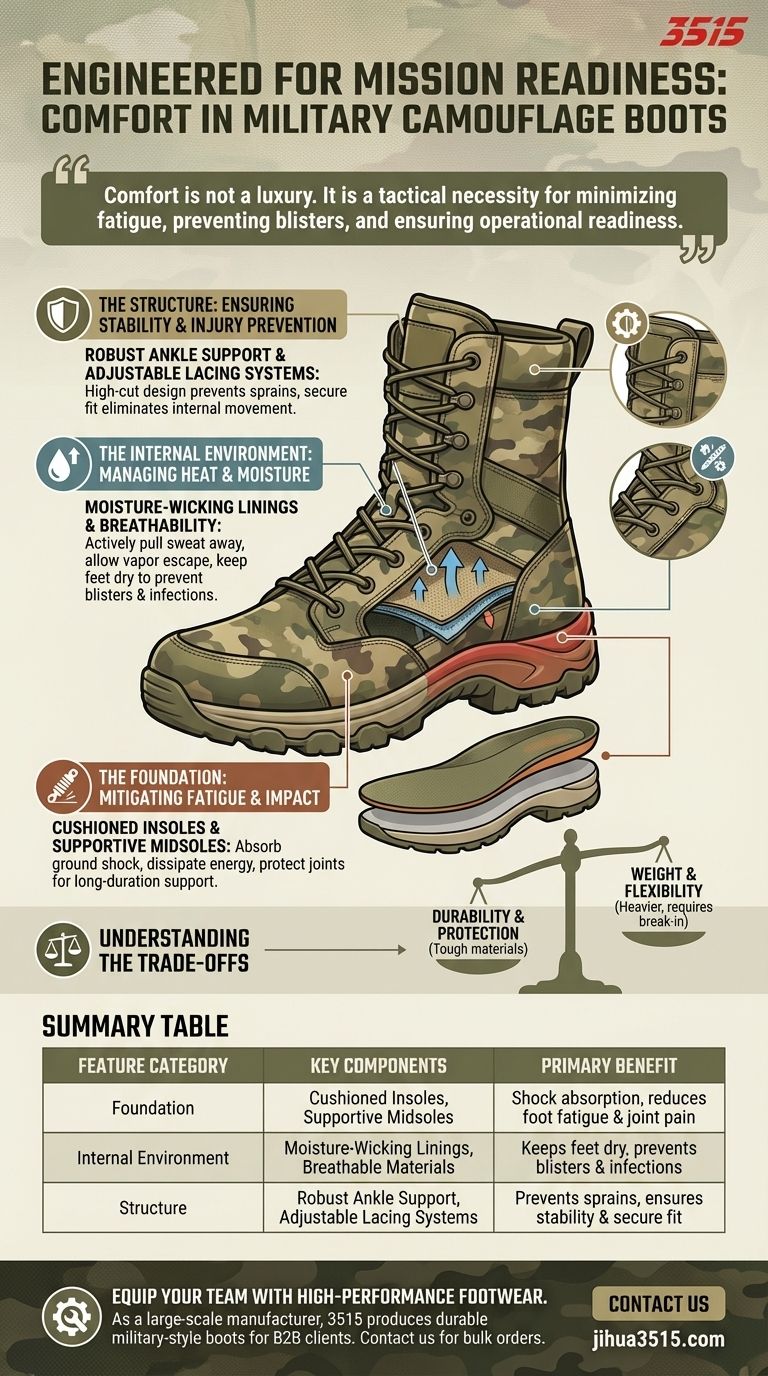
Insoles provide the first layer of defense against ground impact. They are specifically designed for long-duration support, absorbing shock and conforming to the foot's arch to reduce strain during extended use.
Supportive Midsoles
Beneath the insole, the midsole is the boot's main shock absorber. This thicker layer dissipates the energy from each step, which is critical for preventing stress fractures and joint pain over many miles.
The Internal Environment: Managing Heat and Moisture
A soldier's worst enemy can be their own sweat. A wet foot is prone to blisters, fungal infections, and in cold weather, frostbite.
Moisture-Wicking Linings
Modern military boots feature linings made from synthetic materials that actively pull moisture away from the skin. This process, known as wicking, keeps the foot drier and significantly reduces the friction that causes blisters.
Breathability
A wicking liner works best when the boot's upper materials allow that moisture to escape. While providing durability and protection, the boot must also be breathable enough to let water vapor out, maintaining a stable internal environment.
The Structure: Ensuring Stability and Injury Prevention
A boot's structure is a critical component of comfort because it directly contributes to safety and confidence in movement.
Robust Ankle Support
The high-cut design of most military boots is intentional. It provides a rigid structure around the ankle to prevent sprains and twists, which are common risks when navigating uneven ground with a heavy pack.
Adjustable Lacing Systems
A secure, customizable fit is essential. Advanced lacing systems, often featuring speed hooks or eyelets, allow the user to tighten the boot precisely, eliminating internal foot movement that leads to chafing and fatigue.
Understanding the Trade-offs
Military boots are tools built for a specific, unforgiving purpose. This design focus comes with inherent trade-offs that are important to understand.
Durability Over Weight
These boots are constructed from tough leathers and resilient textiles to withstand extreme abuse. This focus on durability often results in a boot that is heavier than a comparable civilian hiking boot.
Protection Over Flexibility
The same features that provide robust ankle support and protection from impact can make the boot feel stiff, especially when new. A dedicated "break-in" period is almost always required to achieve optimal comfort.
How to Apply This to Your Needs
Choosing the right boot depends entirely on your intended activity.
- If your primary focus is long-distance hiking: Prioritize a boot with proven ankle support and a high-performance moisture-wicking system to prevent injuries and blisters.
- If your primary focus is standing or working on hard surfaces: Look for superior cushioned insoles and a supportive midsole to combat foot fatigue.
- If your primary focus is agility on varied terrain: Emphasize a secure lacing system that locks your heel in place, combined with strong ankle support for stability.
Ultimately, understanding these engineered comfort features allows you to select a boot that functions as a piece of high-performance equipment for your feet.
Summary Table:
| Feature Category | Key Components | Primary Benefit |
|---|---|---|
| Foundation | Cushioned Insoles, Supportive Midsoles | Shock absorption, reduces foot fatigue and joint pain |
| Internal Environment | Moisture-Wicking Linings, Breathable Materials | Keeps feet dry, prevents blisters and infections |
| Structure | Robust Ankle Support, Adjustable Lacing Systems | Prevents sprains, ensures stability and secure fit |
Ready to equip your team with high-performance footwear? As a large-scale manufacturer, 3515 produces a comprehensive range of durable and comfortable military-style boots for distributors, brand owners, and bulk clients. Our production capabilities ensure every pair meets the highest standards of support and endurance. Contact us today to discuss your specific needs and discover how we can be your trusted manufacturing partner.
Visual Guide
Related Products
- Durable Spiked Camouflage Boots Wholesale & Factory Production
- Wholesale High-Traction Camo Boots - Custom Manufacturer for Brands
- Durable Military Combat Boots with Water Drainage for Wholesale & OEM
- High-Traction Suede Tactical Boots Wholesale & Custom Manufacturing
- Wholesale Durable Camouflage Canvas Shoes with High-Traction Cleated Rubber Sole
People Also Ask
- How does boot height affect waterproofing? Choose the Right Height for Ultimate Protection
- What are the best types of shoes for different gardening conditions? Find Your Perfect Match.
- What role does camouflage play in hunting boots? It's More Than Just a Pattern
- What should you look for to ensure boots are fully waterproof? The Essential 2-Part System
- How does boot construction affect waterproofing? The Science Behind Truly Dry Feet