
My goal is to provide a clear, authoritative, and actionable guide for someone who really values their boots. I'm focusing on the "why" as much as the "what." This isn't just about cleaning and polishing; it's about preserving a valuable investment and the craftsmanship behind it.
First, I see the user wants to know the practical steps, like how to clean them. But beneath that, they want to keep their boots looking and feeling great for as long as possible. That's what I'm going to tap into. I'll need to answer the immediate question, but also emphasize how caring for these boots reflects an appreciation for quality.
The references are helpful starting points. They tell me the basics: conditioning and checking the soles are key. But I need to go deeper. The mention of cowhide lining is gold! It tells me the boots are likely of high quality, and quality materials need quality care. I'll use that to emphasize that proper care isn't just about making them look pretty; it's about preserving their construction and comfort.
I'll structure the guide like this: I'll start with the bottom line – regular conditioning and structural checks. I'll make sure it's immediately useful and scannable. Then, I'll provide a "core takeaway" that highlights the "why": This is about preserving quality and ensuring longevity.
The main body will be in-depth, but organized: a section on leather preservation, with details on cleaning and conditioning. Another section on structural integrity, focusing on those heel and sole inspections, but also touching on the welt to add some expert detail. I'll definitely include a section on common mistakes, like over-conditioning, which adds credibility and shows I'm not just selling a product. Finally, I'll provide a practical care schedule that's tailored to different usage patterns.
My voice will be objective and authoritative, but also helpful and empowering. It's about a consistent, easy-to-follow routine. It's my expertise, distilled for someone who respects their gear. Proper care for western boots is a straightforward process centered on two fundamental practices: regularly conditioning the leather to keep it supple and proactively monitoring the sole and heel for signs of wear. Due to their often ornate construction, a delicate and consistent approach is required to preserve both their function and appearance.
The core principle of western boot care is not about complex procedures, but about routine maintenance. Your goal is to preserve the integrity of the natural leather and the boot's structure, ensuring it molds to your foot and lasts for decades.
The Foundation: Leather Preservation
The defining feature of a quality western boot is its leather. Treating it correctly is the most critical aspect of long-term care, directly impacting comfort, durability, and appearance.
Why Conditioning is Non-Negotiable
Leather is a natural skin; without moisture, it will dry out, crack, and lose its supportive structure. High-quality boots often use materials like cowhide for their lining, which provides superior body and comfort. Conditioning maintains the health of these materials from the outside in.
The Conditioning Process
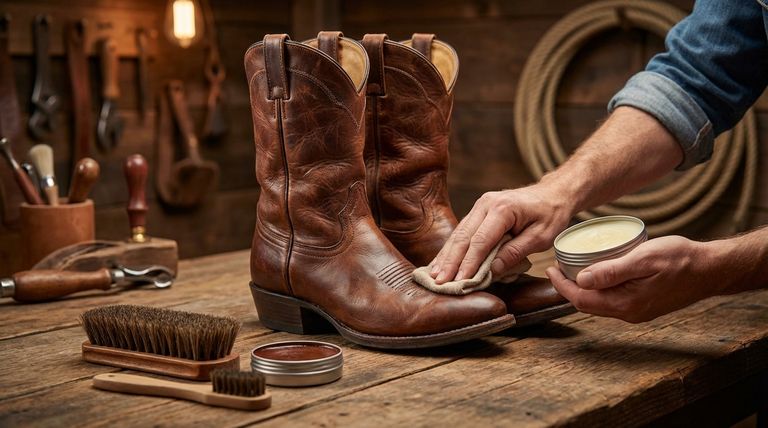
First, always wipe your boots clean with a damp cloth or a soft brush to remove any surface dirt or dust. Once completely dry, apply a small amount of a quality leather conditioner with a clean, soft cloth, using gentle circular motions. Allow the conditioner to absorb fully before wearing.
Polishing vs. Conditioning
Conditioner is for the health of the leather; it moisturizes and protects. Polish is primarily for aesthetics, adding shine and color. Always condition the leather before you consider applying a polish.
Maintaining Structural Integrity
A boot is only as good as its foundation. Paying attention to the sole and heel is essential for maintaining proper fit, comfort, and preventing more costly repairs down the line.
Inspecting the Sole
Regularly check the leather or rubber sole for uneven wear, especially at the ball of the foot. If you notice soft spots or areas wearing thin, it is time to consult a cobbler for a resole.
Checking the Heel Cap
The heel cap, or the very bottom layer of the heel, is designed to wear down and be replaced. Monitor this piece closely. Replacing it early is a simple, inexpensive repair that protects the more integral heel base.
Common Pitfalls to Avoid
Proper care is as much about what you do as what you don't do. Avoiding these common mistakes will significantly extend the life of your boots.
Using Harsh Cleaners
Never use household cleaners, soaps, or chemicals on your boots. These products can strip the natural oils from the leather, causing it to dry out and become brittle almost immediately.
Applying Direct Heat
If your boots get wet, let them air dry naturally. Applying direct heat from a radiator, fireplace, or blow dryer will cook the leather, causing it to shrink and crack.
Neglecting Storage
When not in use, store your boots upright in a cool, dry place away from direct sunlight. Using boot trees will help them maintain their shape and prevent the vamp (the top of the foot) from creasing and cracking over time.
A Practical Care Schedule
Your approach should adapt to how you use your boots. Use these guidelines to build a consistent routine.
- If your boots are for daily wear: Wipe them down weekly and perform a full conditioning once a month to counteract constant exposure and stress.
- If your boots are for occasional use: A thorough cleaning and conditioning every 3-6 months is sufficient to keep the leather healthy.
- If you expose your boots to harsh conditions (mud, snow, water): Clean and condition them immediately after they are fully dry to prevent long-term damage.
Consistent care transforms your western boots from a simple purchase into a lasting, personal investment.
Summary Table:
| Aspect of Care | Key Action | Frequency |
|---|---|---|
| Leather Preservation | Clean & Condition | Monthly (Daily Wear) / 3-6 Months (Occasional Wear) |
| Structural Integrity | Inspect Heel & Sole | Before & After Each Wear |
| Storage | Use Boot Trees & Store Upright | After Every Use |
| Post-Exposure | Clean & Condition After Drying | Immediately After Getting Wet/Muddy |
Ready to build a boot collection that lasts a lifetime? As a large-scale manufacturer, 3515 produces a comprehensive range of durable footwear for distributors, brand owners, and bulk clients. Our production capabilities encompass all types of western boots built with quality materials that respond beautifully to proper care. Let us help you source boots that are worth the investment. Contact our team today to discuss your wholesale or private label needs.
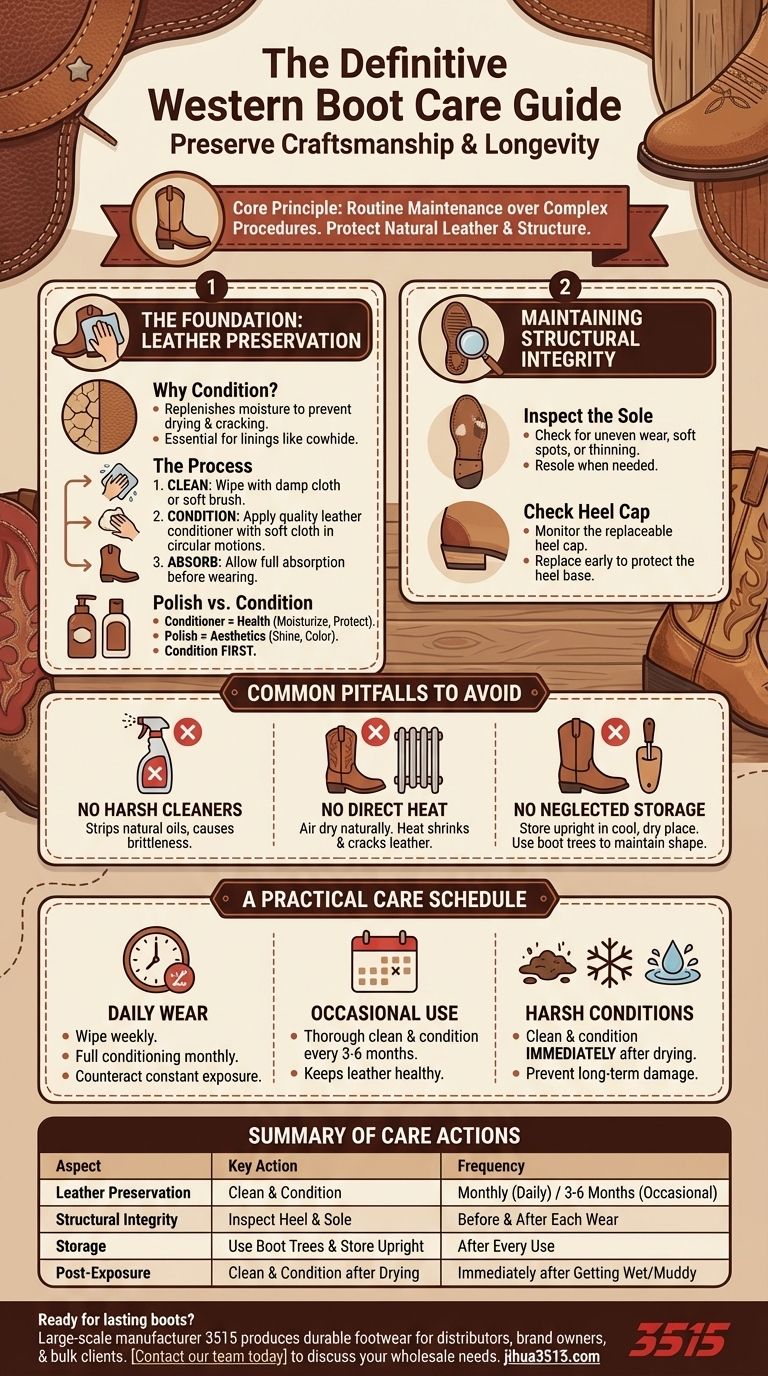
Visual Guide
Related Products
- Durable Goodyear Welt Leather Work Boots for Wholesale & Private Label
- High-Traction Suede Tactical Boots Wholesale & Custom Manufacturing
- Durable Leather Tactical Boots Wholesale & Custom Manufacturing for Brands
- Durable High-Ankle Tactical Boots for Wholesale & Custom Manufacturing
- Wholesale Safety Boots Manufacturer for Custom & Private Label Orders
People Also Ask
- What is the difference between full-grain and top-grain leather? Premium Material Guide for Boot Manufacturers
- What are the advantages of leather as an upper material for work boots? Unmatched Durability & Custom Comfort
- Why is it important to waterproof leather work boots? Protect Your Investment and Performance
- How should new leather work boots be broken in? A Guide to Comfort and Durability
- What are the advantages of leather uppers in work boots? Unmatched Durability & Protection
















