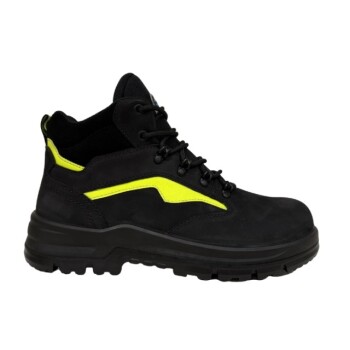
Caring for new work boots begins before you ever step onto the job site. The most critical initial steps are to first break them in at home to ensure comfort, then apply a quality leather conditioner to soften the material, and finally, add a waterproofing agent to create a protective barrier against the elements. This three-part process is foundational to both the comfort and the long-term durability of your investment.
The goal of initial boot care is not intensive cleaning, but proactive preparation. By focusing on breaking-in, conditioning, and waterproofing from day one, you prevent future discomfort and significantly extend the life of your boots.
The Foundational Step: Breaking In Your Boots
Properly breaking in new work boots is the most important step for ensuring lasting comfort and preventing premature wear. Skipping this can lead to painful blisters and damage to the boot's interior lining.
Why Breaking In is Non-Negotiable
New boots, particularly those made of leather, are often stiff and rigid. The break-in period allows the material to soften and conform to the unique shape of your feet, creating a custom fit that minimizes friction and pressure points.
The Proper Method
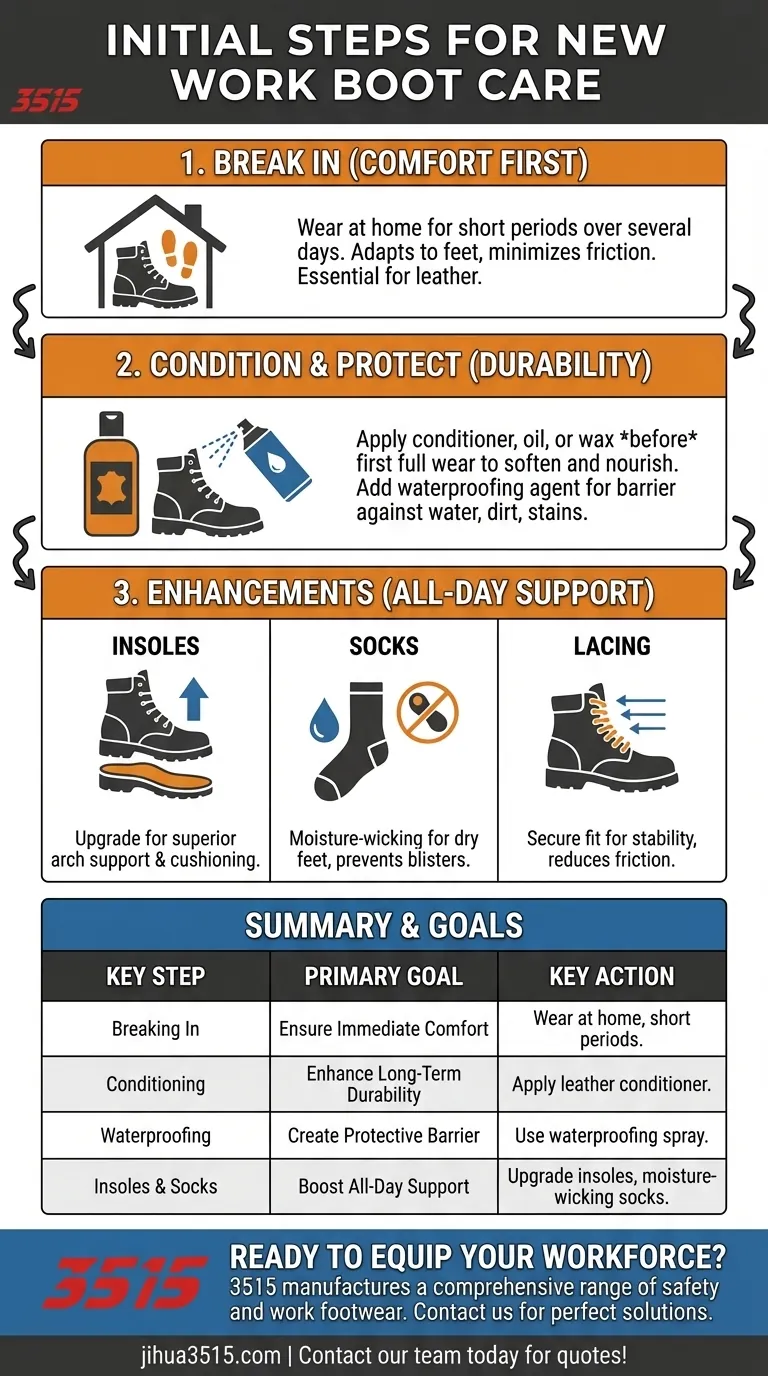
The safest and most effective way to break in new boots is to wear them around your home for a few hours at a time over several days. This gentle, gradual process allows the boots to adapt to your feet without the stress of a full workday.
Conditioning and Protecting the Material
Once your boots begin to feel comfortable, the next step is to treat and protect the exterior material. This shields them from water, chemicals, and physical damage.
The Role of a Leather Conditioner
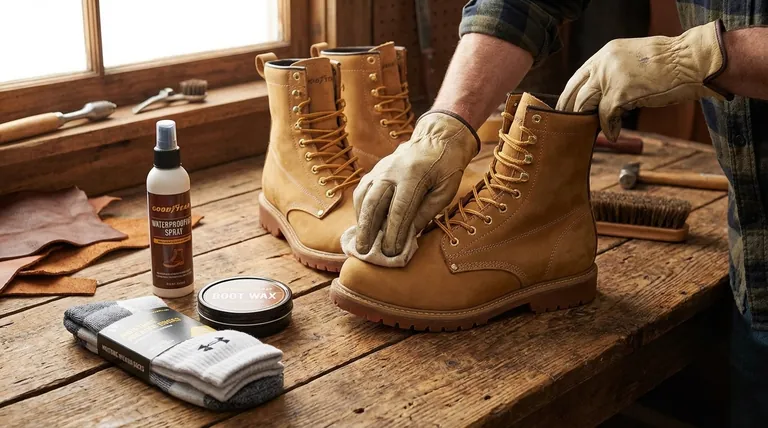
For leather boots, applying a conditioner, oil, or wax before the first full wear is essential. This nourishes the leather, making it softer and more pliable, which aids comfort and helps prevent the material from drying out and cracking over time.
Applying a Waterproofing Agent
After conditioning, apply a waterproofing spray or agent. This creates an invisible protective barrier that repels not only water but also dirt, oil, and stains. Most modern waterproofing products are versatile and safe for use on leather, suede, nubuck, and textile boots.
Understanding the Trade-offs and Enhancements
While breaking in and waterproofing are essential, a few additional steps can dramatically improve your experience. Neglecting them is a common oversight that can reduce comfort and support.
Upgrading with Insoles
The factory insoles that come with most boots provide minimal support. Swapping them out for custom or higher-quality insoles offers superior arch support and cushioning, which is critical for reducing fatigue during long days on your feet.
The Importance of the Right Socks
The socks you wear play a direct role in your comfort. Choose moisture-wicking or cushioned socks to keep your feet dry and prevent blisters, especially during the break-in period.
Lacing for a Secure Fit
Take the time to tighten your laces properly. A snug, secure fit prevents your foot from sliding inside the boot, which enhances stability and reduces the friction that causes hot spots and blisters.
Making the Right Choice for Your Goal
Your initial care routine should align with what matters most to you on the job. Use this framework to prioritize your first steps.
- If your primary focus is immediate comfort: Prioritize breaking the boots in at home for several days and always wear high-quality, moisture-wicking socks.
- If your primary focus is long-term durability: Apply a quality leather conditioner followed by a waterproofing agent before they are ever worn outside.
- If your primary focus is all-day support: Invest in better insoles from day one to ensure you have proper arch support and cushioning for long hours.
By preparing your boots before they face the demands of the job, you are investing directly in your own comfort and the longevity of your essential gear.
Summary Table:
| Key Step | Primary Goal | Key Action |
|---|---|---|
| Breaking In | Ensure Immediate Comfort | Wear at home for short periods over several days. |
| Conditioning | Enhance Long-Term Durability | Apply a quality leather conditioner to soften and nourish. |
| Waterproofing | Create a Protective Barrier | Use a waterproofing spray to repel water, dirt, and stains. |
| Insoles & Socks | Boost All-Day Support & Comfort | Upgrade insoles and wear moisture-wicking socks. |
Ready to equip your workforce with durable, comfortable work boots?
As a large-scale manufacturer, 3515 produces a comprehensive range of footwear for distributors, brand owners, and bulk clients. Our production capabilities encompass all types of safety and work shoes and boots, built for comfort and long-term performance right out of the box.
Let us help you find the perfect footwear solution for your needs. Contact our team today for quotes and more information!
Visual Guide
Related Products
- Durable Leather Work Boots for Wholesale & Custom Manufacturing
- Durable Leather Work Boots for Wholesale & Custom OEM Manufacturing
- Durable Leather Work Boots Wholesale Manufacturer & Custom Factory
- Durable Leather Moc Toe Work Boots for Wholesale & Custom Manufacturing
- Wholesale Leather Work Boots with Customizable Wedge Sole for Brands
People Also Ask
- What is the difference between full-grain and top-grain leather? Premium Material Guide for Boot Manufacturers
- What are the common workplace hazards that can be mitigated with the right work boots? Protect Your Workforce
- What are the common foot issues workers face due to uncomfortable work boots? Prevent Pain & Deformities
- What are the advantages of leather versus synthetic work boots? A Guide to Choosing the Right Material
- What are the key components of modern work boots? Engineered for Ultimate Durability and Comfort