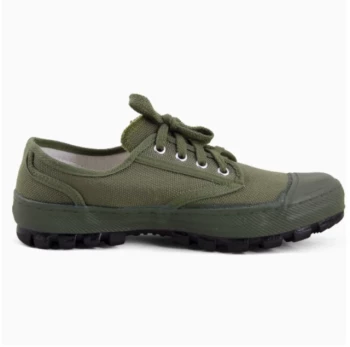
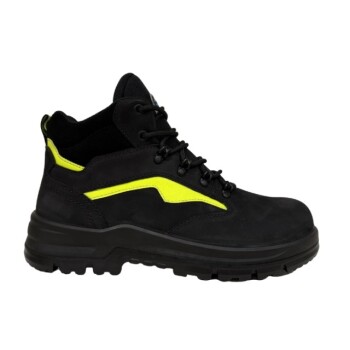
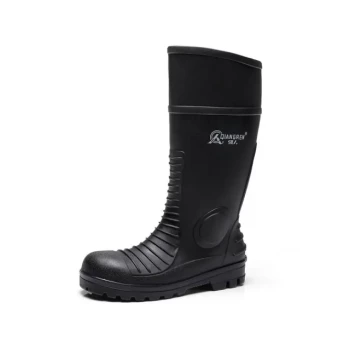
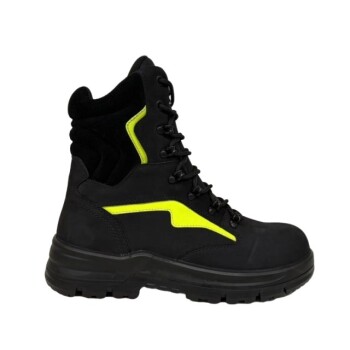
In short, women's work boots are far more than just scaled-down men's footwear. They are specialized safety boots engineered to match the specific anatomical structure of a woman's foot. This tailored design combines crucial protective elements like safety toes and slip-resistant soles with a fit that provides essential comfort and support for long hours in demanding work environments.
Choosing a women's work boot isn't about aesthetics; it's about acknowledging that proper fit dictates both safety and performance. A boot designed for a woman's unique foot shape provides superior support and stability, directly reducing fatigue and the risk of injury.
Beyond the Label: What Makes a Work Boot "For Women"?
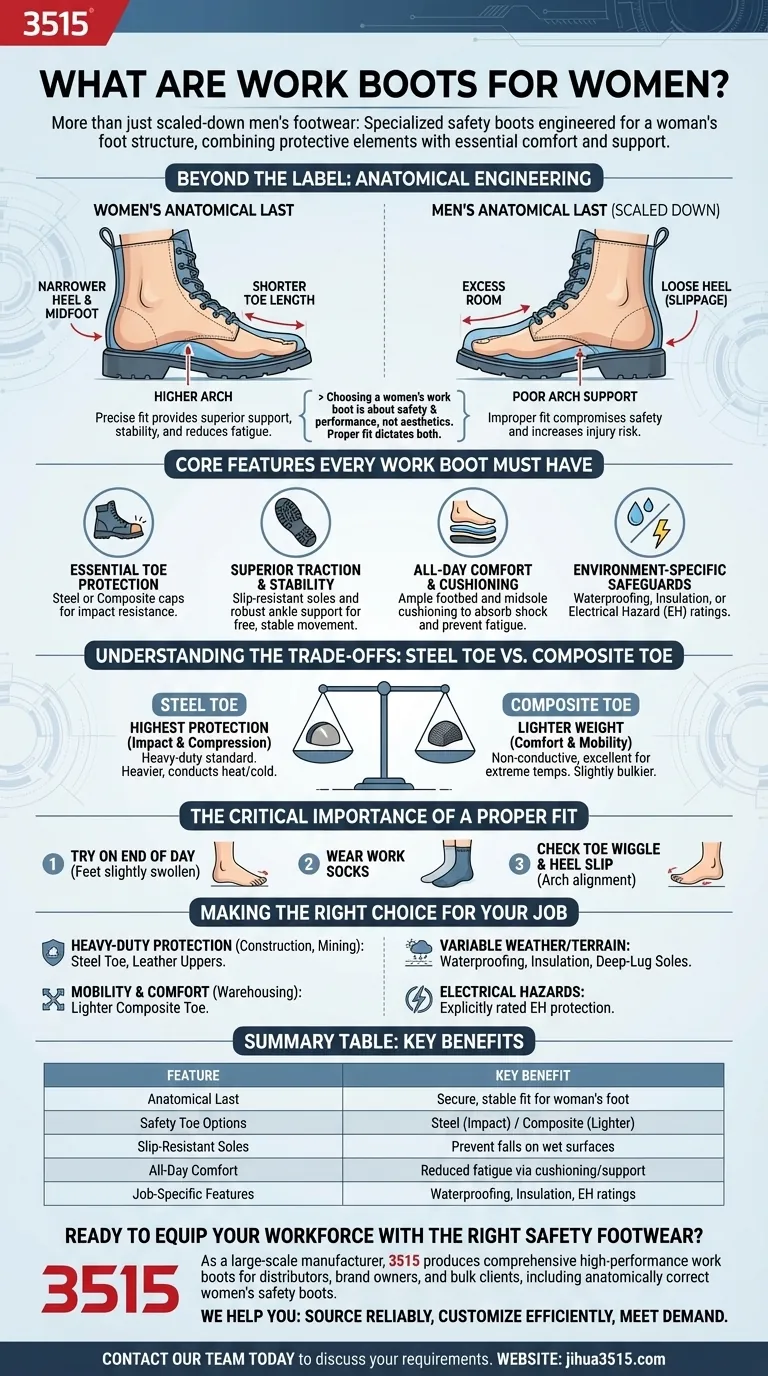
The most significant distinction lies in the internal construction of the boot, known as the "last." Men's and women's feet have consistent anatomical differences that a properly designed boot must account for.
Anatomical Engineering, Not Just Sizing
Women's feet are typically narrower, particularly at the heel, and often have a shorter toe length and higher arch compared to men's feet.
Simply sizing down a men's boot results in a poor fit, leading to heel slippage, improper arch support, and excess room that compromises stability.
The Foundation of Performance and Safety
A boot that is correctly shaped for your foot prevents strains and pains by providing targeted cushioning and support.
This precise fit ensures that safety features, like the protective toe cap, are positioned correctly to do their job effectively during an impact.
Core Features Every Work Boot Must Have
Regardless of the specific job, all quality work boots are built around a core set of protective features designed to mitigate common workplace hazards.
Essential Toe Protection
Protective toe caps are non-negotiable in many industries. They are typically made of steel for maximum impact resistance or a composite material (like carbon fiber or plastic) for lighter-weight protection.
Superior Traction and Stability
Soles are a critical safety feature. Look for boots with slip-resistant outsoles to prevent falls on wet or slick surfaces and robust ankle support to allow for free, stable movement.
All-Day Comfort and Cushioning
Quality boots provide ample cushioning in the footbed and midsole to absorb shock and prevent fatigue during long shifts on hard surfaces.
Environment-Specific Safeguards
Many work boots offer additional protections tailored to specific jobs, such as waterproofing for wet conditions, insulation for cold environments, or Electrical Hazard (EH) ratings for work around live circuits.
Understanding the Trade-offs: Steel Toe vs. Composite Toe
One of the most common decisions is choosing between steel and composite toe protection. Neither is inherently better; the right choice depends entirely on your work environment.
The Case for Steel Toes
Steel offers the highest level of protection against impact and compression. It is the traditional standard for heavy-duty industries like construction, logging, and manufacturing.
The primary trade-offs are weight, which can increase fatigue over a long day, and its conductivity of heat and cold.
The Advantage of Composite Toes
Composite toes are significantly lighter than steel, which is a major benefit for comfort and mobility. They do not conduct temperature, making them a better choice for extreme hot or cold environments.
While they meet the same national safety standards, they can be slightly bulkier than steel caps to achieve the same level of protection.
The Critical Importance of a Proper Fit
A work boot's safety features are only effective if the boot fits correctly. An improper fit can create new hazards and negate the boot's protective design.
How to Test for the Right Fit
When trying on boots, always do so at the end of the day when your feet are slightly swollen. Wear the same type of socks you will wear for work.
Ensure you have enough room to wiggle your toes, but check that your heel does not slip excessively when you walk. The boot's arch should align comfortably with your foot's natural arch.
Making the Right Choice for Your Job
Selecting the right boot means matching its features to the specific demands and hazards of your workplace.
- If your primary focus is heavy-duty protection (e.g., construction, mining): Prioritize boots with steel toes and durable leather uppers for maximum impact resistance.
- If your primary focus is mobility and all-day comfort (e.g., warehousing, light manufacturing): Consider lighter composite toe boots that reduce fatigue without sacrificing safety.
- If your primary focus is working in variable weather or outdoor terrain: Look for specific features like waterproofing, insulation, and aggressive, deep-lugged soles for traction.
- If your primary focus is working around live electrical circuits: Ensure your boots are explicitly rated for Electrical Hazard (EH) protection.
Investing in a work boot designed for your foot and your specific job is the most fundamental safety decision you can make.
Summary Table:
| Feature | Key Benefit |
|---|---|
| Anatomical Last | Designed for a woman's narrower heel and higher arch for a secure, stable fit. |
| Safety Toe Options | Steel toe for maximum impact protection; composite toe for lighter weight. |
| Slip-Resistant Soles | Superior traction to prevent falls on wet or slick surfaces. |
| All-Day Comfort | Targeted cushioning and arch support to reduce fatigue during long shifts. |
| Job-Specific Features | Options include waterproofing, insulation, and Electrical Hazard (EH) ratings. |
Ready to Equip Your Workforce with the Right Safety Footwear?
As a large-scale manufacturer, 3515 produces a comprehensive range of high-performance work boots for distributors, brand owners, and bulk clients. Our production capabilities encompass all types of safety footwear, including anatomically correct women's work boots designed for superior protection and comfort.
We help you:
- Source Reliably: Ensure a consistent supply of certified safety boots.
- Customize Efficiently: Develop branded footwear tailored to your market's needs.
- Meet Demand: Fulfill large-volume orders with competitive pricing and dependable quality.
Contact our team today to discuss your specific requirements and learn how we can become your trusted manufacturing partner.
Visual Guide
Related Products
- Wholesale Leather Work Boots with Customizable Wedge Sole for Brands
- Durable Leather Work Boots for Wholesale & Custom Manufacturing
- Durable Leather Moc Toe Work Boots for Wholesale & Custom Manufacturing
- Durable Leather Work Boots for Wholesale & Custom OEM Manufacturing
- Durable Moc Toe Wedge Sole Work Boots for Wholesale and Private Label
People Also Ask
- What is the difference between full-grain and top-grain leather? Premium Material Guide for Boot Manufacturers
- What are the advantages of leather as an upper material for work boots? Unmatched Durability & Custom Comfort
- How can leather work boots be protected from environmental elements? A 3-Step Guide to Lasting Durability
- What is the complete process for deep cleaning leather work boots? A Step-by-Step Guide to Preserve Your Investment
- What are the key qualities of leather for work boots? Superior Durability, Breathability & Custom Fit