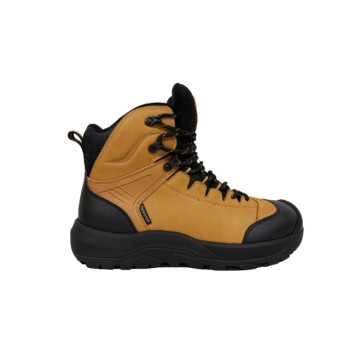
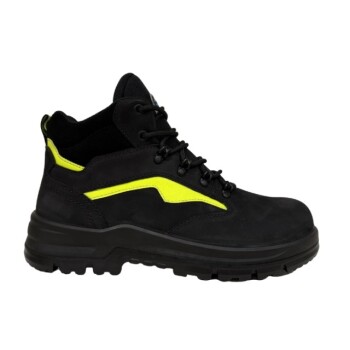
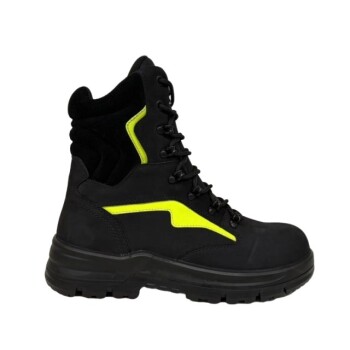
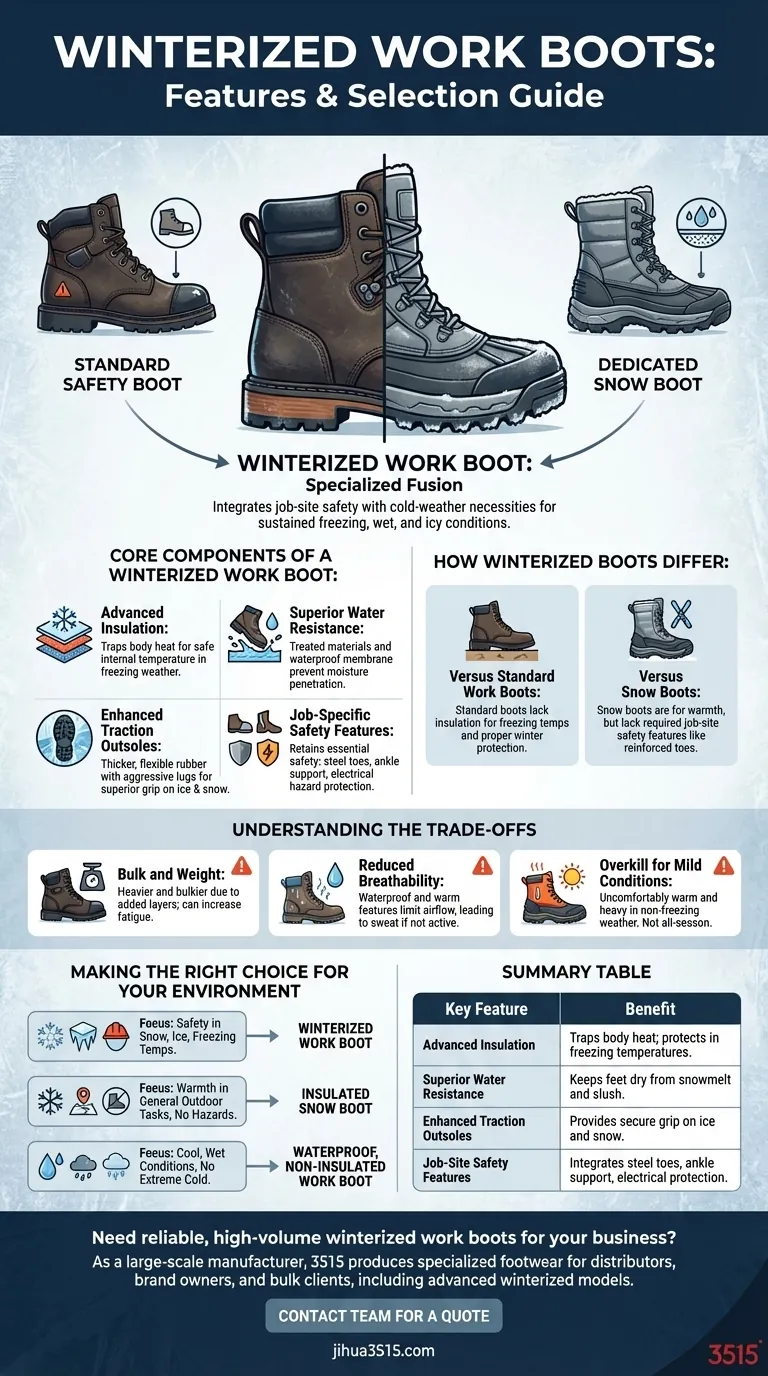
At their core, winterized work boots are a specialized fusion of a standard safety work boot and a dedicated snow boot. They are engineered specifically for professionals who require certified safety features while working in sustained freezing, wet, and icy conditions.
The critical distinction is that winterized work boots integrate job-site safety requirements like steel toes with cold-weather necessities like heavy insulation and aggressive traction, a combination not found in other types of footwear.
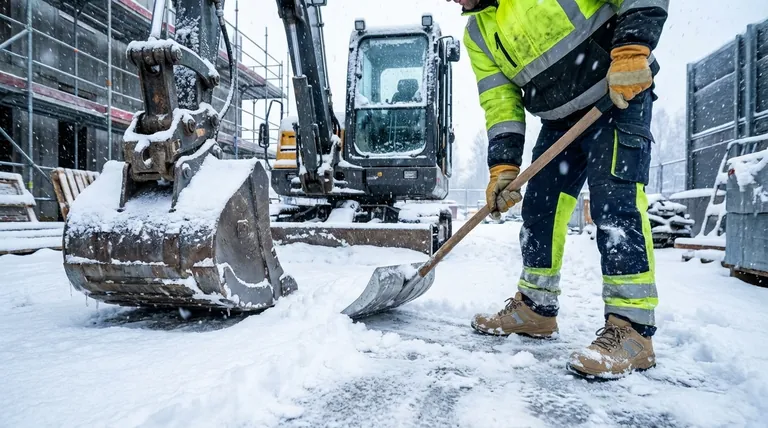
The Core Components of a Winterized Work Boot
A winterized work boot is defined by a specific set of enhancements layered on top of a standard safety boot chassis. These features work in tandem to provide protection from both environmental and workplace hazards.
Advanced Insulation
The primary feature is added insulation designed to trap body heat and maintain a safe internal temperature for your feet in freezing weather. This is a significant upgrade from the minimal lining found in standard boots.
Superior Water Resistance
These boots are constructed from highly moisture-resistant materials, such as treated leather, and often include a fully waterproof membrane. This prevents snowmelt and slush from penetrating the boot and soaking your feet.
Enhanced Traction Outsoles
To combat hazardous surfaces, winterized boots feature outsoles made of a thicker rubber compound that remains flexible in the cold. They are molded with deep, aggressive lugged treads to provide superior grip on ice and snow.
Job-Specific Safety Features
Crucially, they retain all the safety features of a regular work boot. This includes high-cut designs for ankle support, reinforced steel toes for impact protection, and sometimes insulation against electrical hazards.
How Winterized Boots Differ from Other Footwear
Understanding the specific purpose of winterized work boots becomes clearer when comparing them to other common types of boots. The key difference is always the unique combination of safety and environmental protection.
Versus Standard Work Boots
A standard work boot provides safety and durability but lacks the necessary insulation for freezing temperatures. While many are water-resistant, they are not designed to handle prolonged exposure to snow and ice.
Versus Snow Boots
A snow boot is excellent for warmth and keeping snow out during recreational activities. However, it almost never includes the certified safety features—like reinforced toes, puncture resistance, or ankle support—required on a professional job site.
Understanding the Trade-offs
While essential for cold climates, the specialized nature of winterized work boots comes with certain compromises. Acknowledging these limitations ensures you use the right tool for the job.
Bulk and Weight
The additional layers of insulation, waterproofing, and thicker rubber outsoles make these boots significantly heavier and bulkier than their three-season counterparts. This can lead to increased fatigue over a long workday.
Reduced Breathability
The same features that make these boots waterproof and warm also limit their breathability. In milder conditions or during intense physical activity, this can lead to sweaty, uncomfortable feet if not paired with proper moisture-wicking socks.
Overkill for Mild Conditions
These boots are highly specialized. Wearing them in cool, non-freezing weather will likely be uncomfortably warm and unnecessarily heavy. They are not intended to be an all-season solution.
Making the Right Choice for Your Environment
Selecting the correct footwear is a critical decision for both safety and comfort. Your specific work environment and tasks should be the primary guide.
- If your primary focus is safety on a job site with snow, ice, and freezing temperatures: The integrated safety and weather features of a winterized work boot are non-negotiable.
- If your primary focus is warmth during general outdoor tasks without impact or puncture hazards: A standard insulated snow boot will provide adequate warmth and comfort.
- If your primary focus is working in cool, wet conditions without ice or extreme cold: A quality waterproof, non-insulated work boot is the most practical and comfortable choice.
Ultimately, choosing the right boot is about matching the tool directly to the demands and hazards of your environment.
Summary Table:
| Key Feature | Benefit |
|---|---|
| Advanced Insulation | Traps body heat to protect feet in sustained freezing temperatures. |
| Superior Water Resistance | Keeps feet dry from snowmelt and slush with treated materials and membranes. |
| Enhanced Traction Outsoles | Provides a secure grip on ice and snow with deep, flexible lugged treads. |
| Job-Site Safety Features | Integrates steel toes, ankle support, and electrical hazard protection. |
Need reliable, high-volume winterized work boots for your business?
As a large-scale manufacturer, 3515 produces a comprehensive range of specialized footwear for distributors, brand owners, and bulk clients. Our production capabilities encompass all types of safety boots, including advanced winterized models designed to protect workers in the harshest conditions.
We can help you source or customize durable, high-performance winter work boots that meet your specific safety standards and volume requirements. Contact our team today to discuss your needs and get a quote.
Visual Guide
Related Products
- Premium Insulated Safety Boots and Shoes for Wholesale & Bulk Orders
- Wholesale Leather Work Boots with Customizable Wedge Sole for Brands
- Wholesale Customizable Safety Boots Durable & Protective Footwear Manufacturing
- Durable Leather Moc Toe Work Boots for Wholesale & Custom Manufacturing
- Factory Direct Wholesale Rain Boots Durable Waterproof & Fully Customizable
People Also Ask
- What are the recommended insulation ratings for mild winter conditions? A Guide for Active & Stationary Workers
- How does insulation thickness correlate with temperature ranges? A Guide to Choosing the Right Warmth
- What insulation level is needed for severe cold and stationary work? 1200g or Higher is Essential
- What safety advantages do insulated boots offer beyond warmth? Dielectric Protection & Superior Grip
- How does fleece lining contribute to the warmth of insulated boots? Trapping Air for Superior Cold Protection