
At its core, a Western boot is specialized footwear designed specifically for the unique demands of horseback riding in a Western saddle. Unlike other boots, its primary features—a high shaft, angled heel, and typically smooth sole—are engineered not for walking, but for safety and efficiency while in the stirrup.
The defining characteristic of a Western boot isn't its style, but its function. Every element is a direct solution to a problem faced by a rider, from preventing a foot from slipping through a stirrup to protecting the leg from the elements.
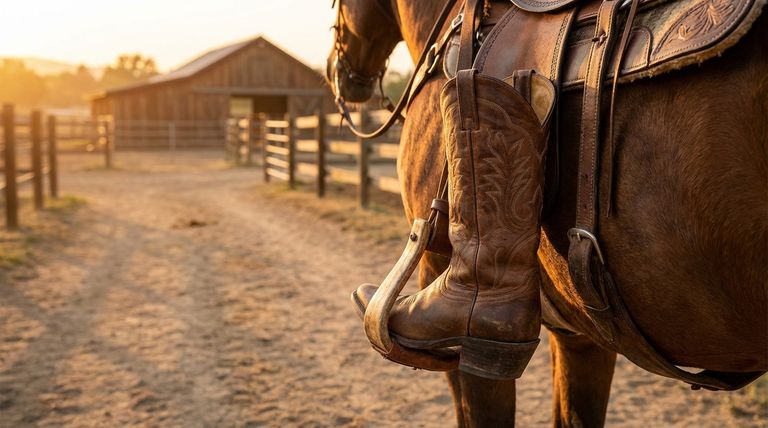
The Anatomy of a Classic Western Boot
To understand the Western boot, you must look at how each component serves a specific purpose for a rider. The design is a masterclass in form following function.
The Angled Heel
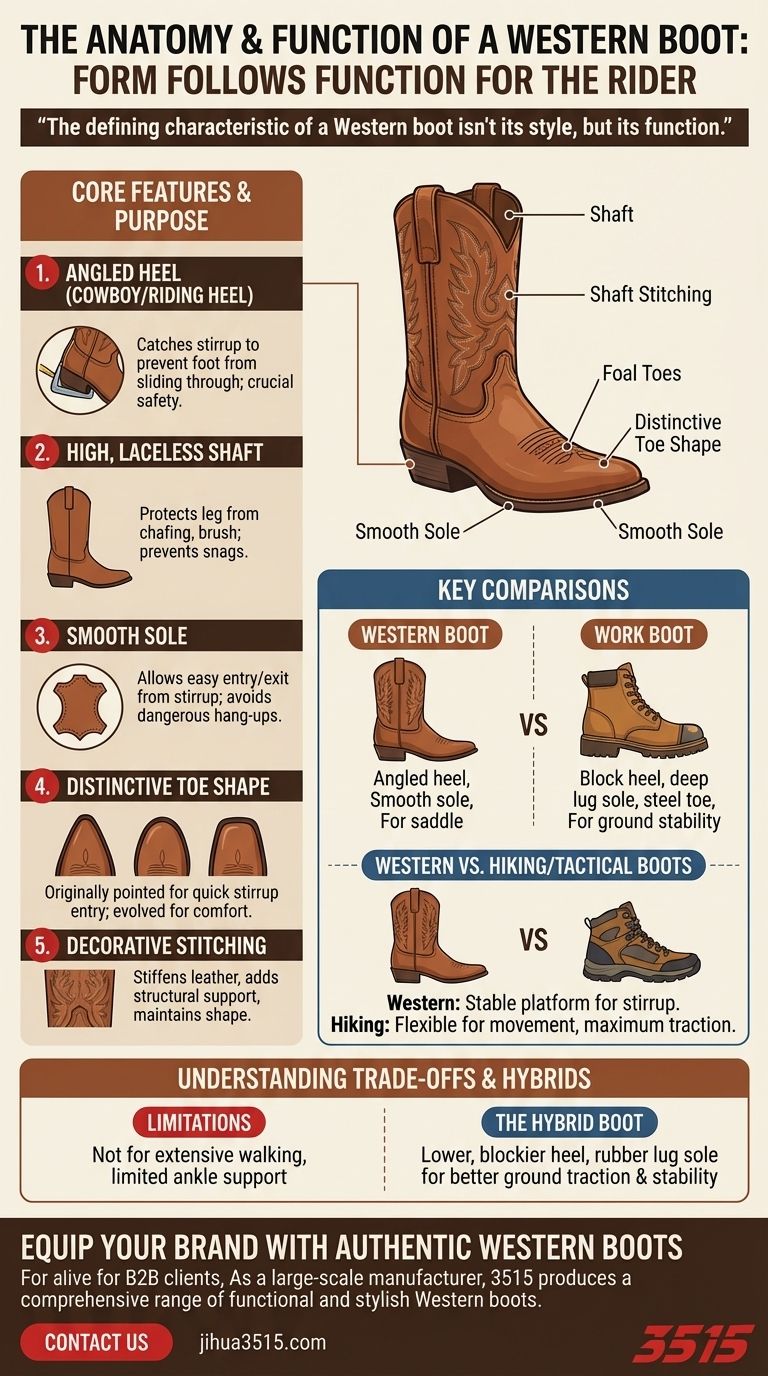
The most critical safety feature is the high, angled heel, often referred to as a "cowboy" or "riding" heel. Its primary job is to catch the back of the stirrup, preventing the rider's foot from sliding too far forward and getting stuck, which can be extremely dangerous during a fall. This contrasts with the low, blocky heels of work boots, which are designed for stability on the ground.
The High, Laceless Shaft
A Western boot features a tall shaft, typically reaching mid-calf. This protects the rider's leg from saddle chafing, as well as from brush, thorns, and snake bites when on the trail. The laceless, pull-on design is intentional; it prevents laces from snagging on branches or equipment.
The Smooth Sole
Classic Western boots have a smooth, often leather sole. This is not a design flaw but a crucial feature. It allows the rider's foot to slide easily into and out of the stirrup. Boots with deep treads or heavy lug soles, like those on hiking or work boots, can get dangerously hung up.
The Distinctive Toe Shape
Traditionally, Western boots had a pointed or narrow toe to help a rider guide their foot quickly into the stirrup. Over time, styles have evolved to include rounded and square toes, which offer more room and comfort, especially for those who wear the boots for work or long periods on their feet.
Decorative Stitching
The intricate stitching on the shaft is not purely for show. Originally, these stitch patterns served to stiffen the leather and add structural support, helping the shaft maintain its shape and prevent it from slumping. While now a key aesthetic element, it has a functional heritage.
How Western Boots Differ from Other Boots
Understanding the purpose of a Western boot becomes clearest when comparing it to other common types of footwear.
Western Boots vs. Work Boots
The core difference is the environment they are built for: the saddle versus the ground. Work boots prioritize on-foot safety and stability with features like steel toes, deep lug soles for traction, and high-cut lacing for ankle support. Western boots prioritize safety and control while riding, often sacrificing on-foot traction and ankle support for stirrup functionality.
Western Boots vs. Hiking & Tactical Boots
This comparison is about mobility. Hiking and tactical boots are designed to be lightweight and flexible, providing maximum traction for movement over varied terrain. They bend with the foot. A traditional Western boot is comparatively rigid, providing a stable platform in the stirrup rather than flexible comfort for extensive walking.
Understanding the Trade-offs
Choosing a Western boot means accepting the limitations inherent in its specialized design.
Not Ideal for Extensive Walking
The same features that make the boot excellent for riding make it less suitable for long walks. The angled heel can alter your natural gait, and the smooth sole offers very little traction on slick or uneven surfaces.
Limited Ankle Support
The pull-on design, essential for avoiding snags, provides minimal ankle stabilization compared to a laced work or hiking boot. This makes them less ideal for jobs that involve climbing or navigating rough, unstable ground.
The Rise of the Hybrid Boot
To address these trade-offs, the "Western work boot" has become popular. This hybrid style often features the classic upper of a Western boot but incorporates a lower, blockier heel and a rubber lug sole for better traction and stability, blending ranch style with on-the-ground functionality.
Making the Right Choice for Your Needs
Selecting the correct boot depends entirely on its intended use.
- If your primary focus is horseback riding: A classic Western boot with a taller, angled heel and a smooth leather sole is essential for safety and performance.
- If your primary focus is ranch work or construction: A "Western work boot" with a square toe for comfort and a durable, slip-resistant sole is the superior choice.
- If your primary focus is style and casual wear: You have complete flexibility to choose the toe shape, heel, and exotic materials that prioritize your comfort and aesthetic preferences.
Understanding the purpose behind each feature allows you to choose a boot that is not just an accessory, but a functional tool for your specific goal.
Summary Table:
| Feature | Purpose |
|---|---|
| Angled Heel | Prevents foot from slipping through stirrup |
| High Shaft | Protects leg from chafing and brush |
| Smooth Sole | Allows easy foot entry/exit from stirrup |
| Pull-On Design | Prevents snagging on equipment or branches |
| Decorative Stitching | Adds structural support and stiffens the shaft |
Ready to Equip Your Team or Brand with Authentic Western Boots?
As a large-scale manufacturer, 3515 produces a comprehensive range of functional and stylish Western boots for distributors, brand owners, and bulk clients. Whether you need classic riding boots, durable work hybrids, or fashion-forward styles, our production capabilities ensure top-quality footwear built to your exact specifications.
Contact us today to discuss your manufacturing needs and discover how we can bring value to your business!
Visual Guide
Related Products
- Durable Goodyear Welt Leather Work Boots for Wholesale & Private Label
- Durable Military Combat Boots with Water Drainage for Wholesale & OEM
- High-Traction Suede Tactical Boots Wholesale & Custom Manufacturing
- Durable Leather Tactical Boots Wholesale & Custom Manufacturing for Brands
- Durable Waterproof Rain Boots | Custom Manufacturer for Wholesale & Brands
People Also Ask
- What is the difference between full-grain and top-grain leather? Premium Material Guide for Boot Manufacturers
- What are the advantages of leather as an upper material for work boots? Unmatched Durability & Custom Comfort
- Why is it important to waterproof leather work boots? Protect Your Investment and Performance
- How should new leather work boots be broken in? A Guide to Comfort and Durability
- What are the advantages of leather uppers in work boots? Unmatched Durability & Protection















