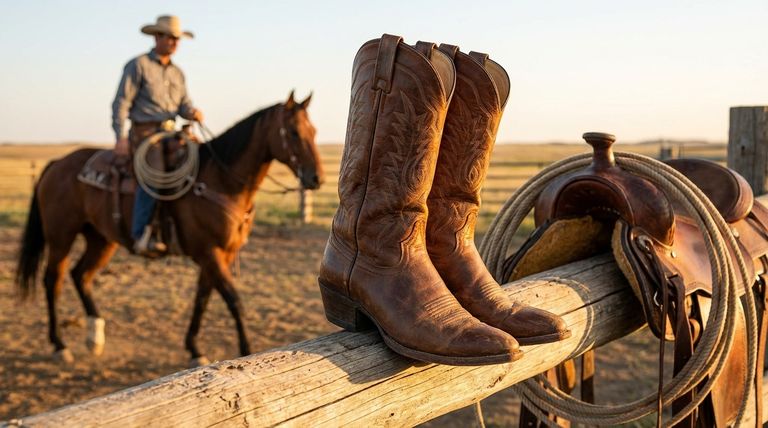
At their core, the unique characteristics of a Western boot are a direct reflection of its original purpose as a tool for horseback riding. The most defining features are a high, angled heel designed to prevent a rider's foot from slipping through a stirrup, a tall shaft to protect the leg, and a distinct toe shape for easily finding that stirrup. While often seen as stylistic, nearly every element originated from a practical, functional need.
The iconic style of a Western boot is not an accident. Every curve, stitch, and angle was born from the functional demands of a rider, creating a piece of footwear where heritage, purpose, and design are inseparable.
The Anatomy of a Classic Cowboy Boot
To understand the Western boot, you must first understand the problems it was designed to solve for a person spending long hours in the saddle. Each feature serves a specific, practical purpose.
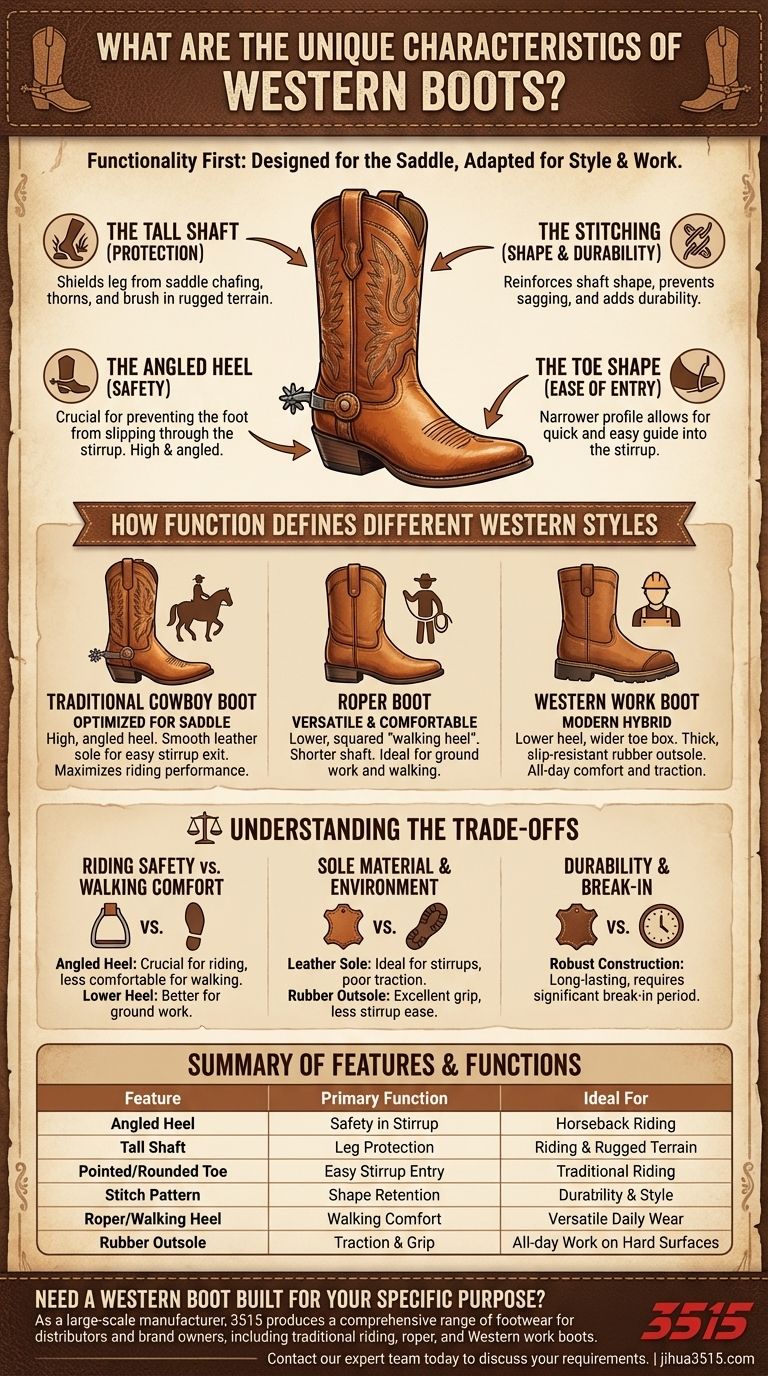
The Angled Heel
The most critical safety feature of a classic riding boot is its high, angled heel, typically measuring between one and two inches. Its sole purpose is to provide a "catch" that prevents the rider's foot from accidentally sliding all the way through the stirrup, which could be incredibly dangerous if the rider were to fall.
The Tall Shaft
The tall leather shaft, which extends up the calf, acts as a shield. It protects the rider's shins and legs from saddle chafing, as well as from encounters with brush, thorns, and even snake bites when working in rugged terrain.
The Toe Shape
Traditionally, cowboy boots featured a pointed or rounded toe. This wasn't just for looks; the narrower profile made it easier for a rider to quickly guide their foot into the stirrup when mounting a horse.
The Stitching
The decorative stitching often seen on the shaft, known as a "stitch pattern," had a functional origin. These intricate stitches helped the leather maintain its shape and prevented the tall shaft from sagging or slouching over time.
How Function Defines Different Western Styles
As the boot evolved from a rider's tool to a staple of work and fashion, its core design was adapted for different needs. The "best" Western boot depends entirely on its intended use.
The Traditional Cowboy Boot
This is the classic design optimized for being in the saddle. It features the high, angled heel and a smooth, often leather, sole that allows for easy entry and exit from the stirrup. This style prioritizes riding performance above all else.
The Roper Boot
A popular variation, the roper boot was designed for cowboys who might also be working on the ground, such as "roping" calves in a rodeo. It features a much lower, squared-off "walking heel" and often a shorter shaft, making it more versatile and comfortable for walking.
The Western Work Boot
This is a modern hybrid that blends the iconic Western aesthetic with the technology of a traditional work boot. It keeps the classic stitching and profile but adds features for all-day wear on your feet. These boots typically have a lower heel, a wider and more spacious toe box, and thick, slip-resistant rubber outsoles for superior traction and durability.
Understanding the Trade-offs
Choosing a Western boot involves balancing its original design intent with modern needs. Understanding the inherent trade-offs is key to making an informed decision.
Riding Safety vs. Walking Comfort
A tall, angled heel is a non-negotiable safety feature for riding, but it can be less comfortable for long hours of walking or standing on hard surfaces. Conversely, the lower heel of a roper or work boot is far more practical for life on the ground.
Sole Material and Environment
A traditional smooth leather sole is ideal for the stirrup but offers very little traction on wet or uneven surfaces. Modern Western work boots use thick rubber outsoles that provide excellent grip but don't slide as easily from a stirrup.
Durability and Break-In
True Western boots are built from tough, durable leather with heavy-duty stitching to withstand harsh conditions. This robust construction means they often require a significant break-in period to conform to your foot, a trade-off for their exceptional longevity.
Making the Right Choice for Your Purpose
Your primary activity should dictate the features you prioritize in a Western boot.
- If your primary focus is horseback riding: Select a traditional cowboy boot with a tall shaft and a high, angled heel for maximum safety and stability in the stirrup.
- If your primary focus is all-day work on your feet: Choose a Western work boot that combines the classic style with a lower heel, a cushioned insole, and a slip-resistant rubber outsole.
- If your primary focus is style and versatility: A roper-style boot offers a timeless look with a more comfortable "walking" heel, making it an excellent all-around choice for daily wear.
By understanding the purpose behind each design element, you can choose a Western boot that is not just a statement of style, but a functional tool perfectly suited to your needs.
Summary Table:
| Feature | Primary Function | Ideal For |
|---|---|---|
| Angled Heel | Prevents foot from slipping through stirrup | Horseback riding |
| Tall Shaft | Protects leg from saddle chafing and brush | Riding and rugged terrain |
| Pointed/Rounded Toe | Eases entry into stirrup | Traditional riding |
| Stitch Pattern | Reinforces shaft shape and prevents sagging | Durability and style |
| Roper/Walking Heel | Provides comfort for walking and ground work | Versatile daily wear |
| Rubber Outsole | Offers slip resistance and traction | All-day work on hard surfaces |
Need a Western boot built for your specific purpose?
As a large-scale manufacturer, 3515 produces a comprehensive range of footwear for distributors, brand owners, and bulk clients. Our production capabilities encompass all types of shoes and boots, including durable traditional riding boots, versatile roper styles, and modern Western work boots designed for comfort and safety. We can help you find or create the perfect boot to meet your functional and stylistic needs.
Contact our expert team today to discuss your requirements and discover how we can deliver quality and value for your business.
Visual Guide
Related Products
- Durable Goodyear Welt Leather Work Boots for Wholesale & Private Label
- Durable Military Combat Boots with Water Drainage for Wholesale & OEM
- High-Traction Suede Tactical Boots Wholesale & Custom Manufacturing
- Durable Leather Tactical Boots Wholesale & Custom Manufacturing for Brands
- Durable Waterproof Rain Boots | Custom Manufacturer for Wholesale & Brands
People Also Ask
- What is the difference between full-grain and top-grain leather? Premium Material Guide for Boot Manufacturers
- What are the advantages of leather as an upper material for work boots? Unmatched Durability & Custom Comfort
- Why is it important to waterproof leather work boots? Protect Your Investment and Performance
- How should new leather work boots be broken in? A Guide to Comfort and Durability
- What are the advantages of leather uppers in work boots? Unmatched Durability & Protection