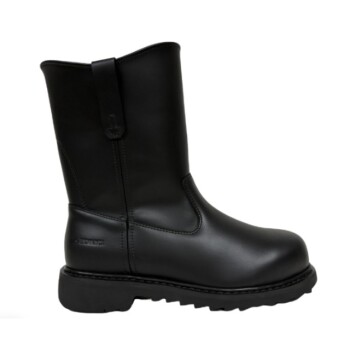
The two primary styles of cowboy boot heels are the low-profile roper heel and the taller, angled riding heel. The roper heel is shorter, broader, and more squared-off, closely resembling the heel on a traditional work boot. In contrast, the riding heel is significantly taller and angled forward, creating the classic, recognizable cowboy boot silhouette.
The choice between a roper and a riding heel is a decision between everyday walking comfort and specialized riding function. The heel's design is not merely stylistic; it directly dictates the boot's intended purpose and safety profile.
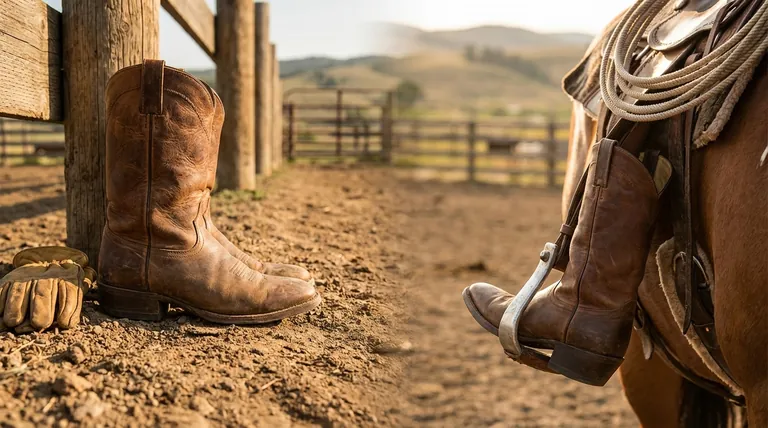
The Functional Divide: Roper vs. Riding Heels
The fundamental difference between the two main heel types lies in their original purpose. One was designed for work on the ground, while the other was engineered specifically for safety and control in the saddle.
The Roper Heel: Built for Walking
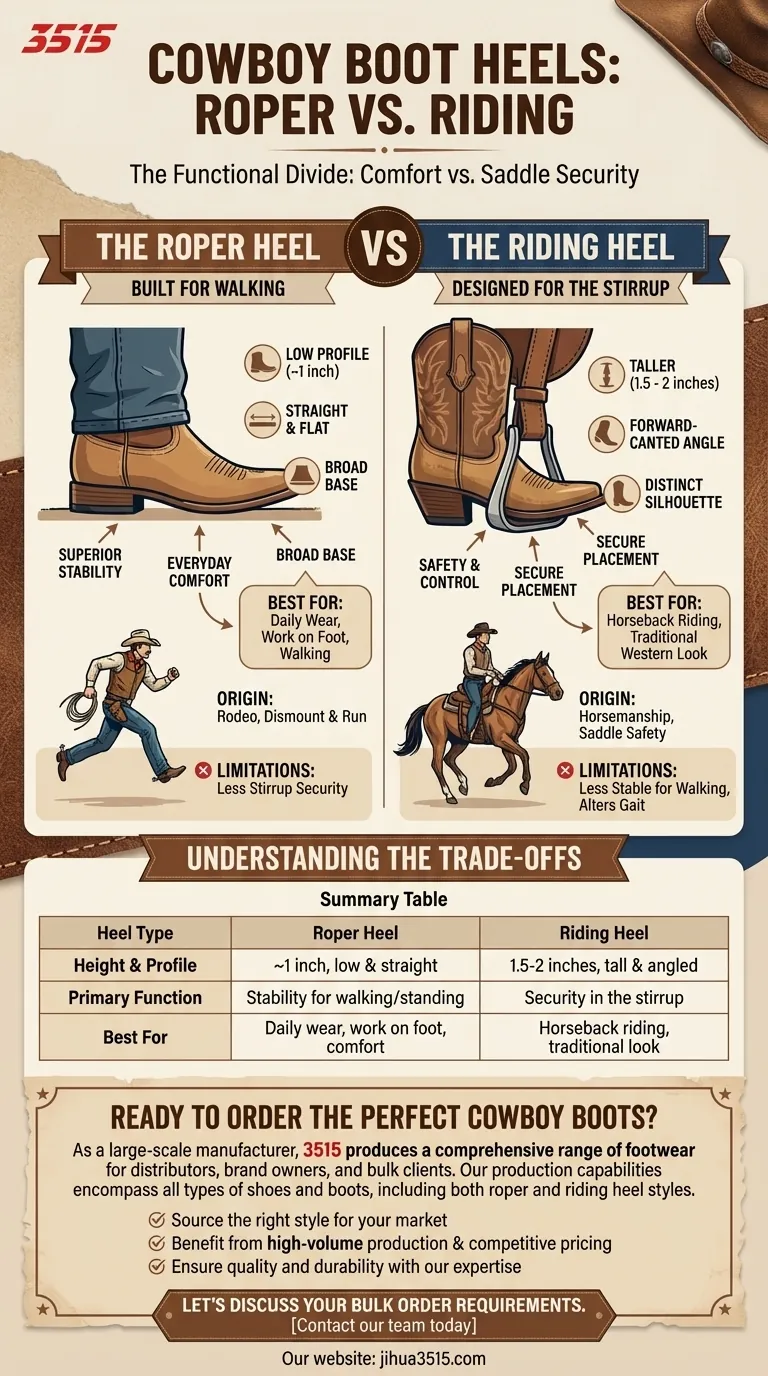
The roper heel is typically about one inch high with a straight, flat profile. Its design provides a broad, stable base for the foot.
This style originated from the needs of rodeo cowboys in events like calf roping, where they had to quickly dismount, run, and work on their feet.
Consequently, the roper heel offers superior comfort and stability for extended periods of walking or standing, making it a highly practical choice for daily wear.
The Riding Heel: Designed for the Stirrup
The traditional riding heel is taller, often ranging from 1.5 to 2 inches, and features a distinct forward-canted angle.
This design serves a critical safety function: the taller, angled heel block prevents the rider's foot from accidentally slipping forward and through the stirrup.
This secure placement provides better stability and control while in the saddle, locking the foot into the proper riding position.
Understanding the Trade-offs
Choosing a boot heel involves balancing comfort, safety, and tradition. Each design excels in its intended environment but has limitations when used outside of it.
The Compromise of the Roper Heel
The primary advantage of the roper heel is its versatility and comfort on flat ground. It feels much more like a standard shoe or boot.
However, its lower and straighter profile offers less security in a stirrup, making it a less-than-ideal choice for serious or frequent horseback riding.
The Limitations of the Riding Heel
The riding heel provides unmatched security for horsemanship. The tall, angled design is the cornerstone of a safe and effective riding boot.
This same design, however, can feel less stable and more awkward for extensive walking. The taller heel alters your natural gait and concentrates pressure on the ball of the foot.
Making the Right Choice for Your Needs
Your decision should be guided by how you realistically plan to use your boots.
- If your primary focus is daily wear and walking comfort: The roper heel is the clear choice for its stability and ease of use on any surface.
- If your primary focus is horseback riding or a traditional Western look: The riding heel offers essential safety in the stirrup and the classic, iconic silhouette.
Ultimately, understanding the function behind each heel design empowers you to select a boot that perfectly serves your specific purpose.
Summary Table:
| Heel Type | Height & Profile | Primary Function | Best For |
|---|---|---|---|
| Roper Heel | ~1 inch, low & straight | Stability for walking/standing | Daily wear, work on foot, comfort |
| Riding Heel | 1.5-2 inches, tall & angled | Security in the stirrup | Horseback riding, traditional look |
Ready to Order the Perfect Cowboy Boots?
As a large-scale manufacturer, 3515 produces a comprehensive range of footwear for distributors, brand owners, and bulk clients. Our production capabilities encompass all types of shoes and boots, including both roper and riding heel styles.
We can help you:
- Source the right style for your target market's needs.
- Benefit from high-volume production and competitive pricing.
- Ensure quality and durability with our manufacturing expertise.
Let's discuss your bulk order requirements. Contact our team today to get a quote and learn more about our capabilities.
Visual Guide
Related Products
- Durable Leather Moc Toe Work Boots for Wholesale & Custom Manufacturing
- Durable Leather High-Ankle Tactical Boots for Wholesale & Custom Manufacturing
- Wholesale Customizable Safety Boots Durable & Protective Footwear Manufacturing
- Heavy-Duty Goodyear Welted Pull-On Safety Rigger Boot
- Wholesale Leather Ankle Boots with Lug Soles for Custom Brand Manufacturing
People Also Ask
- What are moc toe work boots designed for? Superior Comfort and Mobility for Tradespeople
- What are the key features to look for when purchasing moc toe boots? A Guide to Durability & Fit
- How did moc toe boots originate? A Legacy of Workwear Durability and Style
- What clothing items complement the Outdoorsman/Heritage Look with moc toe boots? Build a Timeless, Rugged Wardrobe
- What types of outfits can moc toe boots be worn with? Versatile Style Guide