
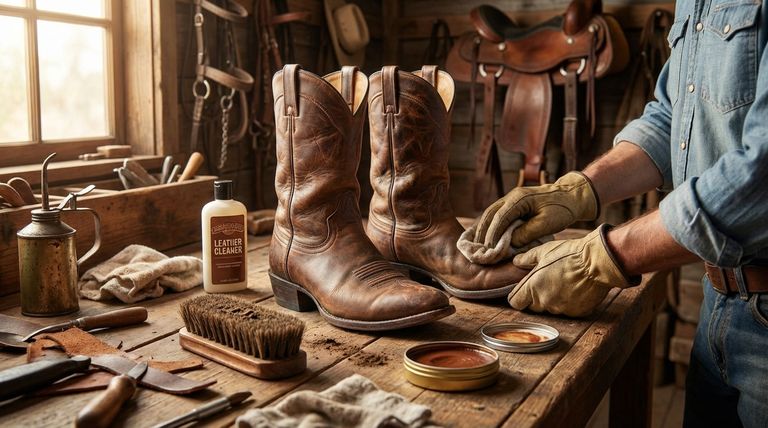
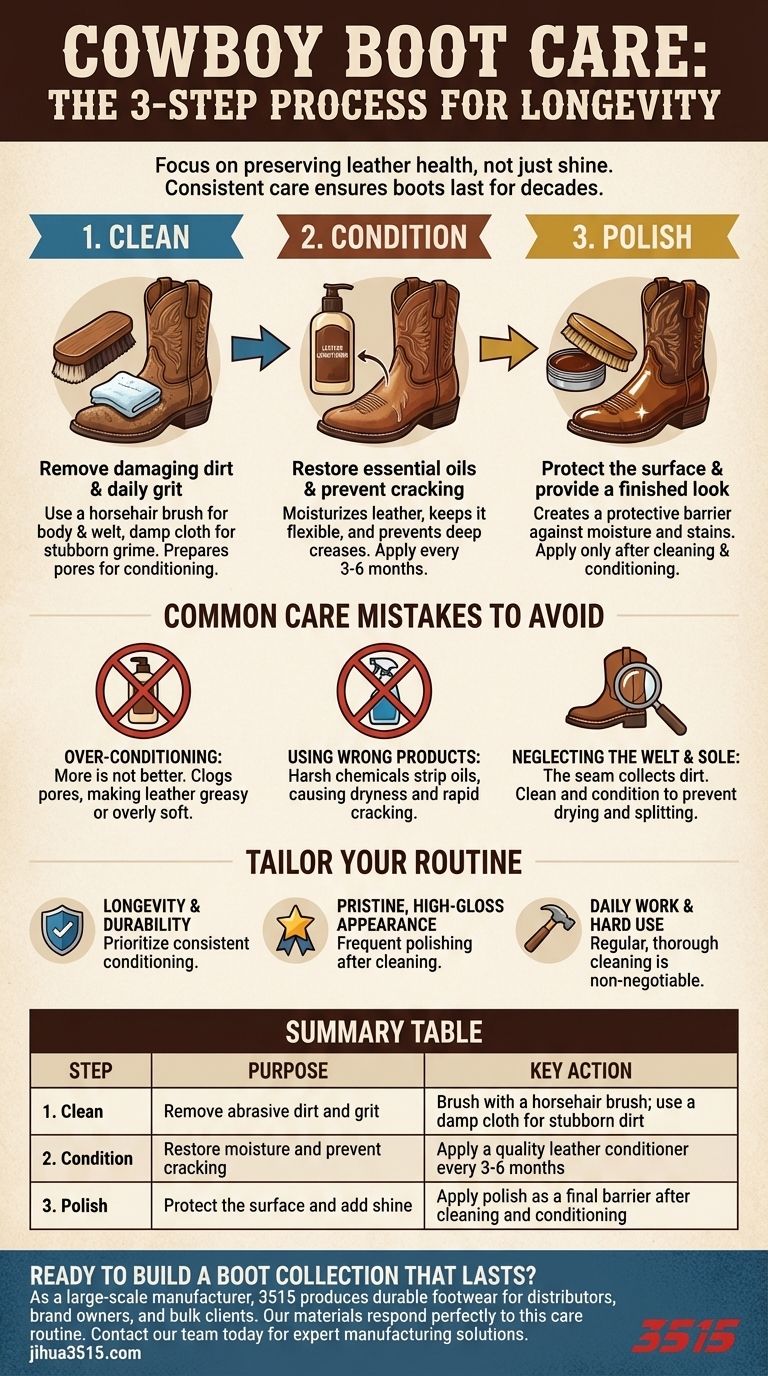
At its core, proper cowboy boot care is a simple, three-step process. The fundamental steps are to first clean the leather to remove damaging dirt, then condition it to restore moisture and flexibility, and finally, polish it to protect the surface and provide a finished look.
While many focus on shine, the true goal of boot care is preserving the leather's health. A consistent routine of cleaning and conditioning is what ensures your boots will last for decades, not just seasons.
The Foundation: A Deeper Look at the Three Core Steps
To truly extend the life of your boots, it's important to understand the purpose behind each step in the care process. Each action serves a specific function in protecting your investment.
Step 1: Cleaning - Removing the Daily Grit
Cleaning is always the first and most critical step. Boots accumulate dust, dirt, and mud, which are abrasive and can slowly break down the leather fibers if left unattended.
Before applying any products, you must remove this surface debris. A horsehair brush is ideal for sweeping away loose dirt from the main body, or vamp, and the seams around the sole, known as the welt.
For more stubborn dirt, a slightly damp cloth is effective. This prepares the leather's pores to properly absorb the conditioner in the next step.
Step 2: Conditioning - Restoring Essential Oils
Conditioning is the single most important step for the longevity of your boots. Think of it as a moisturizer that replenishes the natural oils within the leather.
As leather is exposed to the elements, it dries out. This loss of moisture leads to stiffness, brittleness, and eventually, cracking.
Applying a quality leather conditioner every few months keeps the material supple and strong. This prevents the deep creases that can form across the instep and ensures the boot flexes with your foot without damage.
Step 3: Polishing - The Final Seal and Shine
Polishing serves two purposes: protection and appearance. While it's best known for creating a high-gloss shine, its primary function is to create a protective barrier on the leather's surface.
A good polish helps seal the leather against minor moisture and prevents stains from setting in.
This final layer adds a finishing touch, but it should only ever be applied to boots that have already been cleaned and conditioned. Applying polish to dirty or dry leather will simply trap dirt and fail to address the underlying health of the boot.
Understanding the Trade-offs: Common Care Mistakes
Proper technique is just as important as the routine itself. Avoiding common mistakes is crucial for preventing unintentional damage to your boots.
Over-Conditioning the Leather
More is not always better. Applying too much conditioner or applying it too frequently can over-saturate the leather, clogging its pores and making it feel greasy or overly soft.
Stick to a schedule of conditioning your boots every 3 to 6 months, depending on how frequently you wear them and the climate you live in.
Using the Wrong Products
Never use household cleaners, soaps, or detergents on your boots. These products contain harsh chemicals that can strip the essential oils from the leather, causing it to dry out and crack rapidly.
Always use products specifically designed for leather footwear to ensure you are nourishing the material, not damaging it.
Neglecting the Welt and Sole
The seam that attaches the sole to the boot, the welt, is a common point of failure. This area collects a significant amount of dirt and moisture.
Pay special attention to brushing this area clean and applying conditioner to the welt and the leather sole edges to keep them from drying out and splitting.
How to Apply This to Your Project
Your care routine should adapt to how you use your boots and what you value most.
- If your primary focus is longevity and durability: Prioritize consistent conditioning above all else to keep the leather strong and flexible.
- If your primary focus is a pristine, high-gloss appearance: Polishing will be a frequent and essential part of your routine after every cleaning.
- If your boots are for daily work and hard use: Regular, thorough cleaning is non-negotiable to prevent abrasive grit from permanently damaging the leather.
A few minutes of regular care translates directly into years of reliable service from your boots.
Summary Table:
| Step | Purpose | Key Action |
|---|---|---|
| 1. Clean | Remove abrasive dirt and grit | Brush with a horsehair brush; use a damp cloth for stubborn dirt |
| 2. Condition | Restore moisture and prevent cracking | Apply a quality leather conditioner every 3-6 months |
| 3. Polish | Protect the surface and add shine | Apply polish as a final barrier after cleaning and conditioning |
Ready to build a boot collection that lasts? As a large-scale manufacturer, 3515 produces a comprehensive range of durable footwear for distributors, brand owners, and bulk clients. Our production capabilities encompass all types of work and western boots, built with quality materials that respond perfectly to this care routine. Let's discuss your footwear needs – contact our team today for expert manufacturing solutions.
Visual Guide
Related Products
- Wholesale High-Traction Camo Boots - Custom Manufacturer for Brands
- High-Traction Suede Tactical Boots Wholesale & Custom Manufacturing
- Wholesale Lightweight Tactical Boots Custom Manufacturer for Desert & Combat Use
- Durable Leather Tactical Boots Wholesale & Custom Manufacturing for Brands
- Wholesale Durable Mid-Cut Tactical Boots for Custom & Private Label Brands
People Also Ask
- What are the key features of the new line of camo boots? Built for Extreme Cold & Rugged Terrain
- Are camo boots necessary for hunting success? Prioritize Performance Over Pattern
- What is the technical logic behind using closed-eye testing for tactical boots? Unlocking Peak Footwear Stability
- How does the Rank Score Test identify the primary causes of premature failure in tactical and work boots? Key Insights
- What shoes to wear for a security job? Durable, Protective Footwear for Long Shifts



















