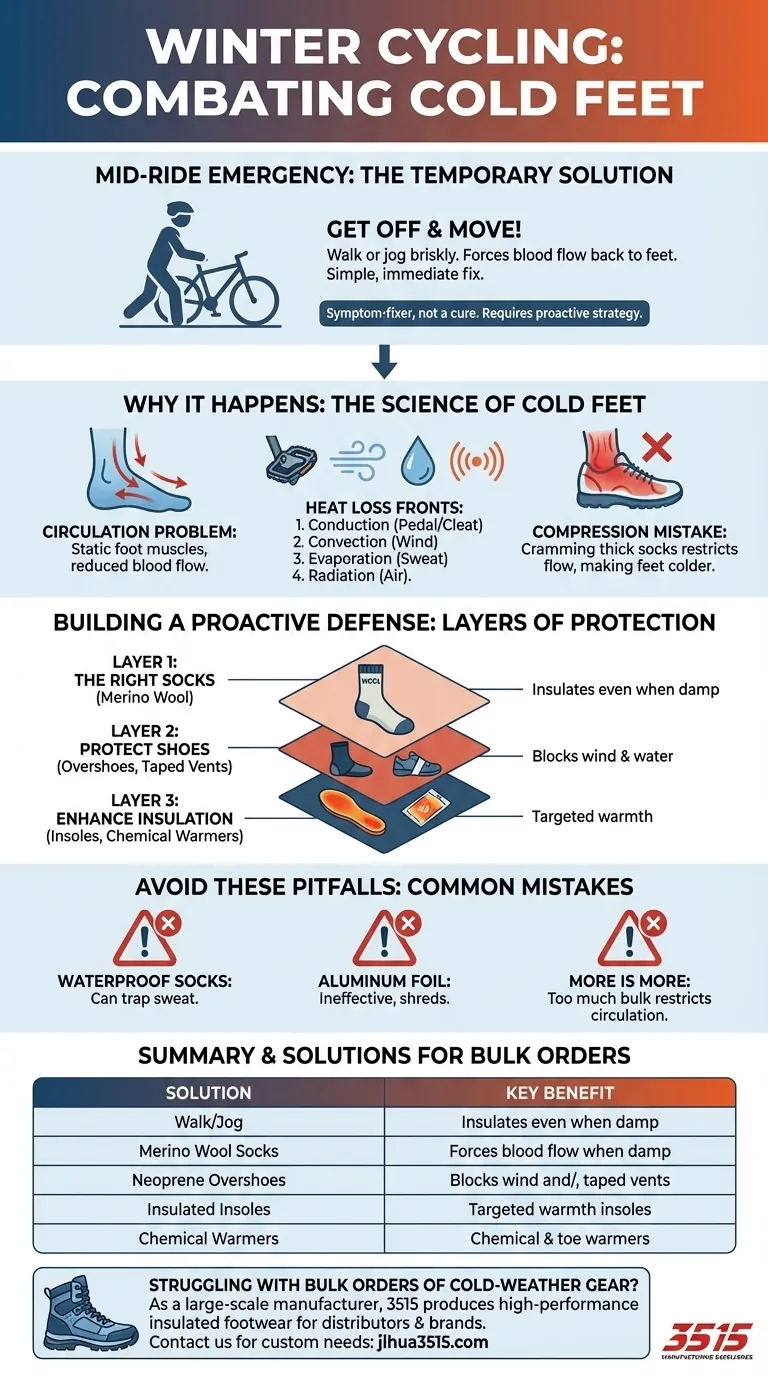
When your feet turn to blocks of ice mid-ride, the most effective temporary solution is to get off your bike and move. Walking or jogging briskly while pushing your bike for a few minutes forces your foot muscles to engage, driving warm blood back into your extremities and restoring feeling. This is a simple, immediate fix that requires no extra gear.
While walking can save a ride in a pinch, it's a symptom-fixer, not a cure. The true solution to cold feet lies in a proactive strategy of insulation and protection before you even start pedaling.
Why Your Feet Get So Cold on the Bike
Understanding the cause of cold feet is the first step toward preventing it. Unlike running or walking, cycling involves factors that actively work against foot warmth.
The Circulation Problem
Cycling primarily engages your large leg muscles, but the smaller muscles within your feet remain relatively static. This lack of intense, repetitive muscle contraction reduces blood flow, making your feet one of the first parts of your body to feel the cold.
The Four Fronts of Heat Loss
Your feet are under constant attack from the cold in four distinct ways:
- Conduction: Heat is pulled directly from the bottom of your foot into the cold pedal and metal cleat.
- Convection: Wind constantly strips heat away from the surface of your shoe.
- Evaporation: Sweat cools your skin, and if it can't escape, it will make your feet damp and cold.
- Radiation: Your feet naturally radiate heat into the colder surrounding air.
The Compression Mistake
A common error is cramming thick socks into shoes that are already snug. This compression restricts blood flow, cutting off the supply of warmth and making the problem significantly worse, not better.
Building a Proactive Defense Against Cold Feet
The best way to deal with cold feet is to stop them from getting cold in the first place. This involves a layered approach focused on insulation, wind proofing, and moisture management.
Foundation 1: The Right Socks
Your choice of socks is critical. Wool, especially merino wool, is the gold standard because it insulates effectively even when damp. If your shoes have enough room, a thin silk or merino liner sock paired with a medium-weight wool sock can offer excellent warmth without excessive bulk.
Foundation 2: Protecting Your Shoes
Your standard, well-ventilated cycling shoes are designed to keep you cool, which is a major liability in winter.
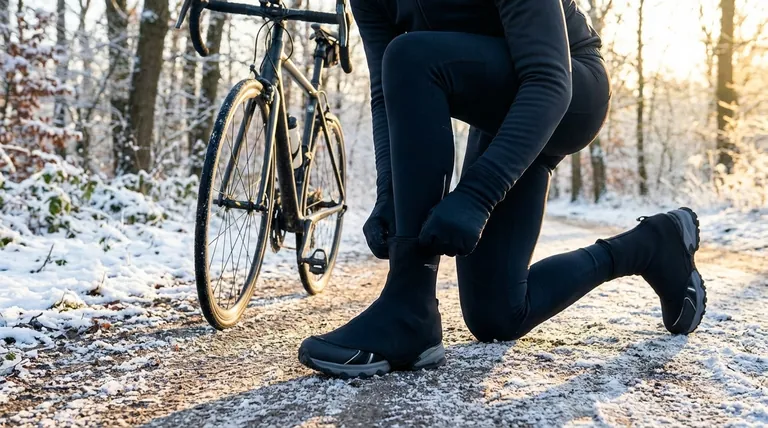
- Overshoes (Booties): These are the most common and effective solution. Neoprene booties provide a thermal barrier that blocks wind and water, instantly upgrading your summer shoes for winter use.
- Tape Your Vents: A simple, budget-friendly trick is to place duct tape or electrical tape over the ventilation holes in your shoes to block airflow.
Foundation 3: Enhancing Insulation
Even with good socks and covers, you can lose significant heat.
- Insulated Insoles: Swapping your standard insole for a thermal or wool version helps combat heat loss through the bottom of your shoe and cleat.
- Chemical Warmers: Single-use chemical toe warmers can be placed on top of your socks (never directly on skin) inside your shoe for hours of consistent heat.
Understanding the Trade-offs and Common Pitfalls
Not all solutions are created equal, and some popular "hacks" can be counterproductive.
Waterproof Socks: A Double-Edged Sword
Socks like SealSkinz are excellent at keeping external moisture out. However, they can also trap sweat inside, leading to damp feet that get cold from the inside out. They work best on shorter rides or for riders who don't sweat heavily.
The Aluminum Foil Myth
Wrapping your toes in aluminum foil is a frequently shared but ineffective tip. The foil shreds quickly inside a shoe and does little to provide meaningful, lasting insulation against the cold.
The Danger of "More is More"
Resist the urge to simply add more layers. One or even two pairs of overshoes can be effective, but stuffing two pairs of thick socks into your shoes will almost certainly restrict circulation and leave your feet colder than when you started.
Making the Right Choice for Your Goal
Your ideal strategy depends on your budget, conditions, and how seriously you take winter riding.
- If your primary focus is a quick, temporary fix: Get off the bike and walk or jog briskly for several minutes to restore circulation.
- If your primary focus is a budget-friendly upgrade: Start with quality merino wool socks and use tape to cover the ventilation holes on your existing shoes.
- If your primary focus is versatile protection: Invest in a good pair of neoprene overshoes (booties) that you can layer over your regular cycling shoes for most cold conditions.
- If your primary focus is maximum warmth for serious winter riding: Dedicated, insulated winter cycling boots are the most effective and reliable long-term solution.
Ultimately, preventing cold feet from the start is far more effective than trying to warm them up mid-ride.
Summary Table:
| Solution | Best For | Key Benefit |
|---|---|---|
| Walk/Jog Off Bike | Immediate Relief | Forces blood flow back to feet |
| Merino Wool Socks | All-Round Use | Insulates even when damp |
| Neoprene Overshoes | Versatile Protection | Blocks wind and water |
| Insulated Insoles | Targeted Warmth | Fights heat loss through cleats |
| Chemical Warmers | Extreme Cold | Provides hours of consistent heat |
Struggling with bulk orders of cold-weather cycling gear?
As a large-scale manufacturer, 3515 produces a comprehensive range of high-performance footwear for distributors, brand owners, and bulk clients. Our production capabilities encompass all types of insulated and weatherproof shoes and boots, ensuring your customers stay warm and comfortable.
Let's discuss your specific needs → Contact Our Team Today
Visual Guide
Related Products
- Premium Insulated Safety Boots and Shoes for Wholesale & Bulk Orders
- Premium Suede Sport Safety Shoes for Wholesale & Bulk Orders
- Lightweight Breathable Sneakers with Wet-Traction Grip for Wholesale & Private Label
- Wholesale Durable Camouflage Canvas Shoes with High-Traction Cleated Rubber Sole
- Advanced KPU Athletic Safety Shoe with Steel Toe Cap Anti-Slip Rotary Lacing System
People Also Ask
- What are the recommended insulation ratings for mild winter conditions? A Guide for Active & Stationary Workers
- How does insulation thickness correlate with temperature ranges? A Guide to Choosing the Right Warmth
- What insulation level is needed for severe cold and stationary work? 1200g or Higher is Essential
- What safety advantages do insulated boots offer beyond warmth? Dielectric Protection & Superior Grip
- How does fleece lining contribute to the warmth of insulated boots? Trapping Air for Superior Cold Protection