
Choosing the right footwear for woodland walks is a foundational decision for your safety and endurance. The key factors to consider are structural support for uneven ground, robust protection from environmental hazards like rocks and snakes, and a balance of waterproofing and breathability to manage weather and sweat. The correct shoe prevents injury and fatigue, directly impacting the quality and length of your time outdoors.
Footwear for the woods is not an accessory; it is critical equipment. The right choice moves beyond simple comfort to become a system that provides structural support, protection from environmental hazards, and reliable performance in unpredictable conditions.
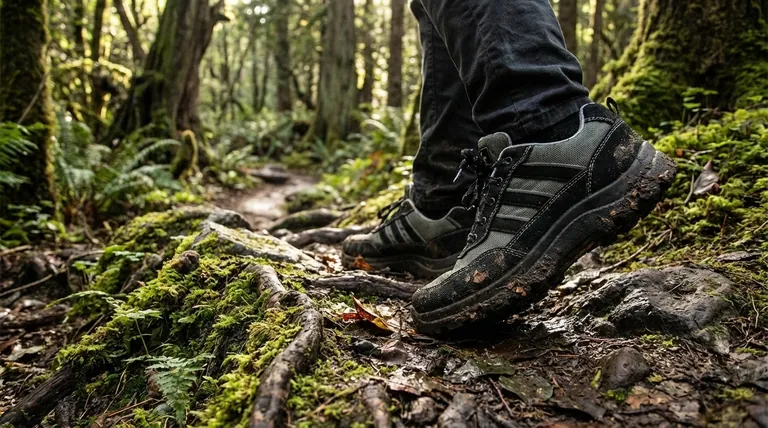
The Core Pillars of Effective Woodland Footwear
Understanding why certain features matter is the key to selecting footwear that truly serves you on the trail. It's about creating a stable and safe platform for your body over many miles of unpredictable terrain.
Beyond Comfort: The Role of Structural Support
Proper support is what separates a casual shoe from true hiking footwear. It is the architecture that prevents aches, pains, and long-term injury.
Look for a stiff sole that protects your foot from feeling every sharp rock and root underfoot. Equally important is adequate arch support, which maintains your foot's natural alignment and reduces strain on your joints during long walks.
Protection as a Non-Negotiable Feature
A woodland environment presents numerous physical hazards. Your footwear is your first and most important line of defense.
High-ankle boots offer crucial support to prevent twists and sprains on uneven surfaces. Furthermore, boots made of durable materials like leather or high-quality rubber provide a necessary barrier against scrapes, punctures, and potential snake bites.
Managing Your Environment: Weather and Moisture
Your feet must stay dry, both from the outside and the inside. Managing moisture is essential for preventing blisters and maintaining comfort.
A waterproof membrane keeps your feet dry when crossing streams or walking through rain-soaked undergrowth. At the same time, the material must be breathable to allow sweat to escape, ensuring your socks and feet don't become saturated from the inside.
Understanding the Trade-offs: Durability vs. Weight
There is no single "best" shoe, only the best shoe for a specific purpose. Every design choice involves a trade-off, most commonly between maximum protection and minimum weight.
The Heavy-Duty Hiking Boot
Traditional boots, often made of leather or thick synthetic materials, offer the highest level of protection and ankle support. They are built to withstand abuse from the roughest terrain.
The trade-off is their weight, which can lead to faster fatigue. They also may require a "break-in" period to become comfortable and can be less breathable than lighter options.
The Lighter Trail Shoe
Modern hiking shoes offer a more agile and lightweight alternative. They are often highly breathable and comfortable right out of the box, making them feel more like athletic sneakers.
However, this comes at the cost of reduced ankle support and less overall protection. Their softer soles and lighter materials may wear out faster and offer less of a barrier against sharp objects.
The Wellington Boot Consideration
While wellington boots provide excellent waterproofing, a standard PVC "garden" welly is not suitable for long walks. They typically lack the necessary arch support and sole stiffness, leading to rapid foot fatigue.
For very wet conditions, only consider high-quality rubber wellies specifically designed for intense outdoor activity, as they are built with better support systems.
Making the Right Choice for Your Walk
Your ideal footwear depends entirely on the conditions you expect to face and your personal priorities for the journey.
- If your primary focus is maximum protection and support on rugged, unpredictable trails: A high-ankle hiking boot made of leather or durable synthetic materials is your most reliable choice.
- If your primary focus is speed and comfort on well-maintained, relatively flat paths: A lighter, breathable hiking shoe will provide adequate performance without unnecessary weight.
- If your primary focus is navigating very wet, marshy, or muddy conditions: A high-quality, supportive rubber wellington designed for outdoor activity offers the best waterproofing.
Your footwear is the critical connection between you and the trail; choose it with intention.
Summary Table:
| Feature | Importance | Key Considerations |
|---|---|---|
| Structural Support | Prevents fatigue & injury | Stiff sole, proper arch support |
| Protection | Defends against hazards | High-ankle design, durable materials (leather/rubber) |
| Weather Management | Keeps feet dry & comfortable | Waterproof yet breathable membrane |
| Durability vs. Weight | Balances protection & agility | Choose based on trail difficulty (boot vs. shoe) |
Ready to equip yourself with the perfect footwear for your next adventure?
As a large-scale manufacturer, 3515 produces a comprehensive range of durable and supportive footwear for distributors, brand owners, and bulk clients. Our production capabilities encompass all types of hiking boots and shoes, engineered for maximum comfort and protection on any terrain.
Let us help you find or create the ideal footwear solution. Contact our expert team today to discuss your needs!
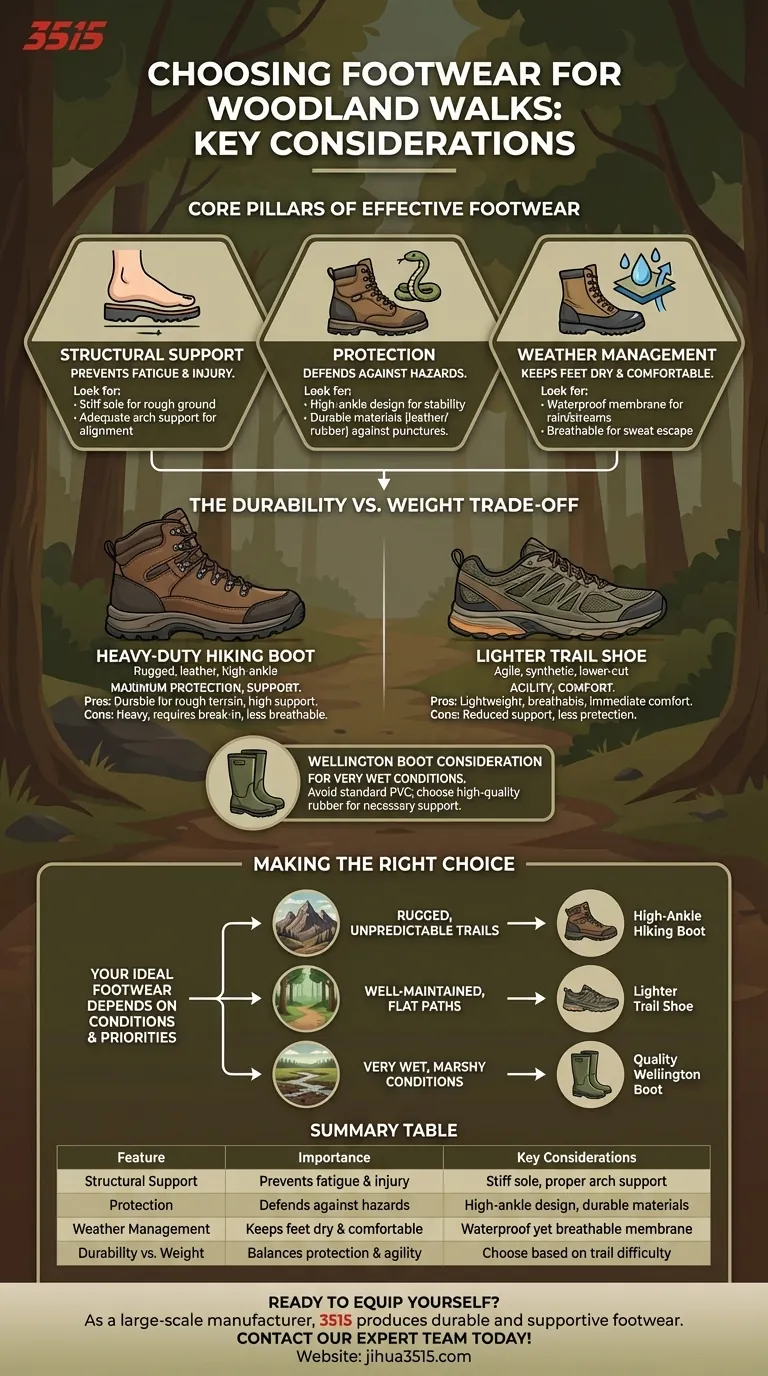
Visual Guide
Related Products
- Durable Rubber Sole Outdoor Shoes Wholesale & Custom Manufacturing
- Wholesale High-Traction Camo Boots - Custom Manufacturer for Brands
- Wholesale Durable Camouflage Canvas Shoes with High-Traction Cleated Rubber Sole
- Durable High-Ankle Tactical Boots Wholesale Manufacturer for Custom & Bulk Orders
- Durable Leather High-Ankle Tactical Boots for Wholesale & Custom Manufacturing
People Also Ask
- What is the function of the sole in outdoor shoes? Find the Perfect Grip and Support
- What role do outdoor shoes and sneakers play in navigating external terrains? Engineered Stability for Every Surface
- How is AI utilized in the design of outdoor and safety footwear? Harnessing Big Data for Market-Driven Shoe Innovation
- Why is durability important when selecting outdoor shoes? A Guide to Safety & Long-Term Value
- What are the key components of outdoor shoes that affect comfort and sturdiness? A Guide to Durable, High-Performance Footwear













