At first glance, a cowboy boot and a Western work boot might seem similar, but their structural differences are significant and purpose-driven. The primary distinctions lie in the heel's angle, the toe's shape, the sole's material, and the shaft's height, each element engineered for a completely different environment.
The core difference is one of function: a traditional cowboy boot is a specialized tool designed for horseback riding, while a Western work boot is engineered for stability, safety, and comfort for long hours spent on your feet.
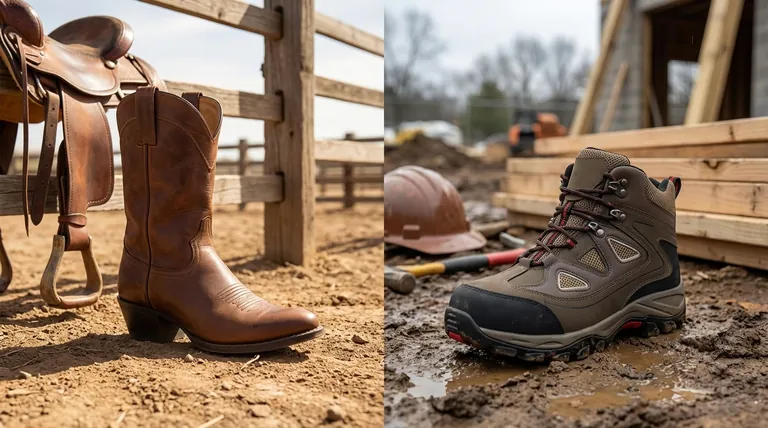
The Anatomy of a Boot: Function Dictates Form
Every component of these boots serves a specific purpose. Understanding why they are constructed differently is key to choosing the correct footwear for your needs.
The Heel: Angled for the Stirrup vs. Blocked for the Ground
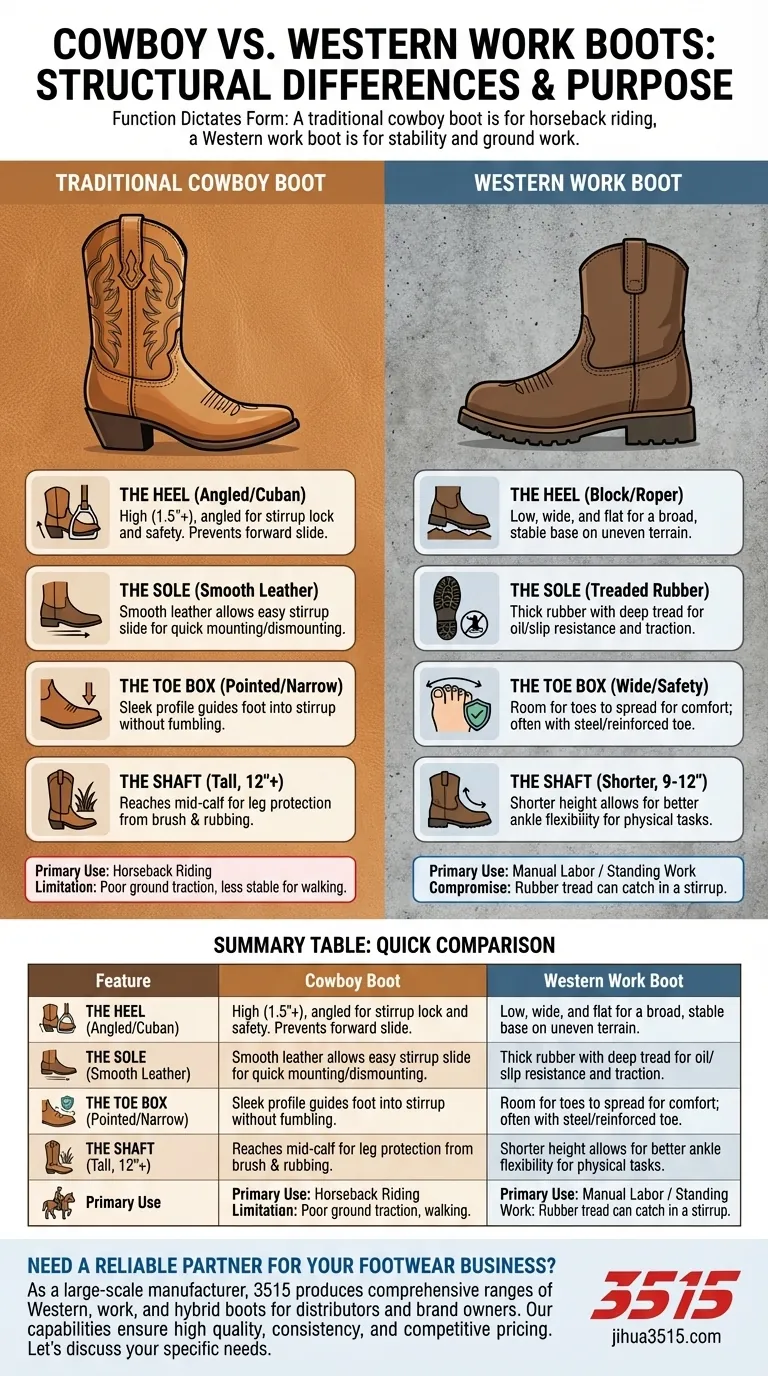
A traditional cowboy boot features a high, angled heel, often called a "Cuban heel," that is typically 1.5 inches or taller. This angle is not for style; it's a safety feature designed to lock into a saddle's stirrup, preventing the rider's foot from sliding too far forward.
A Western work boot, by contrast, has a much lower, wider, and flatter heel. This "roper" or "block" heel provides a broader base, offering significantly more stability for walking, standing, and working on uneven terrain.
The Sole: Smooth Leather for Glide vs. Rubber for Grip
The sole of a cowboy boot is traditionally made of smooth leather. This allows the rider's foot to slide easily in and out of the stirrup, which is critical for quick mounting and dismounting, especially in an emergency.
Western work boots are equipped with thick, treaded rubber outsoles. These soles are designed for traction and are often oil- and slip-resistant, providing a secure grip on various surfaces from concrete to mud, prioritizing on-the-ground safety.
The Toe Box: Pointed for Aim vs. Wide for Comfort
Classic cowboy boots have a pointed or narrow toe. This sleek profile helps a rider guide their foot quickly and accurately into the stirrup without fumbling.
Work boots feature a wide toe box, either rounded or square. This gives your toes room to spread out naturally, which is essential for comfort and balance during long days of standing or walking. Many also include reinforced or steel toes for workplace protection.
The Shaft: Tall for Protection vs. Shorter for Flexibility
The shaft of a cowboy boot is tall, typically 12 inches or more, reaching mid-calf. This height protects the rider's legs from thorny brush, snake bites, and the friction of rubbing against the saddle and horse.
Western work boots generally have a shorter shaft, ranging from 9 to 12 inches. This provides adequate protection while allowing for slightly more ankle flexibility needed for crouching and other physical tasks.
Understanding the Trade-offs
Choosing one style over the other involves accepting a set of functional compromises. Each boot is an expert in its domain but a novice in the other's.
The Cowboy Boot's Limitation on Foot
The very features that make a cowboy boot excellent for riding make it less suitable for extensive groundwork. The smooth leather sole offers poor traction on wet or slick surfaces, and the angled heel can feel unstable for long periods of walking.
The Work Boot's Compromise in the Saddle
Conversely, the work boot's safety features can be a liability for some riders. The deep rubber tread can potentially catch or hang up in a stirrup, and the wider heel may not sit as securely as an angled one.
Making the Right Choice for Your Needs
Selecting the correct boot is about honestly assessing how you will use it most.
- If your primary focus is horseback riding: Choose a traditional cowboy boot for its specialized safety and performance features in the stirrup.
- If your primary focus is manual labor, construction, or farm work on foot: Choose a Western work boot for its superior stability, traction, and comfort.
- If you need a hybrid for occasional riding and general daily wear: Consider a "roper" or "rancher" style boot, which often blends a lower, flat heel with a smooth sole to bridge the gap.
Ultimately, choosing the right boot means matching its specific engineering to its intended environment.
Summary Table:
| Feature | Cowboy Boot | Western Work Boot |
|---|---|---|
| Heel | High, angled (Cuban) for stirrups | Low, wide, flat (block) for stability |
| Sole | Smooth leather for easy stirrup access | Treaded rubber for traction and safety |
| Toe | Pointed/narrow for stirrup entry | Wide/rounded for comfort and protection |
| Shaft Height | Tall (12"+) for leg protection | Shorter (9-12") for flexibility |
| Primary Use | Horseback Riding | Manual Labor / Standing Work |
Need a Reliable Partner for Your Footwear Business?
As a large-scale manufacturer, 3515 produces a comprehensive range of Western, work, and hybrid boots tailored for distributors, brand owners, and bulk clients. Whether you need the specialized construction of a traditional cowboy boot or the rugged durability of a Western work boot, our production capabilities ensure high quality, consistency, and competitive pricing.
Let's discuss your specific needs and how we can help you build a successful product line.
Contact 3515 today for a consultation
Visual Guide
Related Products
- Durable Goodyear Welt Leather Work Boots for Wholesale & Private Label
- Durable Leather Work Boots for Wholesale & Custom Manufacturing
- Durable Leather Work Boots for Wholesale & Custom OEM Manufacturing
- Durable Moc-Toe Wedge Work Boots | Wholesale Manufacturing for Brands
- Wholesale Leather Work Boots with Customizable Wedge Sole for Brands
People Also Ask
- What is the difference between full-grain and top-grain leather? Premium Material Guide for Boot Manufacturers
- What are the advantages of leather as an upper material for work boots? Unmatched Durability & Custom Comfort
- Why is it important to waterproof leather work boots? Protect Your Investment and Performance
- How should new leather work boots be broken in? A Guide to Comfort and Durability
- What are the advantages of leather uppers in work boots? Unmatched Durability & Protection