
To properly clean tactical boots, the process involves five key stages: preparing the boot by removing laces and insoles, dry brushing to remove loose debris, gently scrubbing the exterior with a mild soap solution, wiping away residue, and letting the boots air dry completely away from any direct heat source. This method preserves the boot's materials and structural integrity.
The goal of cleaning tactical boots isn't just about appearance. It's the most critical step in a maintenance routine designed to protect your investment, ensure functional reliability, and dramatically extend the operational life of your gear.
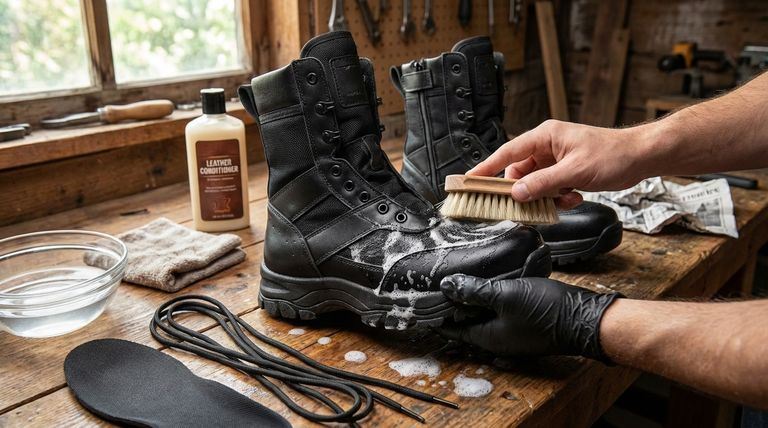
The Core Cleaning Process: A Step-by-Step Guide
Proper cleaning is a methodical process. Rushing any step, particularly drying, can cause more harm than good. Following this sequence ensures a thorough and safe cleaning every time.
Step 1: Preparation is Key
Before you begin, remove the laces and insoles from your boots. This allows you to access all the crevices, like the tongue and eyelets, where dirt accumulates.
Laces and insoles can be washed separately, either by hand with soap and water or in a laundry bag on a gentle machine cycle.
Step 2: The Dry Brush-Down
Using a soft or medium-bristled brush, vigorously brush off all loose dirt, mud, and debris from the entire boot.
Pay special attention to the outsole treads and the seams where the upper connects to the sole, as these areas trap the most grime.
Step 3: Gentle Wet Cleaning
Create a cleaning solution by mixing a small amount of mild soap (like dish soap) with lukewarm water. Avoid harsh detergents or chemicals that can degrade the boot's materials.
Dip a cloth or soft brush into the solution and gently scrub the boot's exterior. Work in small sections to lift away embedded dirt and stains.
Step 4: The Final Rinse
Using a new, clean cloth dampened with only water, wipe down the entire boot. This step is crucial for removing any leftover soap residue, which can attract more dirt or damage the material over time.
Step 5: The Critical Drying Phase
The most important rule is to air dry your boots at room temperature. Never place them near a direct heat source like a radiator, campfire, or in direct sunlight.
Accelerated heat can cause leather to crack, adhesives to fail, and synthetic materials to become brittle. Stuffing the boots with newspaper can help absorb moisture and speed up the process safely.
Beyond Cleaning: Essential Long-Term Maintenance
A clean boot is the foundation for proper care. The following steps protect your boots from the elements and prevent premature wear and tear.
Conditioning for Leather Components
If your boots have full-grain or partial leather uppers, you must condition them after cleaning. Cleaning strips away natural oils, and a quality leather conditioner restores them.
This keeps the leather supple, prevents it from drying out and cracking, and maintains its natural water resistance.
Restoring Water Resistance
Most tactical boots come with a factory-applied waterproofing treatment that wears off over time. After your boots are clean and completely dry, it's wise to reapply a waterproofing spray.
This is especially important for boots made of fabric or a combination of leather and synthetics, ensuring they continue to protect you from moisture.
Addressing Odors and Interior Care
Interior hygiene is just as important as exterior appearance. If the insoles or the inside of the boot develops an odor, a 50/50 solution of white vinegar and water in a spray bottle can help neutralize bacteria.
Lightly mist the inside and allow it to air dry completely.
Common Pitfalls to Avoid
Mistakes in the care process can shorten your boot's lifespan significantly. Being aware of these common errors is critical for proper maintenance.
The Danger of Direct Heat
This is the most common and damaging mistake. Direct heat fundamentally changes the composition of boot materials, causing irreparable damage. Patience during the air-drying phase is non-negotiable.
Using Harsh Chemicals
Bleach, household cleaners, and strong detergents can permanently discolor fabric, strip protective coatings, and weaken the structural fibers of both leather and synthetic materials. Always opt for mild, pH-neutral soap.
The Mistake of Infrequent Cleaning
Allowing mud and grime to sit on your boots is not a cosmetic issue. Caked-on dirt draws moisture out of leather, while abrasive grit can slowly grind away at the fibers and stitching with every step you take.
Making the Right Choice for Your Goal
Your cleaning and maintenance routine should be adapted to the specific materials of your boots.
- If your primary boot is full-grain leather: Your most important follow-up step after cleaning is applying a high-quality leather conditioner.
- If your primary boot is synthetic fabric (like Cordura): Your focus should be on gentle brushing and avoiding any soap residue that could attract future dirt.
- If your primary boot is suede or rough-out leather: Use a specialized suede brush and eraser for cleaning, as water and soap can easily stain or alter the texture.
Consistent, proper care is the most reliable way to ensure your tactical boots perform when you need them most.
Summary Table:
| Step | Key Action | Purpose |
|---|---|---|
| 1. Preparation | Remove laces & insoles | Access all crevices for thorough cleaning |
| 2. Dry Brushing | Brush off loose dirt & debris | Prevent abrasive damage during wet cleaning |
| 3. Wet Cleaning | Gently scrub with mild soap solution | Lift embedded dirt without damaging materials |
| 4. Final Rinse | Wipe with clean water cloth | Remove soap residue to avoid future dirt attraction |
| 5. Air Drying | Dry at room temperature away from heat | Preserve material integrity and prevent cracking |
As a large-scale manufacturer, 3515 produces a comprehensive range of durable tactical, safety, and work footwear for distributors, brand owners, and bulk clients. Our expertise ensures every pair is built for performance and longevity. Need reliable, high-volume footwear solutions? Contact our team today to discuss your specific requirements and discover how we can support your business with quality and scale.
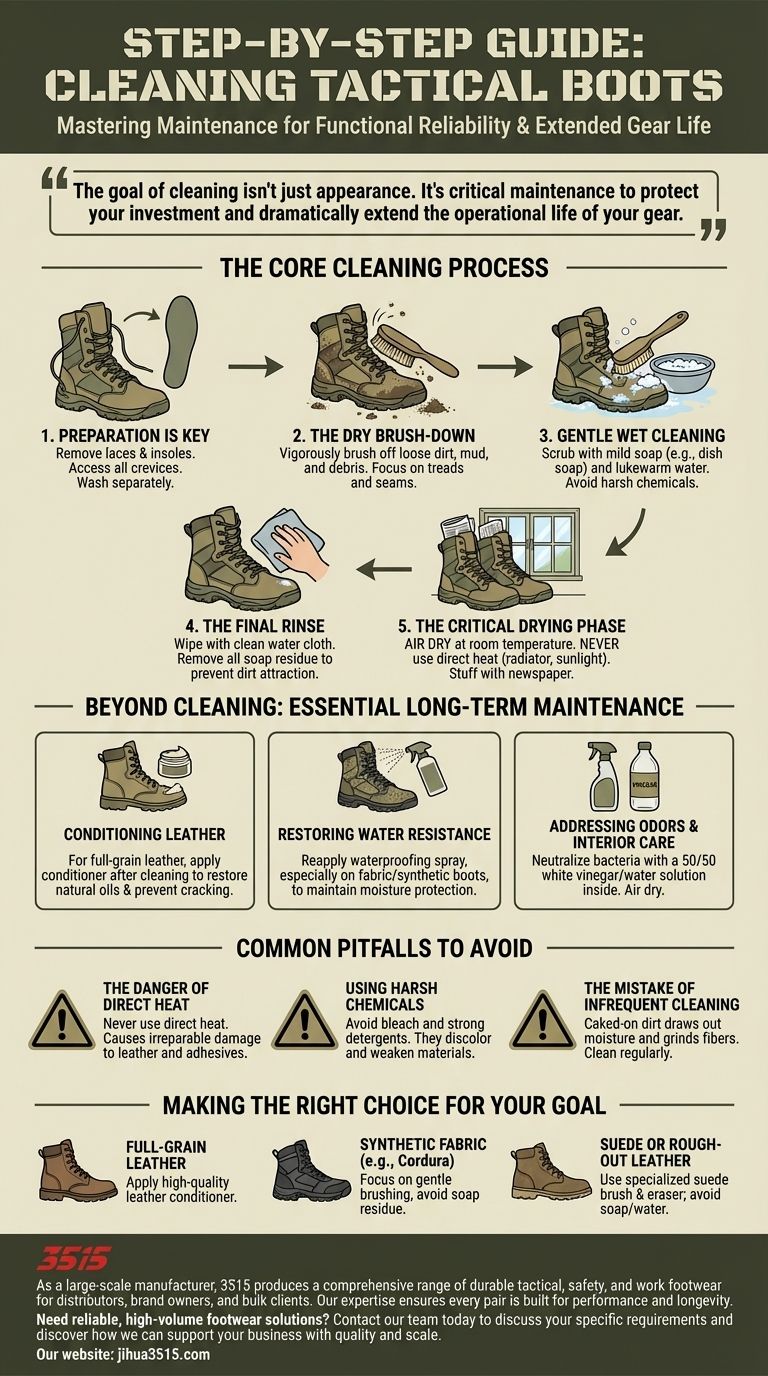
Visual Guide
Related Products
- Durable Leather Tactical Boots Wholesale & Custom Manufacturing for Brands
- High-Traction Suede Tactical Boots Wholesale & Custom Manufacturing
- Durable Leather High-Ankle Tactical Boots for Wholesale & Custom Manufacturing
- Durable Mid-Cut Tactical Boots for Wholesale & Private Label
- Wholesale Waterproof Tactical Boots Custom Suede & High-Traction Soles
People Also Ask
- What specialized protections do tactical boots offer? Maximize Endurance with High-Performance Footwear
- What features should law enforcement officers look for in tactical boots? Essential Guide for Safety & Performance
- Importance of Professional Tactical Boots in Loess Gully Regions: Ensure Safety and Precision for Field Monitoring
- What is rucking, and why are tactical boots suitable for it? Discover the Ultimate Footwear for Heavy Loads
- What makes the traction of tactical boots superior? Unlock the Science of Unbeatable Grip















