
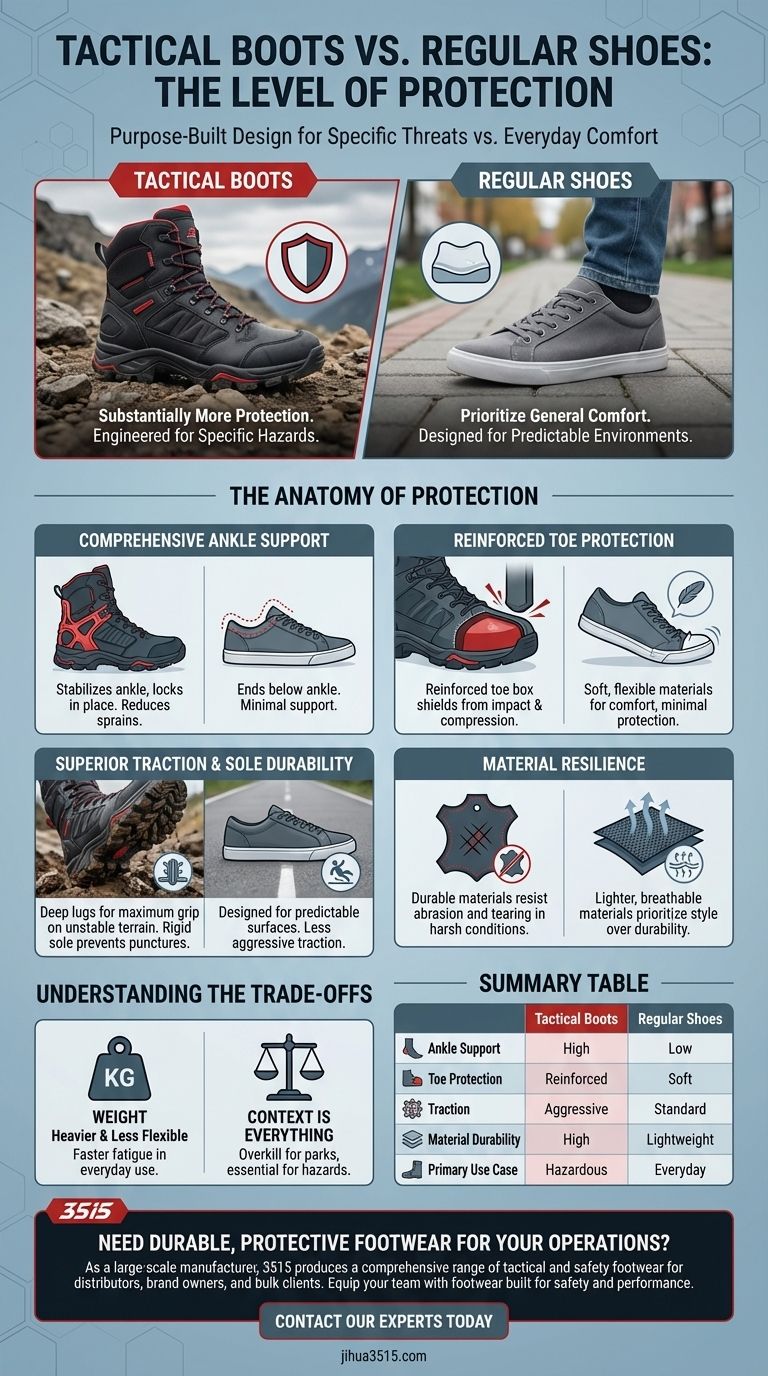
In short, tactical boots provide substantially more protection than regular shoes by focusing on mitigating specific hazards. They are engineered with reinforced toes, extensive ankle support, and aggressive traction for stability in demanding environments, whereas regular shoes prioritize general comfort and style for everyday, low-risk activities.
The core difference isn't about one being "better," but about purpose-built design. Tactical boots are specialized equipment designed to protect your feet from specific threats, while regular shoes are designed for comfort in predictable, safe environments.
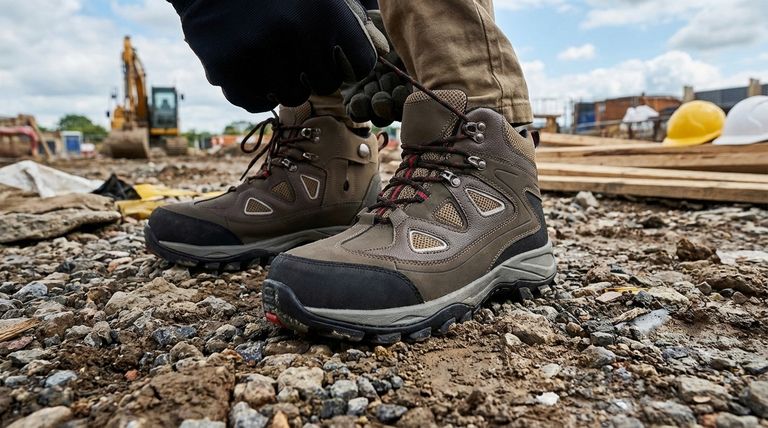
The Anatomy of Protection: Tactical vs. Regular Footwear
To understand the difference in protection, you need to look at how each type of footwear is constructed. Tactical boots are built with a clear focus on structural integrity and user safety under stress.
Comprehensive Ankle Support
A primary function of a tactical boot is to stabilize the ankle. The high-cut design and lacing systems work together to lock the ankle in place, significantly reducing the risk of sprains and twists during dynamic movement on uneven ground.
Regular shoes, particularly sneakers and casual footwear, typically end below the ankle, offering no meaningful support against this type of injury.
Reinforced Toe Protection
Tactical boots often feature reinforced toe boxes to shield your feet from impact and compression. This added structure protects against falling objects or accidental collisions common in hazardous conditions.
Most regular shoes use soft, flexible materials in the toe area to maximize comfort and reduce weight, providing minimal protection from impact.
Superior Traction and Sole Durability
The outsoles of tactical boots are designed with deep, aggressive lugs to provide maximum grip on varied and unstable terrains like mud, gravel, or wet surfaces. The sole itself is often thicker and more rigid to prevent punctures.
Regular shoes have outsoles designed for predictable surfaces like pavement or indoor flooring. Their traction is generally less aggressive and offers little protection from sharp objects underfoot.
Material Resilience
Tactical boots are constructed from durable materials like leather or high-strength synthetic fabrics designed to resist abrasion and tearing. They are built to withstand harsh use without failing.
In contrast, regular shoes often use lighter, more breathable materials like mesh or canvas that prioritize comfort and style over long-term durability in rugged conditions.
Understanding the Trade-offs
Choosing between tactical boots and regular shoes involves acknowledging that enhanced protection comes with compromises. There is no single "best" footwear for every situation.
The Cost of Protection: Weight and Flexibility
The same features that make tactical boots protective—reinforced materials, thick soles, and ankle support—also make them heavier and less flexible than regular shoes. This can lead to faster fatigue during simple, everyday activities.
Context is Everything: The "Right Tool" Principle
Wearing tactical boots for a walk in a city park is overkill. The rigidity and weight are unnecessary and may even be less comfortable than a standard sneaker.
Conversely, wearing regular sneakers on a construction site or a rugged trail exposes you to significant and preventable risks of injury.
Making the Right Choice for Your Needs
Your decision should be based entirely on the environment and activities you anticipate.
- If your primary focus is safety in hazardous or unpredictable environments: Tactical boots are the only appropriate choice due to their dedicated protective features.
- If your primary focus is rigorous outdoor activity on rough terrain: The ankle support and superior traction of tactical boots provide critical stability and safety.
- If your primary focus is comfort during everyday, low-impact activities: Regular shoes are lighter, more flexible, and better suited for this purpose.
Ultimately, choosing the right footwear is about matching the level of protection to your specific level of risk.
Summary Table:
| Feature | Tactical Boots | Regular Shoes |
|---|---|---|
| Ankle Support | High-cut design for stability | Minimal to no support |
| Toe Protection | Reinforced toe box for impact | Soft, flexible materials |
| Traction | Aggressive lugs for unstable terrain | Designed for predictable surfaces |
| Material Durability | Abrasion-resistant leather/synthetics | Lightweight, breathable materials |
| Primary Use Case | Hazardous, unpredictable environments | Everyday, low-risk activities |
Need Durable, Protective Footwear for Your Operations?
As a large-scale manufacturer, 3515 produces a comprehensive range of tactical and safety footwear for distributors, brand owners, and bulk clients. Our production capabilities encompass all types of durable boots designed to offer the superior protection detailed in this article.
We help you equip your team with footwear built for safety and performance.
Contact our experts today to discuss your specific needs and receive a customized solution.
Visual Guide
Related Products
- Durable Leather Tactical Boots Wholesale & Custom Manufacturing for Brands
- High-Traction Suede Tactical Boots Wholesale & Custom Manufacturing
- Durable Leather High-Ankle Tactical Boots for Wholesale & Custom Manufacturing
- Durable Mid-Cut Tactical Boots for Wholesale & Private Label
- Wholesale Waterproof Tactical Boots Custom Suede & High-Traction Soles
People Also Ask
- What specialized protections do tactical boots offer? Maximize Endurance with High-Performance Footwear
- What features should law enforcement officers look for in tactical boots? Essential Guide for Safety & Performance
- Importance of Professional Tactical Boots in Loess Gully Regions: Ensure Safety and Precision for Field Monitoring
- What is rucking, and why are tactical boots suitable for it? Discover the Ultimate Footwear for Heavy Loads
- What makes the traction of tactical boots superior? Unlock the Science of Unbeatable Grip















