
At their core, lightweight tactical boots offer three primary benefits: enhanced speed, superior agility, and a significant reduction in fatigue. By using modern materials like synthetic fabrics and mesh, these boots are specifically engineered for operations where quick movement and endurance are more critical than maximum protection.
The decision to use lightweight tactical boots is a deliberate trade-off. You are prioritizing mobility, comfort, and energy conservation over the heavy-duty durability and protection found in traditional combat boots. Understanding this balance is key to choosing the right tool for your specific mission.
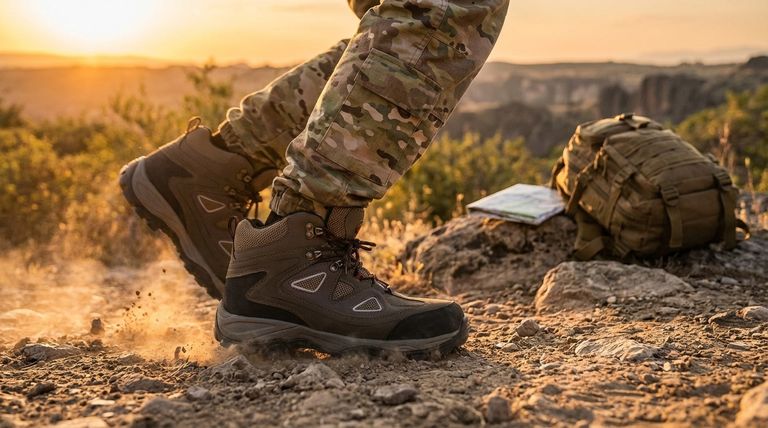
The Core Advantages of Going Lightweight
Choosing a lighter boot has a direct and measurable impact on your operational performance. The benefits are most apparent during long patrols, fast-paced engagements, or any scenario that demands you stay on your feet for extended periods.
Enhanced Speed and Agility
Lighter boots mean less weight to lift with every step. This directly translates into quicker footwork and the ability to change direction more rapidly.
This design allows you to move more naturally and without hindrance, which is a critical advantage when navigating complex environments or reacting to a sudden threat.
Significant Fatigue Reduction
The energy savings from wearing lighter footwear compound over time. A boot that is even a few ounces lighter can save you from lifting hundreds, if not thousands, of extra pounds over the course of a day.
Many lightweight models weigh under two pounds per pair, a substantial difference that helps conserve energy and maintain performance levels during prolonged use.
Superior Comfort and Breathability
Lightweight boots often incorporate breathable materials like mesh panels and moisture-wicking liners. This improves ventilation, keeping your feet cooler and drier.
Ample cushioning in the midsole and footbed provides comfort for long periods of standing or walking, reducing the overall stress on your feet and joints.
Understanding the Trade-offs
No piece of gear is perfect for every situation. The advantages of a lightweight boot come with specific compromises that you must consider based on your environment and operational demands.
Durability vs. Weight
The synthetic fabrics and mesh that make boots lightweight are inherently less resistant to abrasion and tearing than the thick, full-grain leather of traditional, heavier boots.
For missions in extremely rugged, rocky, or hostile terrain, a heavier boot will almost always offer a longer service life.
Protection vs. Agility
To reduce weight, these boots may have less ankle support or omit features like reinforced or steel toes.
This is a conscious design choice. The boot is built for mobility, accepting a lower level of protection against heavy impacts or environmental hazards in exchange for speed.
Key Features Driving Performance
The benefits of lightweight boots are not accidental; they are the result of specific material choices and design philosophies.
Advanced Upper Materials
Instead of heavy leather, these boots utilize durable synthetic fabrics, mesh for breathability, and sometimes even Kevlar for tear resistance without adding significant weight.
Engineered Midsoles and Footbeds
Features like cushioned EVA midsoles, Ortholite footbeds, and integrated shock mitigation systems absorb impact and provide support without the bulk of older materials.
Modern Outsole Design
Slip-resistant outsoles are engineered to provide excellent traction on various surfaces while remaining flexible and lightweight, ensuring your footing is secure without slowing you down.
Making the Right Choice for Your Mission
Your choice of footwear should be dictated entirely by the demands of your environment and objectives.
- If your primary focus is speed and mobility in urban or less-rugged environments: A lightweight tactical boot is the superior choice for reducing fatigue and maximizing agility.
- If your primary focus is carrying heavy loads or operating in harsh, rocky terrain: A heavier, more durable boot with maximum protection and ankle support is the more appropriate tool.
- If your primary focus is a versatile, all-around role: Consider a mid-weight boot that balances the durability of a heavier model with some of the comfort and mobility benefits of a lightweight one.
Ultimately, selecting the right boot is about matching your gear to your mission's specific performance requirements.
Summary Table:
| Benefit | Key Feature | Ideal For |
|---|---|---|
| Enhanced Speed & Agility | Lightweight materials (synthetics, mesh) | Fast-paced engagements, quick maneuvers |
| Significant Fatigue Reduction | Weighs under 2 lbs per pair; cushioned midsoles | Long patrols, extended periods on foot |
| Superior Comfort & Breathability | Moisture-wicking liners, ventilation panels | Operations in warmer climates, high-activity missions |
Ready to equip your team with high-performance tactical footwear?
As a large-scale manufacturer, 3515 produces a comprehensive range of tactical boots for distributors, brand owners, and bulk clients. Our production capabilities encompass all types of lightweight, mid-weight, and heavy-duty boots, ensuring you get the perfect balance of speed, durability, and protection for any mission profile.
Contact our expert team today to discuss your specific requirements and receive a customized quote.
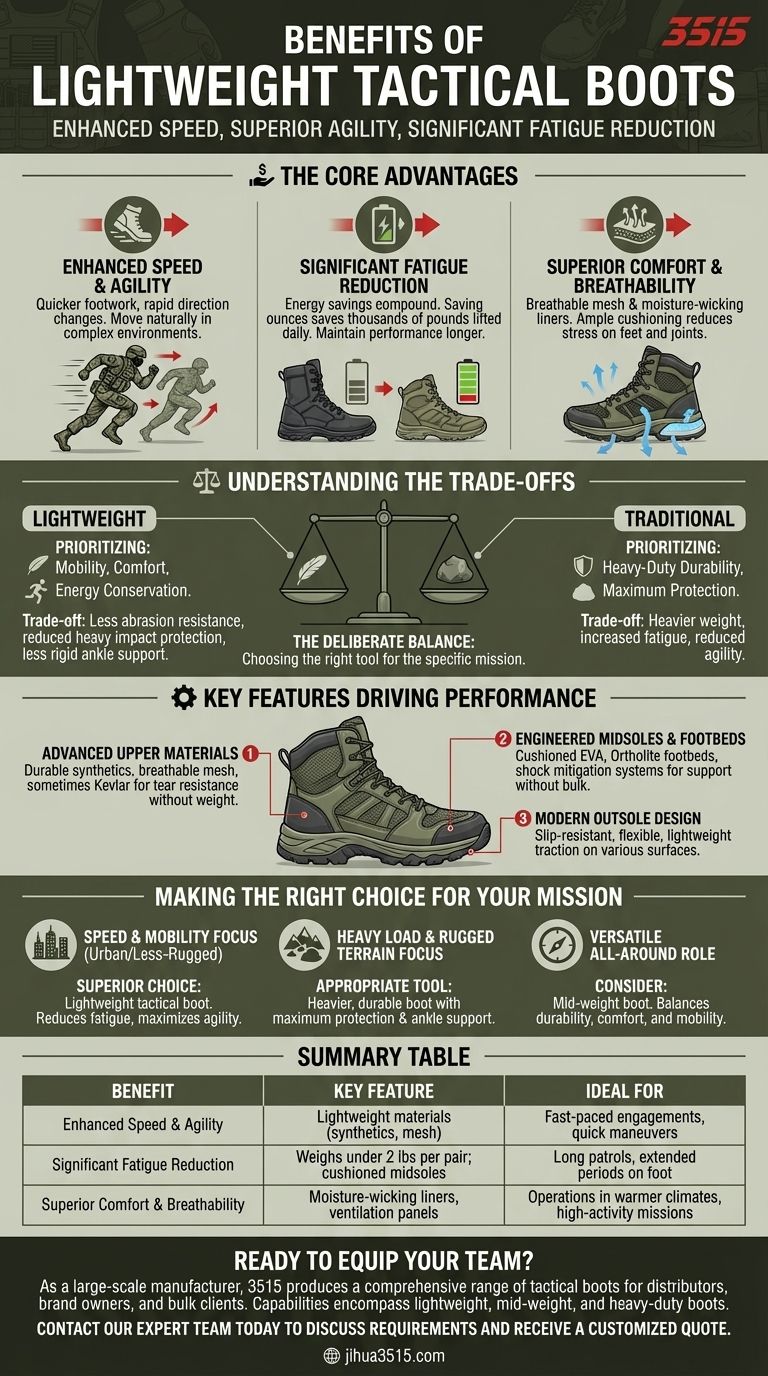
Visual Guide
Related Products
- Wholesale Lightweight Tactical Boots with Dial Closure OEM & Bulk Orders
- Wholesale Lightweight Tactical Boots Custom Manufacturer for Desert & Combat Use
- Wholesale Durable Mid-Cut Tactical Boots for Custom & Private Label Brands
- Durable Mid-Cut Tactical Boots for Wholesale & Private Label
- Durable Leather Tactical Boots Wholesale & Custom Manufacturing for Brands
People Also Ask
- How do manufacturing processes for electronic textiles balance durability with wearing comfort? Innovation in Footwear
- What are the structural advantages of durable tactical boots? Elevate Performance in Rugged & Non-Standard Terrains
- What factors should be considered when choosing between tactical boots and sneakers for daily activities? Find Your Perfect Fit
- Why is durability an important feature of tactical footwear? The Key to Uncompromising Safety & Performance
- What is the necessity of high-performance tactical boots in exoskeletons? Enhancing Load Efficiency and Safety



















