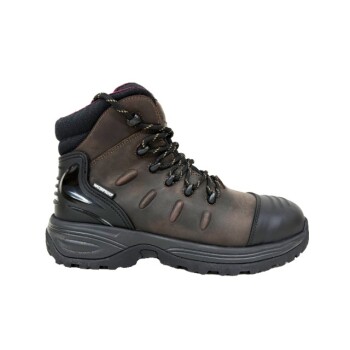
At their core, police boots are specifically engineered for the dynamic and unpredictable environments of law enforcement, tactical operations, and military or security details. Their use cases are defined by the need for a unique combination of all-day comfort, unwavering support, and robust protection against a wide range of environmental and physical hazards.
The specific use case for a police boot isn't a single activity, but rather a system of features designed to provide safety, stability, and endurance for professionals who spend long hours on their feet in potentially dangerous and varied conditions.
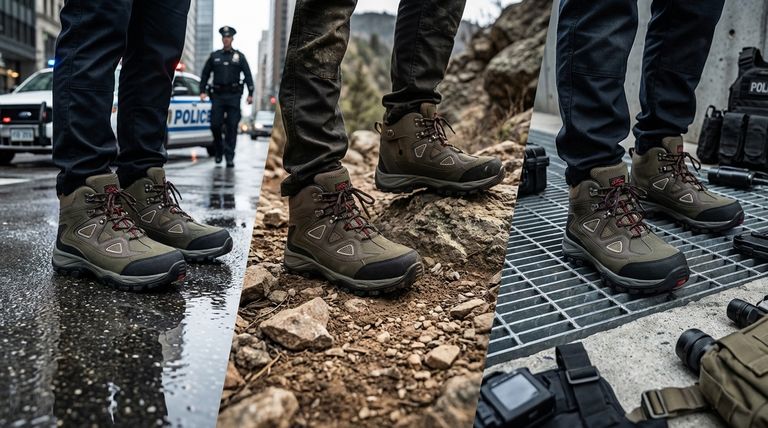
The Foundation: Patrol and General Duty
The most common use case is daily patrol, which demands a boot that can handle hours of standing, walking, and sudden bursts of activity.
All-Day Support for Long Shifts
Officers spend the majority of their shifts on their feet. Police boots are built with enhanced heel, arch, and ankle support to prevent fatigue and injury over long periods. Cushioning and shock absorption are critical for comfort on hard surfaces.
Navigating Unpredictable Surfaces
Patrol duties often involve traversing wet, oily, or uneven ground. A key feature is a slip-resistant sole with deep grooves, providing essential traction to prevent falls and maintain stability during critical moments.
All-Weather Readiness
Police work doesn't stop for bad weather. Most boots incorporate waterproof materials and are designed to perform reliably in rain, snow, or heat, making them a year-round piece of essential equipment.
High-Stakes Environments: Tactical and Special Operations
For high-intensity situations like tactical entries or crowd control, the boot's protective features become paramount. These use cases require a higher level of performance and resilience.
Protection from Physical Threats
Many police boots include steel or composite safety toes to shield the foot from impact and compression caused by falling objects or direct force. This is a non-negotiable feature in many operational environments.
Ensuring Stability and Agility
Ankle stability is crucial when running or climbing. Taller boots (often 8 inches) provide maximum lower-leg protection and ankle support, while modern lightweight materials ensure the officer remains agile and not weighed down.
Specialized Hazard Resistance
Some scenarios involve unique dangers, such as downed power lines. Boots with an Electrical Hazard (EH) rating provide an additional layer of protection against high-voltage environments, a critical feature for first responders.
Understanding the Trade-offs
Selecting a police boot involves balancing competing needs, as no single design can be perfect for every single use case.
Protection vs. Weight
Boots with steel toes and thicker soles offer superior protection but are inherently heavier. This can increase fatigue over a long shift and slightly reduce mobility compared to lighter, composite-toe alternatives.
Height vs. Flexibility
A taller 8-inch boot shaft provides excellent ankle support, which is ideal for rugged terrain or situations requiring maximum stability. However, a mid-height boot (5-6 inches) offers greater flexibility and freedom of movement, which may be preferable for some officers.
Waterproofing vs. Breathability
A fully waterproof boot is essential in wet climates, but the membrane that blocks water can also trap heat. In hot, dry environments, a more breathable, non-waterproof boot might offer superior comfort.
Making the Right Choice for Your Goal
The ideal boot is dictated entirely by the demands of the specific role and environment.
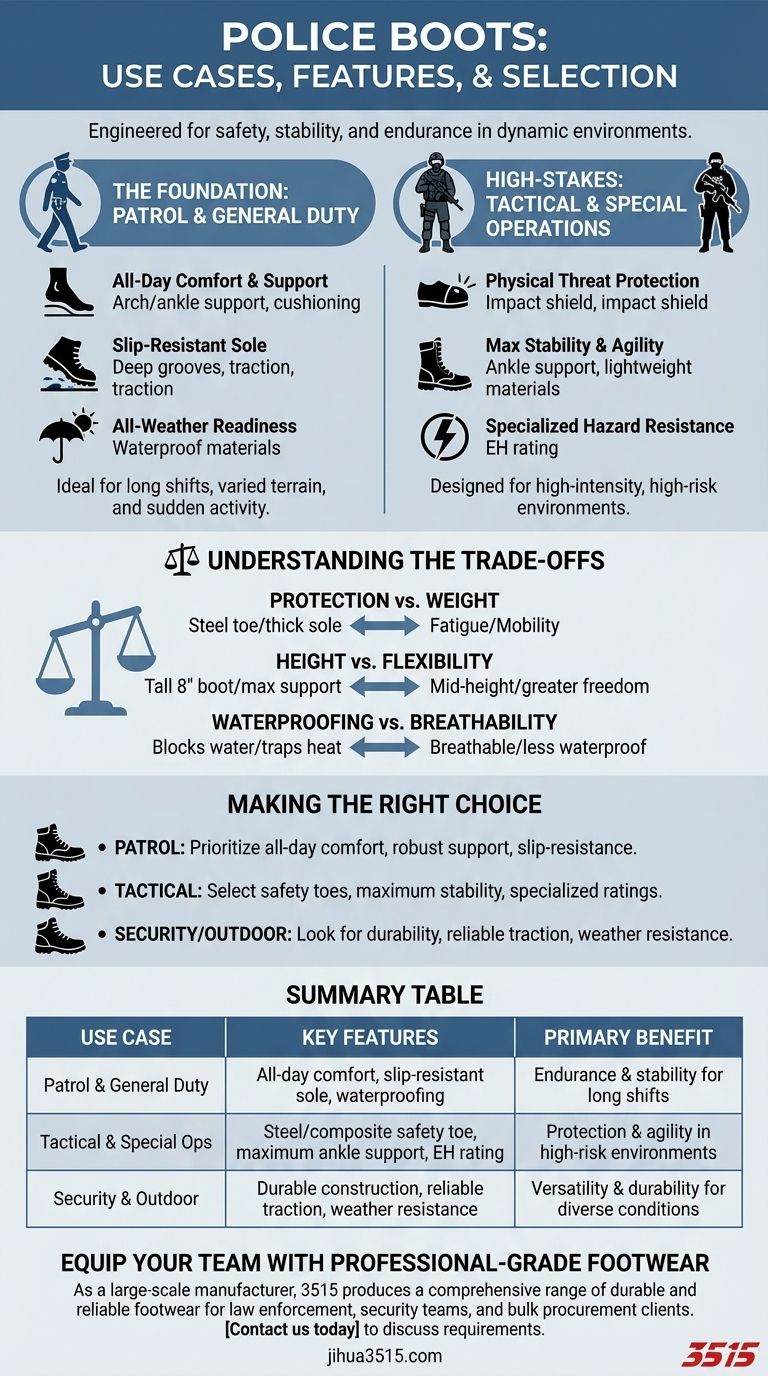
- If your primary focus is daily patrol: Prioritize a boot that balances all-day comfort, robust ankle support, and superior slip-resistance.
- If your primary focus is tactical operations: Select a boot with reinforced safety toes, maximum ankle stability, and any specialized hazard ratings your duties require.
- If your primary focus is security or outdoor recreation: Look for a durable, versatile boot with reliable waterproofing and good traction that can adapt to various conditions.
Ultimately, the right police boot is a critical piece of professional equipment that directly enhances your safety, endurance, and effectiveness on the job.
Summary Table:
| Use Case | Key Features | Primary Benefit |
|---|---|---|
| Patrol & General Duty | All-day comfort, slip-resistant sole, waterproofing | Endurance and stability for long shifts on varied terrain |
| Tactical & Special Ops | Steel/composite safety toe, maximum ankle support, EH rating | Protection and agility in high-risk environments |
| Security & Outdoor | Durable construction, reliable traction, weather resistance | Versatility and durability for diverse conditions |
Equip Your Team with Professional-Grade Footwear
As a large-scale manufacturer, 3515 produces a comprehensive range of durable and reliable footwear for law enforcement, security teams, and bulk procurement clients. Our production capabilities encompass all types of tactical boots and shoes designed to meet the rigorous demands of professionals.
We can provide the right footwear solution to enhance your team's safety, comfort, and effectiveness.
Contact us today to discuss your specific requirements and request a quote.
Visual Guide
Related Products
- Durable High-Ankle Tactical Boots for Wholesale & Custom Manufacturing
- Wholesale Durable Mid-Cut Tactical Boots for Custom & Private Label Brands
- Durable Mid-Cut Tactical Boots for Wholesale & Private Label
- High-Traction Suede Tactical Boots Wholesale & Custom Manufacturing
- Durable Leather Tactical Boots Wholesale & Custom Manufacturing for Brands
People Also Ask
- How do tactical boots protect against injuries? Discover the Integrated Safety System
- What are the different types of tactical boots available? Find the Right Boot for Your Mission
- How is the compatibility of polymer materials demonstrated in smart footwear? Enhancing Tactical & Training Performance
- How does additive manufacturing equipment reduce environmental risks? Sustainable Tactics for Modern Footwear Production
- What are the main construction similarities between tactical boots and tactical sneakers? Built for Performance & Durability