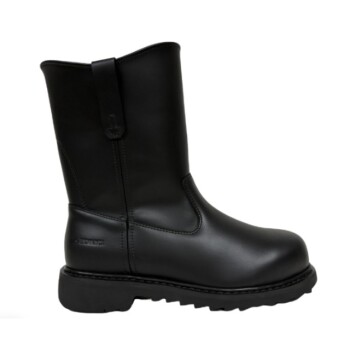
Heavy-duty and cruising boots offer specialized protection explicitly engineered for the rigors of high-speed highway environments. These boots utilize thicker materials and extended physical coverage to shield a larger surface area of the lower leg. Beyond external armor, they provide critical structural benefits, including enhanced ankle support to combat fatigue from vibration and high-strength resistance against abrasion during high-speed slides.
The Core Value While standard footwear may protect against basic elements, heavy-duty cruising boots address the specific physics of long-distance travel. They combine structural stability to reduce physical exhaustion with industrial-grade abrasion resistance to protect against high-speed pavement contact.
Engineering for the Long Haul
The primary advantage of these boots lies in their construction, which is designed to handle the sustained stress of highway travel rather than short, low-speed commutes.
Combating Vibration Fatigue
Long-distance driving subjects the operator to continuous, low-frequency vibration. Over hours, this destabilizes muscles and joints, leading to significant physical exhaustion.
Heavy-duty boots feature enhanced ankle support specifically designed to lock the joint in a stable position. This reduces the muscular effort required to maintain posture, directly mitigating the fatigue caused by continuous road vibration.
Extended Surface Protection
Standard boots often leave the shin or upper ankle exposed. Cruising boots address this by utilizing extended coverage designs.
By covering a larger surface area, these boots protect vulnerable parts of the leg from road debris, wind shear, and engine heat.
Critical Abrasion Resistance
Highway accidents often involve high-speed sliding (side-slips) rather than just blunt impact.
These boots are constructed with thicker materials that offer high-strength resistance. This engineering is critical for withstanding the intense friction of a side-slip incident on abrasive road surfaces.
Understanding the Trade-offs
While the protective benefits are substantial, the robust construction of heavy-duty boots introduces specific compromises that users should anticipate.
Reduced Flexibility
The very features that provide stability—thicker materials and rigid ankle support—can limit range of motion.
Users may find these boots less comfortable for walking long distances or performing tasks that require fine articulation of the foot and ankle off the vehicle.
Weight and Bulk
To achieve high-strength abrasion resistance, these boots use denser materials.
This results in a heavier piece of equipment. While this weight is negligible during driving, it contributes to the overall physical load when the user is not seated in a driving position.
Making the Right Choice for Your Goal
Selecting the correct footwear depends on prioritizing your specific risk factors during long-distance travel.
- If your primary focus is minimizing exhaustion: Prioritize boots with maximum ankle support to neutralize the draining effects of continuous vibration.
- If your primary focus is crash safety: Ensure the boot features thicker materials and extended coverage to maximize resistance against high-speed abrasion.
Properly engineered footwear transforms long-distance travel from a physical endurance test into a secure, manageable operation.
Summary Table:
| Feature | Benefit for Long-Distance Driving | Protective Outcome |
|---|---|---|
| Reinforced Ankle Support | Stabilizes joints against low-frequency vibration | Reduces muscle fatigue and exhaustion |
| Extended Physical Coverage | Shields shins and upper ankles | Protection from road debris and engine heat |
| Thicker Industrial Materials | High-strength friction resistance | Shields against high-speed sliding abrasion |
| Structural Stability | Maintains ergonomic foot posture | Enhances control and long-term comfort |
Partner with 3515 for Professional-Grade Footwear Solutions
As a large-scale manufacturer serving distributors and brand owners, 3515 offers comprehensive production capabilities for all footwear types, anchored by our flagship Safety Shoes series. Our extensive portfolio covers work and tactical boots, outdoor shoes, training shoes, and sneakers, as well as Dress & Formal shoes to meet diverse bulk requirements.
Whether you are looking to source high-performance cruising boots or industrial safety footwear, we provide the manufacturing excellence and scale your business needs to succeed.
Ready to elevate your product line? Contact us today to discuss your bulk manufacturing requirements and discover how our expertise can add value to your brand.
References
- Keith Ray S. Paras, Jose F. Cuevas. No Shoes, No Travel Policy in Ozamiz City: A Case Study. DOI: 10.46431/mejast.2022.5215
This article is also based on technical information from 3515 Knowledge Base .
Related Products
- Heavy-Duty Goodyear Welted Pull-On Safety Rigger Boot
- Heavy-Duty Waterproof Nubuck Safety Boots Safety Shoes for Bulk Supply
- High-Traction Suede Tactical Boots Wholesale & Custom Manufacturing
- Wholesale Waterproof Tactical Boots Custom Suede & High-Traction Soles
- Durable Leather Tactical Boots Wholesale & Custom Manufacturing for Brands
People Also Ask
- What are the key elements of quality boot construction? Ensure Longevity & Performance
- Are Goodyear welted boots worth it? The Ultimate Guide to Lifelong Footwear
- What is a Goodyear welt on a boot? The Secret to Durable, Repairable Footwear
- What makes Goodyear Welt boots suitable for harsh environments? Unmatched Durability & Repairability
- What additional high-quality materials are used in Goodyear Welt boots? A Guide to Advanced Components