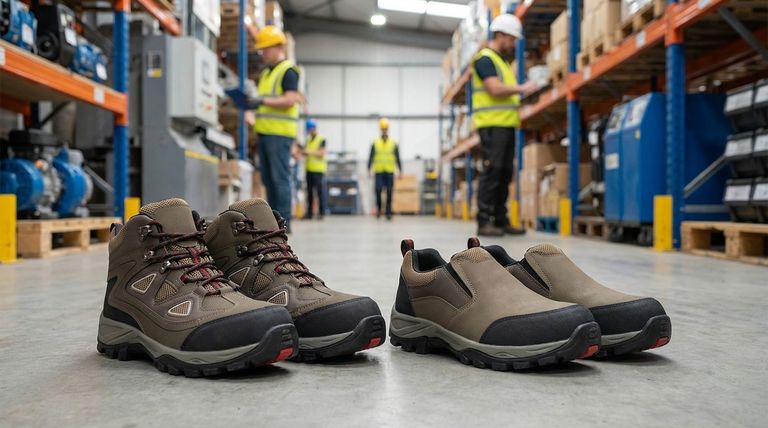
The primary safety advantages of slip-on boots stem from their convenience and design, which offer rapid removal in emergencies and reduce snag hazards from loose laces. Their comfort can also indirectly enhance safety by reducing worker fatigue.
While slip-on boots provide distinct safety benefits in specific situations, their core advantage is convenience. This often involves a trade-off against the superior ankle support and adjustable fit that are characteristic of high-quality lace-up boots.
The Primary Safety Advantages Explained
The most significant safety benefits of slip-on boots are directly related to their laceless construction. This simple design choice creates unique advantages in certain work environments.
### Rapid Removal in Emergencies
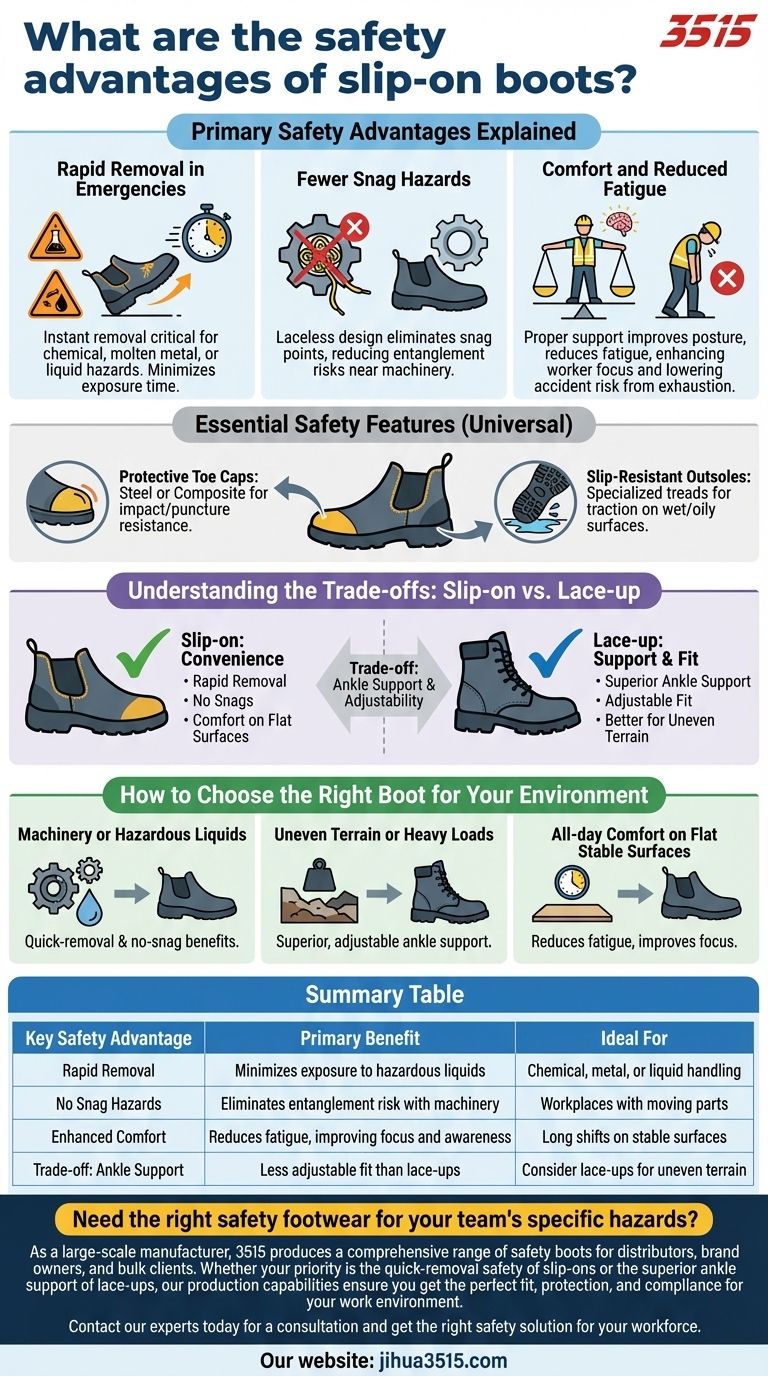
In workplaces with chemical, molten metal, or other liquid hazards, the ability to remove a boot instantly is critical. A slip-on can be kicked off in seconds, minimizing exposure time if a hazardous substance gets inside.
### Comfort and Reduced Fatigue
Slip-on boots are often cited for their comfort. Proper footwear improves posture and reduces fatigue, which in turn helps workers maintain focus and awareness, lowering the risk of accidents caused by exhaustion.
### Fewer Snag Hazards
The absence of laces eliminates a common snag point. For workers operating machinery with moving parts, a loose lace can pose a serious entanglement risk that slip-on boots completely avoid.
Essential Safety Features in Any Quality Boot
While the slip-on design offers unique benefits, it's crucial to remember that core safety features are universal. A quality slip-on boot must still meet the same fundamental standards as any other piece of safety footwear.
### Protective Toe Caps
All safety boots must have reinforced toe caps. These are typically made of steel for maximum puncture and impact resistance, or a non-metallic composite material that is lighter and provides better insulation in extreme temperatures.
### Slip-Resistant Outsoles
Look for boots with outsoles specifically designed for traction. These specialized treads provide a better grip on wet, oily, or slick surfaces, which is a leading cause of workplace accidents in construction, warehousing, and manufacturing.
Understanding the Trade-offs: Slip-on vs. Lace-up
Choosing a slip-on boot involves accepting a set of trade-offs. Understanding these limitations is key to making a safe and appropriate choice for your specific work environment.
### Ankle Support and Fit
This is the most significant trade-off. While high-quality slip-on boots can offer good ankle support, they rarely match the snug, customizable fit of a lace-up boot. For work on uneven terrain, lace-ups provide superior stability and reduce the risk of twists and sprains.
### Puncture Resistance
The overall construction of some slip-on styles may offer less puncture resistance through the sole and upper compared to more ruggedly designed lace-up boots. Always check the boot's specific safety ratings.
### Adjustability Over Time
All boots, particularly leather ones, will stretch and change shape with wear. Lace-up boots can be tightened to compensate for this, maintaining a secure fit. A slip-on boot that becomes too loose can become a trip hazard itself.
How to Choose the Right Boot for Your Environment
The decision between slip-on and lace-up boots should be driven entirely by the primary hazards of your job.
- If your primary focus is working around machinery or hazardous liquids: The quick-removal and no-snag benefits of slip-ons make them a strong safety choice.
- If your primary focus is walking on uneven terrain or carrying heavy loads: The superior, adjustable ankle support of a lace-up boot is generally the safer option.
- If your primary focus is all-day comfort on flat, stable surfaces: A well-fitting, high-quality slip-on can reduce fatigue, which indirectly improves your focus and safety throughout the day.
Ultimately, the safest boot is the one that correctly matches the specific hazards and demands of your work.
Summary Table:
| Key Safety Advantage | Primary Benefit | Ideal For |
|---|---|---|
| Rapid Removal | Minimizes exposure to hazardous liquids | Chemical, metal, or liquid handling environments |
| No Snag Hazards | Eliminates entanglement risk with machinery | Workplaces with moving parts |
| Enhanced Comfort | Reduces fatigue, improving focus and awareness | Long shifts on stable surfaces |
| Trade-off: Ankle Support | Less adjustable fit than lace-ups | Consider lace-ups for uneven terrain |
Need the right safety footwear for your team's specific hazards?
As a large-scale manufacturer, 3515 produces a comprehensive range of safety boots for distributors, brand owners, and bulk clients. Whether your priority is the quick-removal safety of slip-ons or the superior ankle support of lace-ups, our production capabilities ensure you get the perfect fit, protection, and compliance for your work environment.
Contact our experts today for a consultation and get the right safety solution for your workforce.
Visual Guide
Related Products
- Premium Suede Sport Safety Shoes for Wholesale & Bulk Orders
- Premium Lightweight Safety Shoes for Wholesale & Bulk Orders
- Wholesale Anti-Smash & Puncture-Proof Safety Shoes Custom Manufacturing for Brands
- Premium KPU Injection Athletic Style Safety Shoes
- Premium Safety Shoes with Rotating Buckle Safety Sneakers
People Also Ask
- What industries have specific OSHA footwear requirements? Ensure Compliance & Protect Your Workforce
- What are the primary functions of professional safety shoes? Maximize Safety in Water Supply Confined Spaces
- What role do specialized safety shoes play in preventing falls? Engineering Stability in Industrial Environments
- How do gait analysis algorithms ensure accuracy in footwear? Master Step Length Precision for Boots & Sneakers
- What core functions do professional safety shoes serve? Enhance Construction & Industrial Safety Standards